

When Was TSA Created & Why Was It Established?
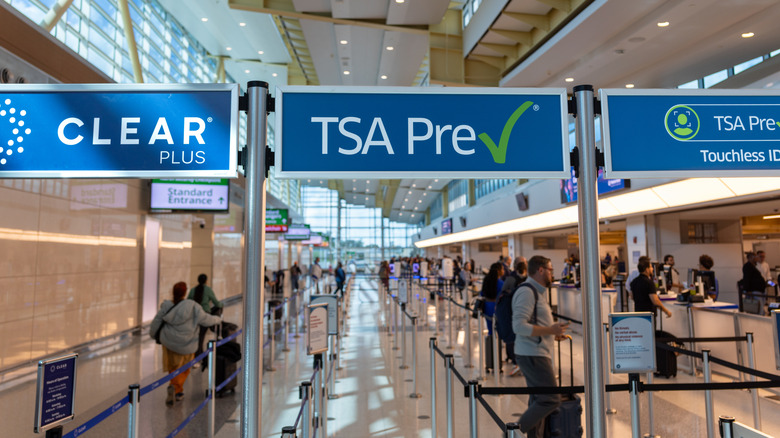
The Transportation Security Administration has an enormous and vital job across the United States, and it's only getting bigger. Over Labor Day weekend 2025, for instance, the body noted in a press release that it performed security screening on approximately 10.4 million travelers, a significant increase of almost 3.5% over the year before. Younger travelers probably can't remember a time when the TSA wasn't synonymous with security in U.S. airports, but in the context of the long history of air travel, it actually wasn't established very long ago.
In November 2001, the Aviation and Transportation Security Act was enacted. It stated that the Department of Transportation would be expanded to include a new administration, the TSA, with the Under Secretary of Transportation for Security as its leader. The first official to hold the post was John Magaw, once Secret Service leader. Though Magaw resigned after about eight months in the position, he had two major policy priorities during his brief time: Establishing a federal workforce to screen travelers at airports, and making it mandatory that every applicable bag and suitcase must be checked for explosive devices. The body's purpose, in short, was to make airport security much tighter than it had previously been. Given the timing, the impetus for this decision is clear. In 2021, Chellie Cameron, then-CEO of Philadelphia International Airport, explained, "the TSA was created in direct response to the tragic events of September 11, 2001 to prevent such a horrendous act from happening again."
The changes in TSA since its work began
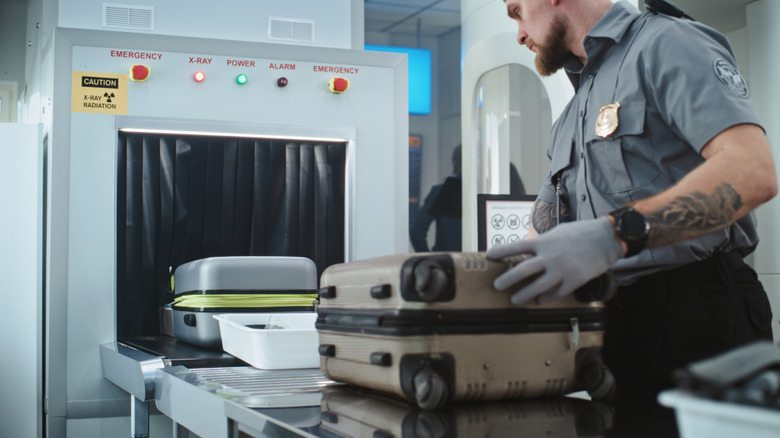
As we've seen, things changed quickly at the TSA after its establishment. In 2003, there was another major change in the service's core makeup. It began as an arm of the Department of Transportation, but as a result of its focus on security, it was folded into the newly-established Department of Homeland Security in 2003. This move was made to better centralize these vital new defensive institutions.
We often think of the TSA as taking care of security at airports (and confiscating weird things that people try to bring through them), but the fact is that the administration has evolved to help protect all modes of transportation. Today, the TSA itself reports that its "scope includes commercial and general aviation; mass transit systems; freight and passenger rail; highways, pipelines and ports."
This isn't to say that the TSA directly provides security for trains, for instance. In April 2025, Sonya Proctor, Surface Operations Assistant Administrator at the TSA, stated that the administration "is probably always going to be primarily an aviation organization," but that its has developed important duties in other areas of travel, which the body described as "security oversight efforts in surface transportation." Under this umbrella are activities such as training of new security operatives. It also administers Security Directives (packages of measures for industries to follow to bolster security) where necessary, the first in response to the pipeline ransomware attack of May 2021. The TSA Surface Operations Division was established in 2019, Proctor went on, and now leads the way in the organization's ongoing battle against a leading threat to U.S. transportation: Cybersecurity breaches.
U.S. airport security before the establishment of TSA
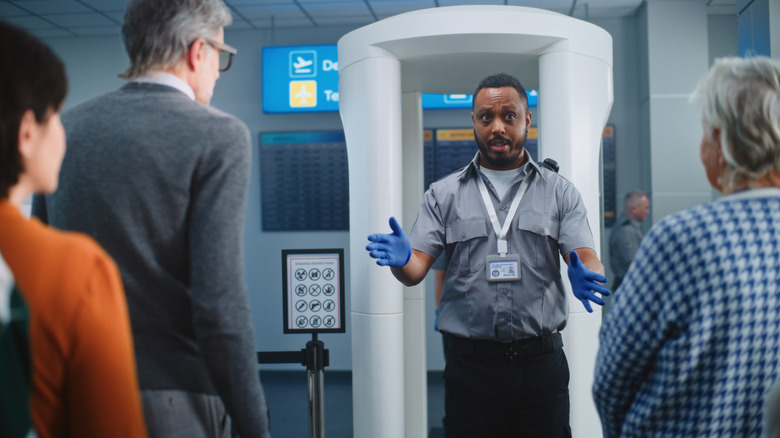
Before the tragic attacks of September 2001, airport security measures were arranged and operated very differently. Jeff Price was Denver International Airport's assistant security director at the time of the attacks. In 2021, he told NPR, "You could walk up to the gate at the very last minute. You did not have to have a boarding pass. All you had to do was go through the security checkpoint — no questions asked, no ID needed."
Those of us who are unnerved by the body scanners used at airports today, or other powerful tools in the TSA's arsenal such as facial recognition technology, might be just as concerned to learn that there were no such measures in use before the administration. Just a simple metal detector. The 9/11 Commission Report states that "a walk-through metal detector calibrated to detect items with at least the metal content of a .22-caliber handgun" was used for this purpose. The TSA's airport body scanners (to foil potential carriers of weapons that wouldn't set off metal detectors) would not be introduced until early 2010. Knives with blades no longer than four inches long were also permitted. Airport security measures were anything but standardized country-wide and were performed primarily by private companies that had been hired by individual airports.
In the immediate wake of the attacks, even before the TSA was established, temporary security measures were installed that saw law enforcement and the National Guard begin to take a role in some screenings. Their checking of travelers for the new, far stricter list of forbidden items marked a collaborative effort that led to the TSA's stringent and organized security measures today.