

5 Clever Ways To Hide Your TV In Plain Sight
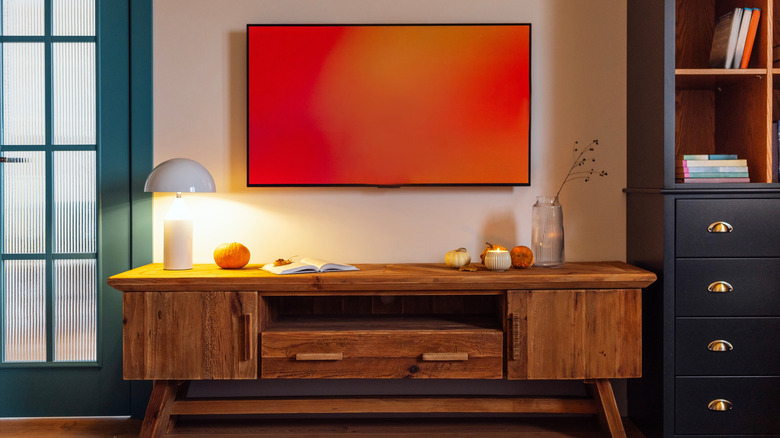
In the modern era, television has become a staple in most homes. However, even as TVs've become thinner and more streamlined in appearance — except for some of the more unique models on the market – some prefer not to have a TV visible in their living space. Fortunately, hiding a TV in plain sight is not only possible, but there are a range of ways to keep it out of the way when it's not in use.
There are many reasons to want to remove a TV from sight without getting rid of it entirely. Maybe you're making a conscious effort to spend less time in front of a screen, which helps keep you more in tune with your surroundings. Perhaps you want to improve your sleep patterns, since TVs emit blue light that disrupts the body's natural rest cycle when used too close to bedtime. For those with a love of interior design, TV camouflage can enhance the room's theming and overall aesthetic.
The incentives to hide one's TV in plain sight are clear. These are just a few of the many ways you can put your TV away, without having to do away with it entirely.
1. A simple set of doors can get your TV out of the way
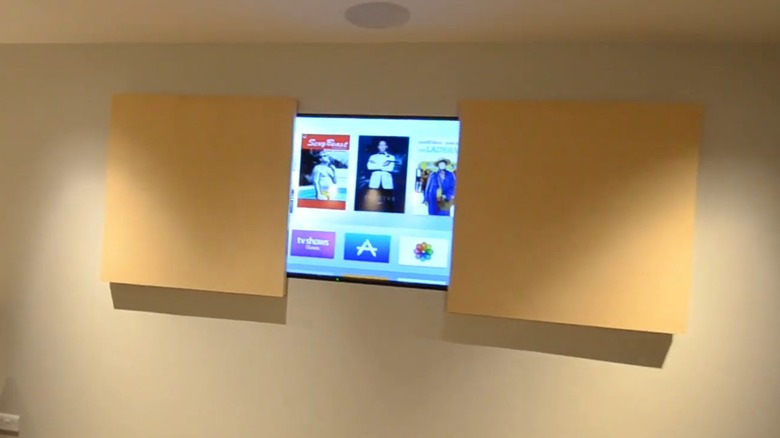
One of the goals of hiding a television in plain sight is to keep the camouflage consistent with the room's aesthetic. It should look like a natural element of the space, not something that sticks out like a sore thumb. While it may not fit all looks, a simple solution to the potentially vibe-killing look of a TV is to add a set of doors over it. Arguably, the easiest setup is to find doors that match the wall and room, and connect them with a hinge system so they can be opened freely. Bi-fold doors can limit how far they extend from the wall when opened.
Should you not opt for the bi-fold look, sliding barn doors could be a fine choice. These are two panels connected to rails that slide to the TV's outer edges to reveal it. Granted, for this method, you'll have to keep the wall space on the sides of your TV open to prevent panel-to-decor collisions. If you're on the fence about which setup is right for you, perhaps one of the many must-have home renovation apps could provide inspiration before you spend time and effort trying it.
2. A mirror can keep a TV out of sight
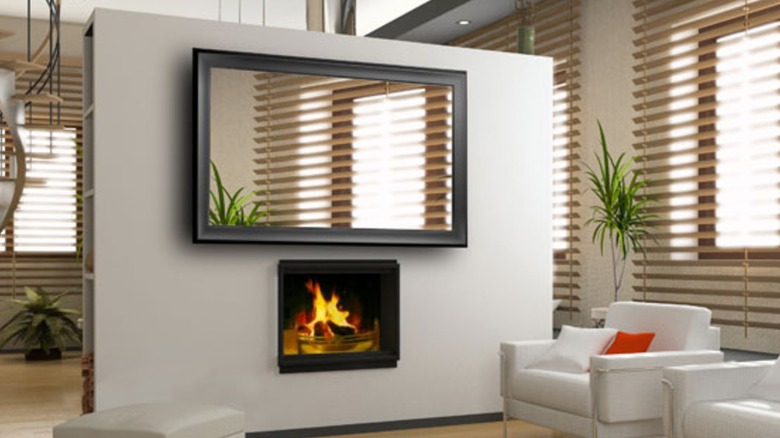
When a television is mounted on a wall, it's obvious it's there. When turned off, it's a large black rectangle that can disrupt the room's overall look. One way to keep it hidden is to change its appearance when it's turned off, which can be done by masking it to look like a simple mirror. There are a few ways to achieve this look, each suited to different budgets and TV camouflaging goals.
The simplest option is to invest in a pre-framed, pre-mirrored TV from a company like Hidden Television. This allows you to find the right TV for your space, with thickness, screen size, and trim appearance all to your liking. The downside is that these belong among the most expensive TVs currently on the market. Custom mirror and frame models can cost tens of thousands of dollars, depending on your specifications. That's why the more budget-friendly option of buying a two-way mirror and building the frame yourself to mount in front of your TV is likely a more appealing and effective route.
3. Artwork is perfect TV camouflage
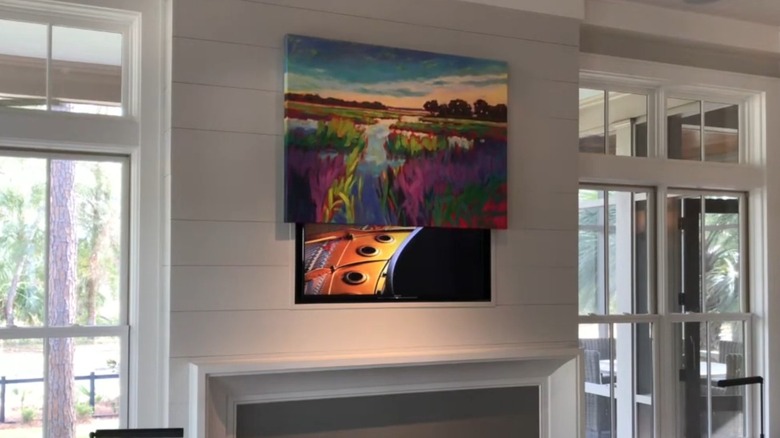
A blank wall can be mounted with many things. While a wall-mounted TV is a prime candidate for such space, if you find the look of one unsightly when it's not in use, you could invest in a more appealing cover. A large, TV-sized piece of artwork could be the solution you're looking for. As people have experimented with this idea, multiple methods have emerged to make this technique possible.
The first option is a single, complete artwork that fits over the TV screen and slides up to reveal it. Alternatively, you could use a two-panel approach, which involves two halves — two individual art pieces or one split down the middle — that slide on a rail away from the center of the TV to reveal it, similar to the aforementioned door idea. If you're crafty enough, you could install electronics to move the artwork, or you could set it up so that you can slide the two art panels manually. In either case, your TV is well hidden and covered by something that better fits the look and tone of your room.
4. A custom cabinet can hide your TV
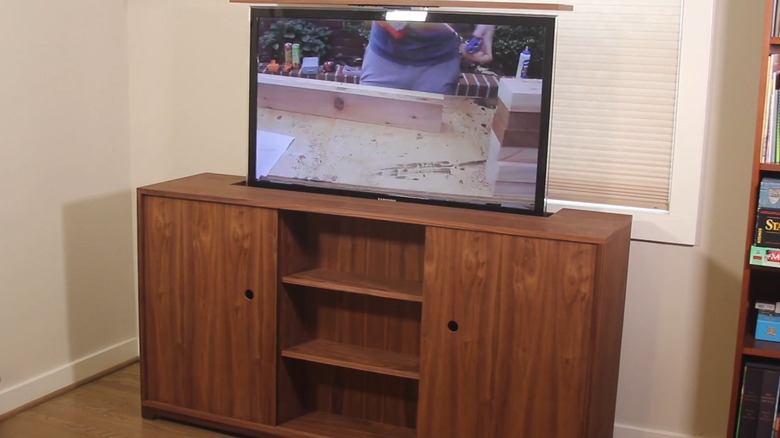
Normally, finding a suitable dresser or cabinet to hold your television is an alternative to mounting it. However, to find an ideal way to hide your TV when it's not in use, you may need to mount it in a cabinet. A TV hideaway cabinet can help keep your TV out of sight, regardless of its size. The TV is mounted to the back of a larger wood piece that slides in and out from the top of the cabinet. When closed, it looks like a normal cabinet. Through furniture vendors like Wayfair, you can buy a hideaway TV cabinet that best fits the room you intend to put it in.
Of course, it can't be ignored that such setups cost thousands of dollars, so the store-bought option isn't exactly a one-size-fits-all solution. Alternatively, if you're confident in your construction skills, you can build a hideaway TV cabinet yourself. Makers like Nathan Builds on YouTube have provided tutorials on how to make such a piece, covering the supplies you'll need, the necessary tools, and, most excitingly, what you can expect it to look like when it's finished. This will also require additional funds and time, but once it's done, you can take pride in a job well done and a TV well hidden.
5. Use textured and patterned walls to your advantage to hide your TV
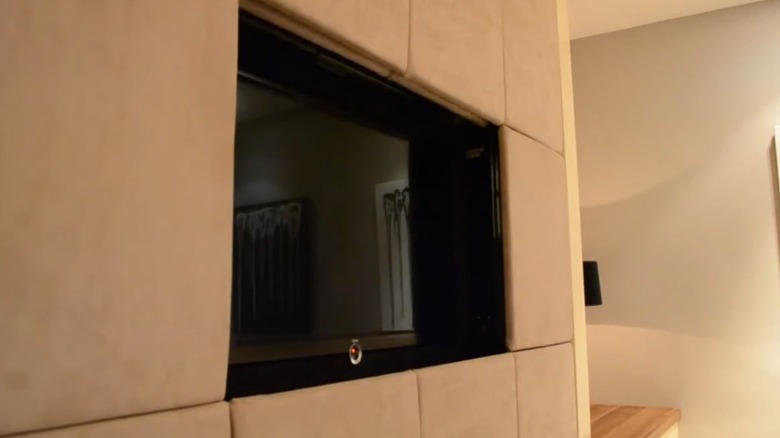
In some living spaces, there's more to walls than just colors. Textures and paneling give these areas a unique look — one that someone hoping to hide their TV can use to their advantage. Repeating patterns and textures make it easy to cut out wall panels that can seamlessly hide TVs in plain sight. This was demonstrated by Finite Solutions on YouTube, showcasing a tiled wall that appears ordinary at first glance. That is, until the mechanism to move two panels from the center is activated, revealing a TV underneath.
While this is a good idea, if you really want it to appear, there isn't a TV present when the panels are closed; there's significant background work involved. Primarily, you'll need to either raise the area around the TV to level with the panels or cut into the wall to mount the TV deep enough that the panels aren't raised. Cutting into your walls can be structurally and electrically risky, so it's a good idea to consult a contractor for guidance or hire a company to handle this extensive renovation for you. It may increase costs, but it's better to be safe than sorry.
While most tricks to hide cables from a mounted TV are rather simple, evidently, hiding the entire TV is no small task. At least once you choose a method and go through the trouble of setting it up, odds are it will deliver on improving your room and then some.