

Where Should You Drive When Snow Hides The Road Lines?
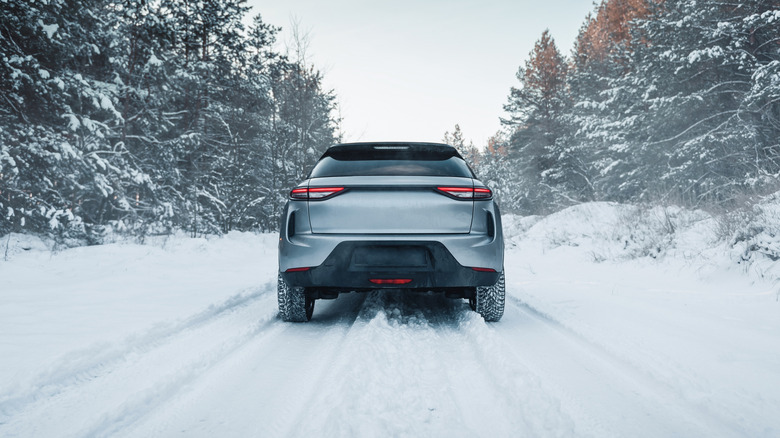
There are many winter car mistakes drivers make, either because they aren't well prepared or don't know how to handle the conditions. Either way, such mistakes can have serious consequences. According to a U.S. traffic safety study published in the American Journal of Public Health, driving on snowy days was associated with a roughly 23% higher rate of non-fatal-injury crashes and a 45% higher rate of property-damage-only crashes compared with dry conditions.
Snow makes your car harder to control, increasing braking distance and making steering less precise. Additionally, snow can hide the lines, potentially masking ice patches and dangerous hazards. So, where should you drive when snow is covering the lines in the road? NHTSA Winter Driving Tips note that snowy roads tend to make it harder to control and stop your vehicle, meaning that drivers should slow down and increase following distance. However, there are no specific federal rules in the U.S. Manual on Uniform Traffic Control Devices (MUTCD) that dictate where to drive when lane markings are obscured; the MUTCD only defines standards for markings when they are visible.
Still, according to a driving instructor from the Advanced Driving School, "Driving in the tracks created by other vehicles often gives more grip, so it might be safer to ignore the normal lane positioning if it would mean driving on deeper snow." Automotive Fleet, a national trade publication, makes a similar recommendation, saying that following snow tracks left by previous vehicles is generally a good idea.
Driving on snowy roads safely
According to a research analysis published by the Sensors journal, at a speed of approximately 12 mph (20 kph), a vehicle traveling on dry asphalt may stop in about 5.5 feet (1.7 m). On snow, the same vehicle requires almost 26 feet (7.9 m) to come to a complete stop. At higher speeds, such as 87 mph (140 kph), stopping distance on snow can reach 1,263 feet (385 m), compared with just 275 feet (84 m) in the dry.
Not all drivers are aware of this, and if they cannot properly gauge snow braking distances, it can easily lead to accidents such as winter weather pileups. The best way to keep yourself safe is to increase your following distance to counteract the longer braking interval, while also making sure to always look ahead for any potential problems that may arise. The Evergreen Safety Council recommends at least a five-second following distance while in the snow, while Consumer Reports says drivers should maintain an 8 to 10-second following distance in extreme conditions.
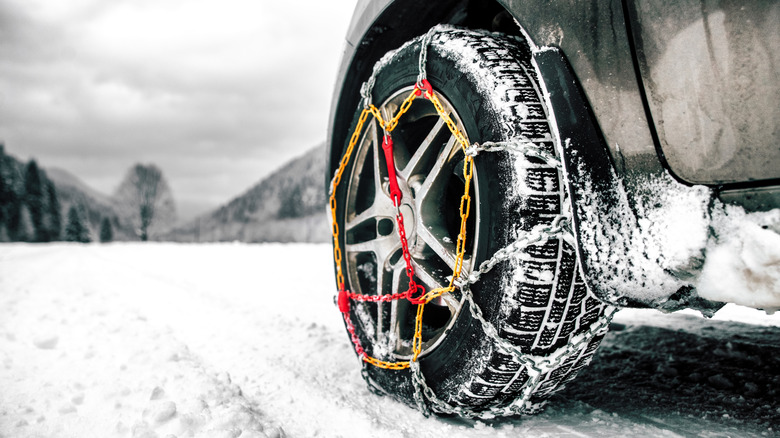
It's also very important to note that good-quality winter tires or snow chains are the best methods of increasing traction on the snow. AWD is not enough in snow and ice. It helps you accelerate and get out of a snowy parking spot, but it makes little to no difference on summer tires. Lastly, make sure to slow down, accelerate gently, use your headlights, plan ahead, and only go out if necessary.
Driving on roads with no lane markings
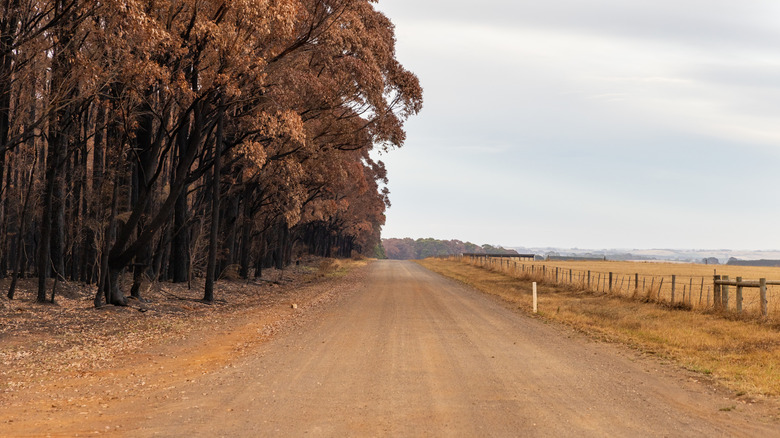
Roads typically have markings and lanes to tell you how you should position yourself while driving. However, there are situations where road markings are obscured, difficult to spot, or nonexistent. To stay safe, you should always position yourself to the right-hand side of the road while also making sure you are not too close to the road's edge.
If you see a car coming from the other way, slow down as soon as you can, and make sure to position yourself safely to let it pass. You may need to adjust your position as you go, which is why you should always be vigilant and look straight ahead. According to Helpful DIY, "the further ahead that you look, the easier that it'll be to actually stay centered without road markings." You never know what you may encounter coming from the other direction. This is why you should give yourself enough space and time to react.
While on the topic of how to drive when lane lines are not visible (either due to snow or unmarked roads), a spokesman for the British Columbia Highway Patrol told The Globe and Mail, "You must do the safest thing that is closest to the ordinary lane position. Sometimes you should follow the clear lane; other times that would be dangerous." Therefore, drivers should always use their best judgment to stay safe.