

HEMI Owners Are Deleting This Feature, Even Though It's Costing Them Fuel
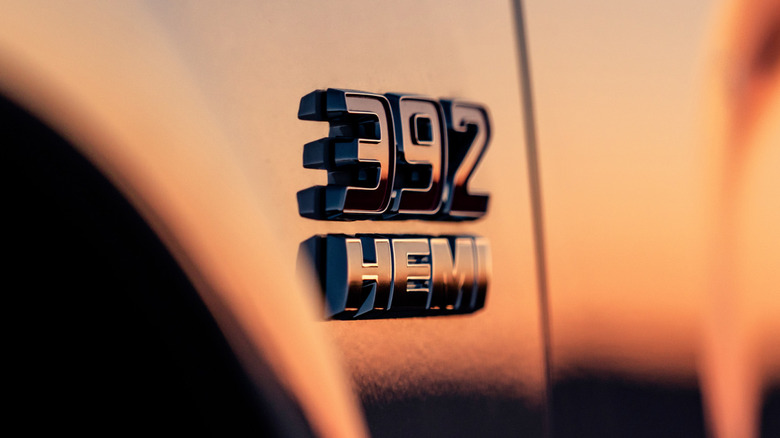
Since 2005, the Gen III HEMI engine (which, fun fact, aren't actually hemis) has sported a feature called MDS, standing for Multi Displacement System, the first of its kind in its respective vehicle classes. Early adopters like the 2005 Chrysler 300C, Dodge Magnum R/T, Jeep Grand Cherokee, and 2006 Dodge Ram all sported the Multi Displacement System, basically a fancy term for a cylinder deactivation mode (called other things by other manufacturers, such as AFM, or Active Fuel Management, on GM vehicles). It works by deactivating cylinders 1, 4, 6, and 7 through a series of clever engineering hacks and ECU programs, turning an eight-cylinder vehicle into a four-cylinder.
Normally this sounds like a game-changing idea; with four cylinders off, it drastically improves fuel economy during light-load events such as idling, highway cruising, or stop-and-go traffic. But lately, a number of individuals on forums and videos discuss MDS as a potential source for failures related to the camshaft and lifters, leading to damages totaling in the thousands of dollars if overlooked. Thankfully a lot of these remarks are hearsay; it's not specifically the fault of this system, but rather oil starvation, neglectful maintenance, and more, which doesn't play nicely with the added complexity of the MDS lifters.
Nevertheless, many individuals opt to remove MDS from their HEMI-powered vehicles. For instance, in spite of the dubious rumors surrounding the potential failure points, they are still more complicated and, thus, more prone to failure than simpler parts. They modify the car's exhaust note as well, arguably not for the better because half the fun of a V8 is the sound. And MDS delete is required for upgrading the camshaft. Whatever the reason, let's go over how the system works, good things to know, and how to safely delete it.
How MDS works (and sometimes fails)
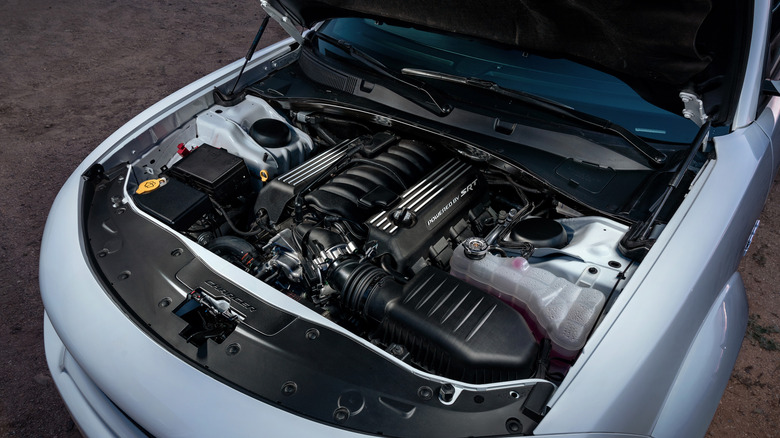
Chrysler's Multi Displacement System functions off the HEMI's hydraulic lifters, so named because the lifters use oil pressure to adjust themselves. Because this system relies on positive, consistent oil pressure to function properly, deviations may create compounding problems, such as using the wrong oil viscosity, using too much or too little oil, or neglecting to change the oil on time. If you're changing the oil yourself, always bear in mind to follow the owner's manual to avoid these kinds of issues regardless of whether your HEMI is equipped with MDS or not; all Gen III HEMI engines are hydraulic lifters. The only difference, from an anatomical standpoint, is in the design of the lifter itself. Both types are fundamentally the same.
In the simplest terms, the engine's computer sends a command to the system when certain conditions are met. This command triggers the MDS to perform various tasks; oil pressure unlocks the lifters, which means the valvetrain is not engaged in these cylinders, so no air-fuel mixture enters. Fuel and spark are simultaneously cut, meaning the cylinders are now effectively "dead," though the pistons themselves are still rotating with the crankshaft — they're just not producing power.
Because of the inherent complexity, a number of factors can go wrong. Every step in this system, from the engine's ECU to the MDS lifters, creates additional failure points. The lifters may stick on or off, for example, leading to a malfunctioning valvetrain. Generally, because the whole thing relies on adequate oil pressure, many of these issues can either be traced to oil starvation, poor oil quality, or wear of the parts themselves.
How and why to delete MDS

Because MDS is both reliant upon software and physical components within the engine, it's far more in-depth than simply remapping an ECU. If you want to convert an MDS to a non-MDS, there are generally two ways to do it: a partial and full lifter swap. MDS-equipped engines have different lifter geometry, so if you're looking to upgrade to a more aggressive cam with higher-lift lobes, then you'll want to swap everything out. But if you're keeping it stock and simply want to eliminate the complexity of the MDS system, then you could easily get away with only changing out the MDS-affected pistons.
Actually changing the system requires removal of various major components such as the cylinder heads, so this isn't a simple job; if you're buying a HEMI crate engine (some of which go for pretty cheap, under $4000), the seller will typically say if it's an MDS or non-MDS block. Either way, expect to be in for low four-figures for such a job if you're not doing it yourself.
Non-MDS blocks differ in various ways that may be preferable; for one, there's no transition between MDS and eight-cylinder modes, leading to a smoother operating band. You don't get that odd "burbly" sound from the exhaust when it's on four cylinders, either. And it's virtually required if you're doing any heavy valvetrain or camshaft modifications to your HEMI. However, the trade-offs are the monetary / labor factors, the reduced fuel economy, and the ECU tuning.