

Winter Storm Fern Could Leave Drivers With Some Expensive Fines
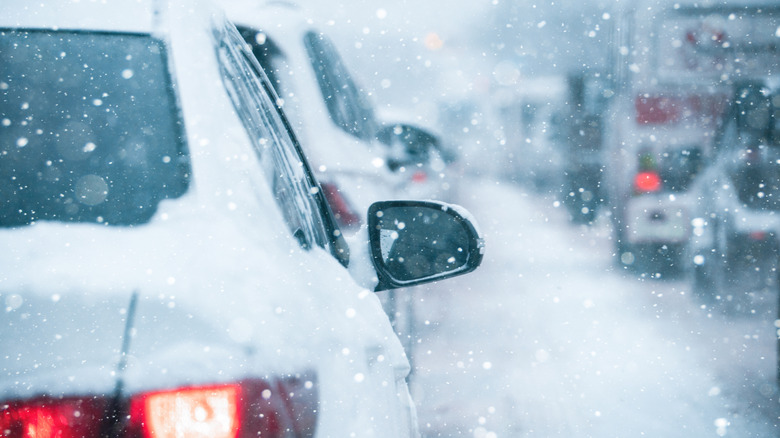
Across the world, dedicated salt and plow teams work in the most bitter of blizzards to keep drivers safe, but while it's still falling and/or the awful conditions are ongoing, sometimes a snow emergency must be declared. Winter Storm Fern continues to rage across the United States, with The Weather Channel reporting that no less than 24 states across the nation have officially declared emergency status.
With tragic deaths from hypothermia reported in Texas and Louisiana, on top of other deaths in states such as Kansas and Arkansas, this storm has been a devastating force. NBC News notes that approximately 820,000 have lost power. Faced with such a threat, one of the most essential acts officials can take is to try to ensure that motorists don't take to their vehicles unless it's an absolute emergency.
Ohio's Pike County Sheriff's Office notes that, when a Level 3 snow warning is in place, "those traveling on the roadways are subject to arrest." How heavy those consequences may be depends on where you are and how you've violated the warning. In Kenton County, Kentucky, when more than two inches of snow have settled and a Snow Emergency is in force, it is not permitted to park "upon any public road right of way," and violators of any Snow Emergency regulations "shall pay a fine of not less than $20 nor more than $100 dollars [sic]." In Ohio's Logan County, meanwhile, disobeying Snow Emergency rules is a fourth degree misdemeanor, with 30 days' imprisonment and/or a fine of up to $250. This is increased to a hefty maximum of $1,000 and/or 180 days if the act is deemed "a risk of physical harm to persons or property." This is yet another winter car mistake you really don't want to make.
The levels of snow emergency
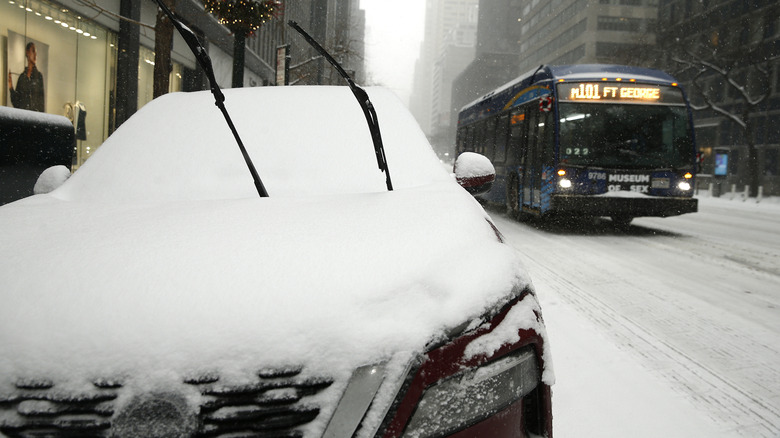
Needless to say, not every incident of snowfall needs to be declared an emergency. Depending on where you live, of course, it might be absolutely routine. This is why there are different levels of snow emergency, to give drivers an idea of just how dire the conditions may be. The Pike County Sheriff's Office breaks down how each one is defined. A snow advisory simply means that there has been some relatively light snowfall and that drivers should be vigilant (as they always should of course), but their journeys shouldn't be hampered by the conditions. After this comes Level 1, which means that the ice and snow are more widespread and that it's important to take that into account, planning your journey should conditions worsen. It's at Level 2 that things start to become extremely dicey — "Roadways are hazardous and snow and ice covered." This is the stage, the office reports, at which it's time to ask the boss if you really need to come to work in these conditions and rethink traveling more broadly if at all possible.
These are not strictly limitations imposed on your journey, though, which kick in at Level 3. It's at this point that only essential trips should be undertaken, with the office highlighting "all roadways are closed to non-emergency personnel." It's a terrifying testimony to the strength of Winter Storm Fern that this level of warning was issued in some areas, such as Franklin County, Ohio. Prior to being downgraded to Level 2 on January 26, it was believed to be the first such warning the county had ever declared, according to Sheriff Dallas Baldwin (via MSN). Should you find yourself caught in inclement weather, these winter driving tips could prove vital.