

5 DIY Ways To De-Ice Your Driveway That Actually Work
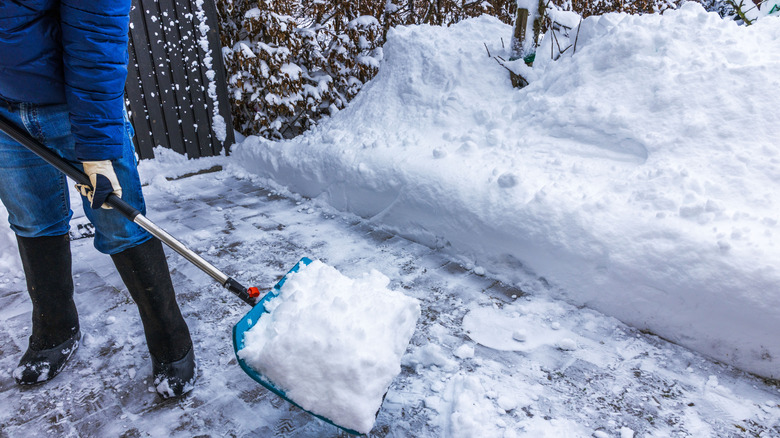
Life keeps going, even after a winter storm when everything outside is frozen in place. Jobs don't care that your driveway is now a giant block of ice; you're coming in anyway. And when you find yourself in the middle of freezing temperatures with no ice melt on hand, you'll want to turn to these DIY methods to de-ice your driveway.
You can buy ice melt products in stores. These pre-made products typically include chemicals like sodium chloride, calcium chloride, or magnesium chloride. However, using these requires some planning (AKA having them on hand when you need them). There are also consequences to using them. For example, sodium chloride might not be as effective when the temperature hits 15 degrees Fahrenheit, so you'll need another solution. These chemicals can also harm vegetation and damage concrete surfaces, so they end up creating problems while solving others. Instead of using these chemicals, you might check to see what you already have at home that can melt driveway ice or stock up on a few winter essentials. Here are five options to try.
Use fertilizer with high nitrogen content
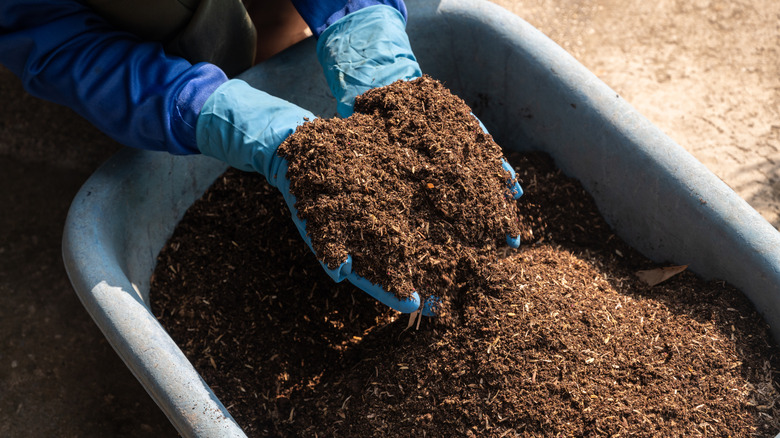
If you have some extra fertilizer lying around, you might want to use it to de-ice your driveway. The high nitrogen content in certain fertilizers is effective in melting ice. Fertilizer ingredients like urea, ammonium sulfate, or potassium chloride are high in nitrogen. These ingredients are also popular in commercial de-icers. As a bonus, fertilizer doesn't damage your concrete or yard as salt does.
Despite being safer than rock salt, you'll still want to use fertilizers sparingly. All the snow and ice will melt eventually and end up in local waterways, and your fertilizer will wash away with it. Use it in a pinch if you need to clear a driveway to get your car out or make sidewalks safer. Fertilizer will help you if you've forgotten your snow chains. The NPK ratio on fertilizer packaging will tell you how much nitrogen is in the fertilizer. It's the first of the three numbers and indicates the percentage of nitrogen. Fertilizers with 20% nitrogen or more are usually considered high nitrogen fertilizers.
Mix rubbing alcohol, hot water, and dish soap
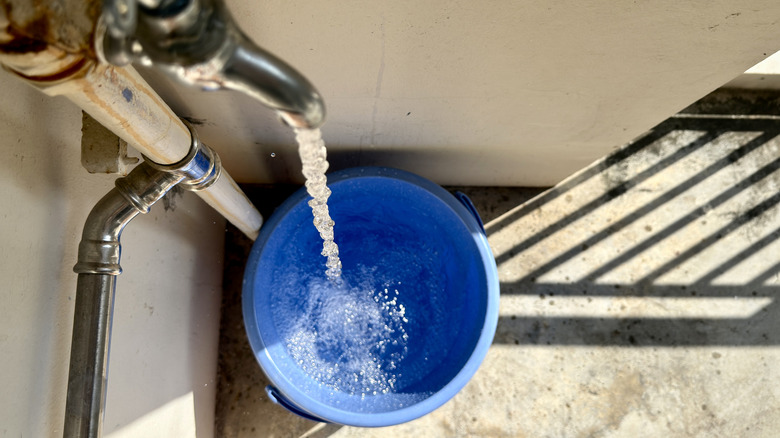
Rubbing alcohol helps to melt ice quickly, but you'd probably need several bottles to make this an effective solution on its own. One way to do this is to mix rubbing alcohol with hot water and a little dish soap. Using rubbing alcohol helps reduce the freezing point of water. This is also why rock salt and chemical de-icers work so well — they rely on freezing-point depression.
Aim for a 16:1 ratio of hot water and rubbing alcohol. Use a five-gallon bucket so you can make a large batch and hopefully treat your whole driveway at once. Mixing the rubbing alcohol with hot water makes sense, but why the dish soap, you might ask? Dish soap is not a de-icer, but it does help to spread your alcohol and water solution over a larger area more evenly. If you're using the 16:1 ratio, plan to add 6-8 drops of dish soap.
Combine white vinegar and hot water
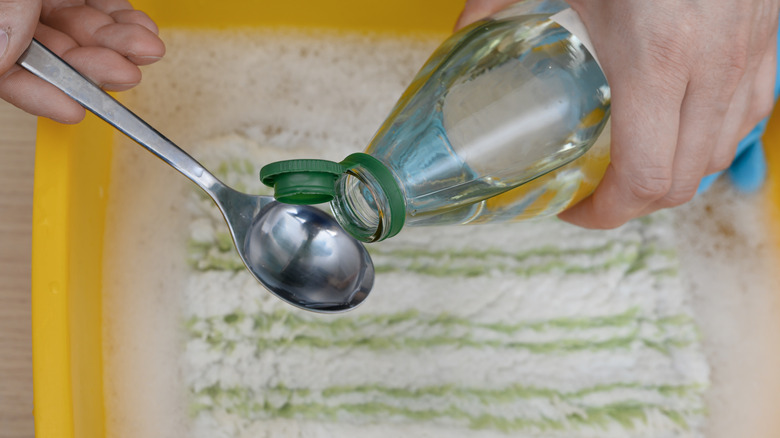
Vinegar contains acetic acid, which helps to lower its freezing point. Similar to the alcohol and water solution, mixing vinegar with hot water yields a larger solution to apply to your driveway. Mix vinegar and hot water in equal parts, then apply it to your driveway immediately. Because of vinegar's lower freezing point, it may prevent your driveway from re-freezing sooner.
However, there are drawbacks to using vinegar as a de-icer. While it's safe for people and pets, it's not the most environmentally friendly for plant life. Vinegar's acid content may damage grass or surrounding plants, plus it can also affect your driveway. It doesn't corrode concrete like salt, but vinegar can weaken protective sealants in the concrete and cause it to degrade over time. It might also damage any colors or finishes you've applied to your driveway. Furthermore, it's only effective if the temperature is just below freezing; it may not work in conditions under 28 degrees Fahrenheit. Using this method on occasion is usually fine, but it might not be the best first option.
Add kitty litter to your driveway to create traction
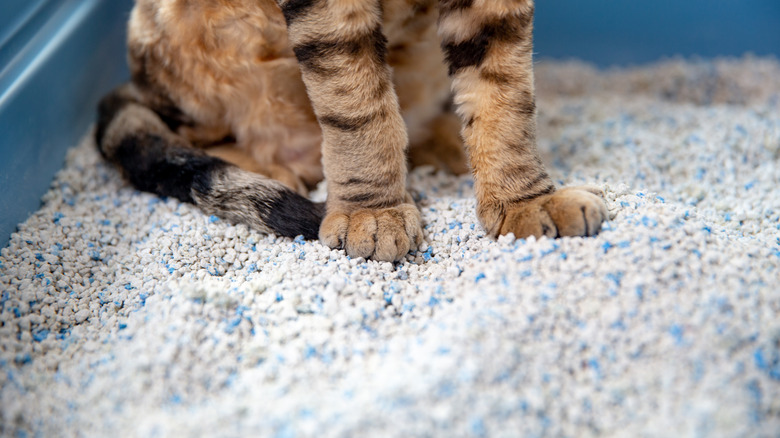
Even if you have great winter tires, your vehicle might need to get out of an icy driveway safely. Let's be clear: kitty litter does not melt ice or make it disappear. However, kitty litter's texture can offer some traction and make your driveway less slippery. The ice is still there, but adding traction makes it less of a concern. It's also great at absorbing moisture (since that's one of its main purposes), so it makes perfect sense to use kitty litter to make driveways and walkways safer.
You don't need to get name-brand kitty litter, nor do you need a ton of it. A little can go a long way in making your driveway and sidewalks less slick. It's also a pretty cheap alternative to rock salt and commercial ice melts. The main downside of using kitty litter for de-icing is the cleanup. What doesn't stick to your tires or wash away when the snow melts will need to be swept up and disposed of. Still, it's a small price to pay if you need a quick and easy solution.
Use vodka to de-ice a driveway
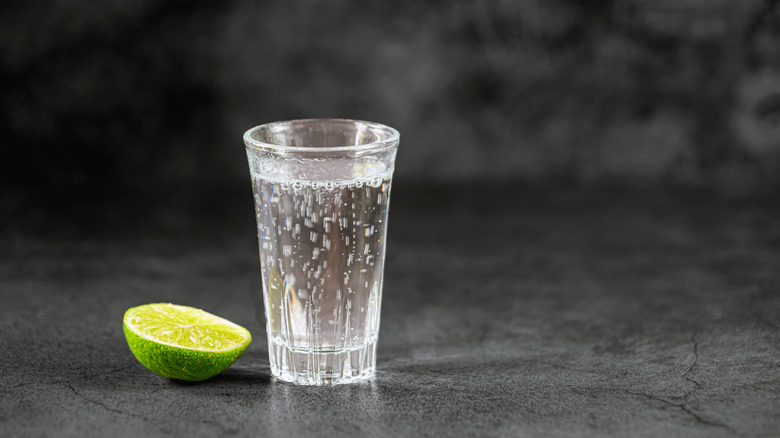
If you're desperate and have no alternatives, you might want to raid the liquor cabinet. Vodka's freezing point is well below zero, so it can help de-ice your driveway in moderate snow and frost. Cheap vodka works just as well as top-shelf brands (though of course you wouldn't want to spend that kind of money for this project). Since there's already a high amount of alcohol in vodka, you don't need to mix it with anything. Just pour it directly over icy areas. If you're working with a small area, you can also add vodka to a spray bottle for a more even application.
Keep in mind that all of these homemade solutions to de-ice a driveway may not work in all conditions. The outside temperature may affect how long these solutions last, and refreezing is a definite possibility. While they can work in a pinch, there's a good chance you will need to reapply these solutions, depending on how long the cold snap lasts.