

What Are Those Weights On Power Lines For?
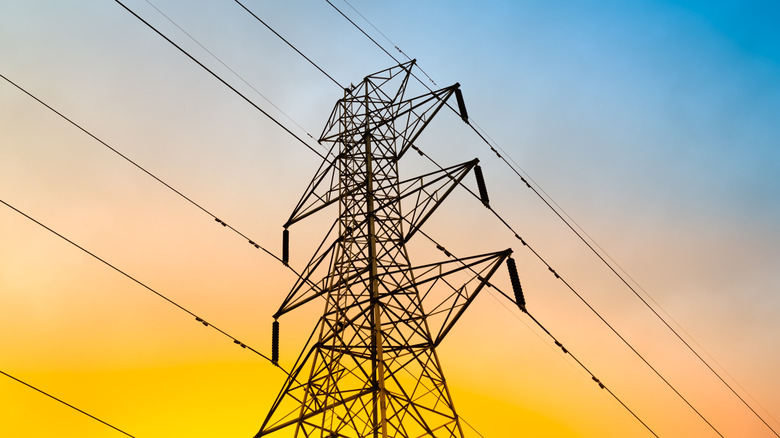
Looking up at the power lines outside your window or along your street, you might notice some small, gray attachments resembling weights hanging from the wires. Not to be confused with the orange balls or the metal springs so often seen on power lines, these weights are known as vibration dampers. And, just like the other things hanging on those wires, they're there to keep the electrical grid functioning safely and reliably. How, you ask? Pretty much exactly as you'd expect: They work like a counterweight to keep the power line from swinging and bouncing all over the place.
When wind whips across power cables, it causes rapid vibrations. Over time, those vibrations can weaken the metal that makes up those power lines. The weaker the metal, the looser the fittings — and the more likely conductor failure could occur. So, utility companies install vibration dampers along the lines to try and stop that process from happening. The weight of the damper absorbs the rapid vibrations and dissipates them to help reduce the likelihood of conductor failure.
Types of vibration dampers used today
Not all vibration dampers are identical. One of the most common types is the Stockbridge damper. It looks like two metal weights connected by a short, flexible cable that clamps directly to the power line. The flexibility of the cable, called a "messenger", lets the weights move to counter the vibration. And no, that vibration is not what creates that buzzing sound around power lines — that's coming from the electricity in the lines themselves.
Other modern designs take the original Stockbridge concept and build on it to deal with a wider range of vibration frequencies. Some dampers use unequal weights, while others use different messenger lengths. Manufacturers also employ alternative materials for specific results, such as galvanized steel messengers, corrosion-resistant finishes, and smoother or rounder weight surfaces. No matter the distinction, it's all in an effort to reduce as much damage as possible.
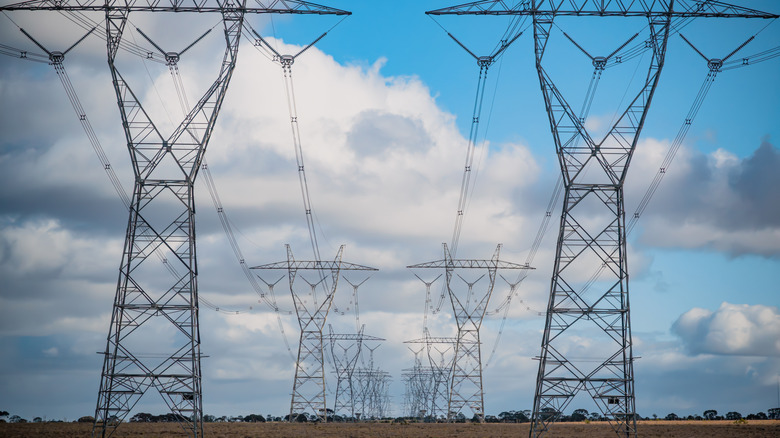
The placement of those dampers is just as important as their assembly and the materials used. Utility companies tend to install them every one or two spans between towers or poles (ultimately depending on conductor size, span length and expected wind conditions). In some setups, they might also use another device called a spacer damper. Those are the things that look like triangles or squares and keep the wires from touching one another while they swing.