

5 '80s Gadgets We Wish Would Make A Comeback
1980 heralded a decade of unique fashion decisions, fantastic movies, music, and TV shows (along with those that perhaps haven't aged nearly so well). Many who remember that unstoppable era will miss the influential technology of the '80s. Now, with all the time that has passed, some technology that seemed so advanced is all but laughable now. Smartphones, for instance, were difficult to imagine for the average person when you consider the Motorola Dynatac 8000X, the first cellphone to hit shelves.
At a hefty 1.7 pounds and with an even heftier price tag of $3,995 (the equivalent of around $11,700 now), it has a critical place in the history of telephone tech, but absolutely no place in your pockets in 2025. Sometimes, though, just sometimes, nostalgia and practicality collide. There are several creations from the '80s that people would love to see make a comeback today, modernized in varying degrees. Not simply because they're remembered so fondly, but because it would actually serve a need and be a sensible idea to do so. Modern technology has transformed society in so many ways, and there's really no comparison between the two eras.
Nonetheless, there are certain niches that it doesn't fill as well as some technology from the past. Crucially, too, the widespread use of streaming services and downloads has resulted in a decline in the availability of physical media. Each of these devices continues to be used today in some capacity, through re-releases and enthusiasts, but has perhaps not quite achieved the level of mainstream comeback they deserve.
Walkman
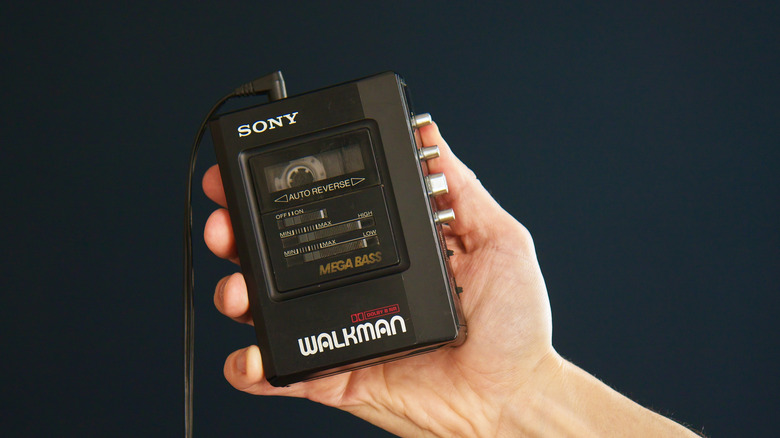
The rise of MP3 players was a fascinating movement to behold. You could own thousands of songs and hundreds of albums without physically owning any of them at all. There's always something to be said for physical media, though, from DVDs to CDs and, before either, the cassette tape. This format's best friend was Sony's Walkman, a portable music player that, to many today, surely looks enormous and impractical. So, too, might cassette tapes themselves. Collectors, however, can't seem to get enough of cassettes.
Northeastern University associate music professor Andrew Mall explained to the Northeastern Global News, "The sales are still minuscule, but what's been bringing it back is the interest in the cassette as an aesthetic object." Vinyl boasts glorious album art that you could display on the wall and a more resilient body that retains audio quality for longer, but you certainly couldn't play one on a portable device. Cassettes are also cheaper and easier to produce.
Both, of course, have that same appeal of actually owning something and building up a collection. In August 2025, Taylor Swift opened up preorders for her upcoming album "The Life Of A Showgirl," with cassette being one of the formats available because, as Mall said, "The cassette didn't ever really die." Neither did the cassette player. A brand-new Walkman model with cassette-playing functionality would be just as niche but would have very real appeal. The Walkman has a fascinating history, and its story isn't over yet.
VHS players
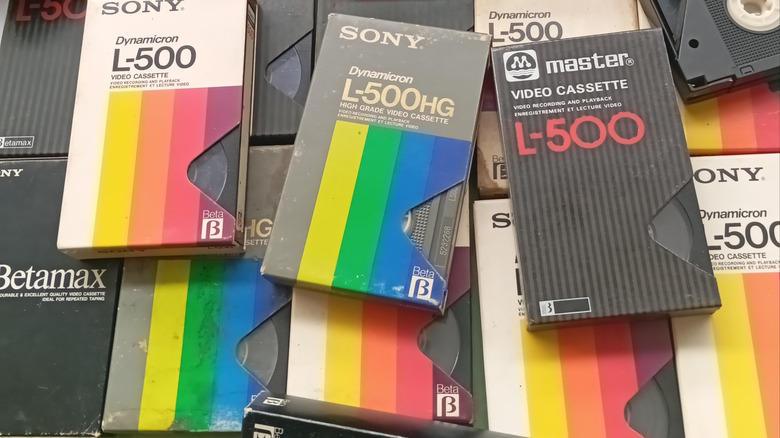
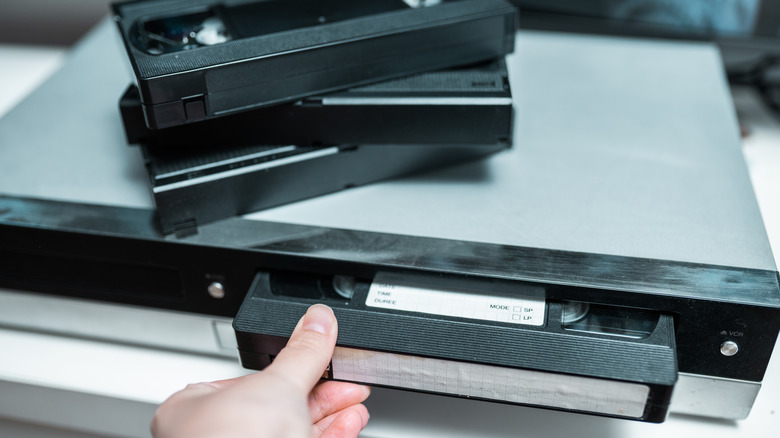
VHS tapes are in a similar situation to cassette tapes in many ways. It's another technology that never disappeared entirely, but it has become increasingly unpopular. Often, though, those who have VHS players are ardent supporters of the format. One YouTube channel showcases the best of the footage it's gathered from old VHS tapes, and communities develop around those who still share the glory of the VCR. The video-loving community has grown somewhat, but this also presents a problem. VCRs are no longer manufactured anywhere at all.
Japan's Funai Electric stopped manufacturing VCRs in 2016, due to declining sales and difficulty securing parts for the format. The company was believed to be the last bastion of cassette player manufacture on the planet. This naturally means that new models are incredibly scarce, and with enthusiasts looking to snatch them up, prices can be unpredictable. Unfortunately, so can the condition of the machine itself.
You never quite know how a system will function when you buy a used one from a store or garage sale, and as Funai Electric discovered, new parts for damaged or worn machines are significantly difficult to come by. That leaves worldwide communities of VHS enthusiasts with growing collections and a difficult time finding reliable players through which to make use of them. There is software that can transfer the content on a VHS tape into digital, but to do so is to deny the physicality of the experience, which is so important to the format's appeal for so many in the first place.
Polaroid cameras
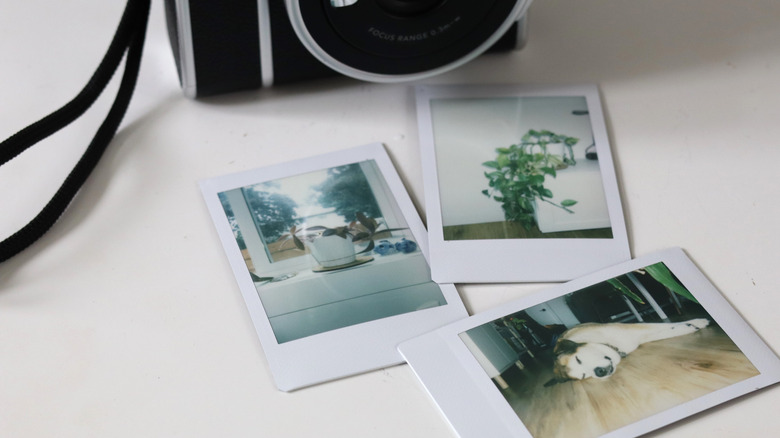
Modern smartphones have large storage capacities that often lead to a tendency to be rather snap-happy. What's needed, sometimes, is a different means of photography. One that is physical and ensures that every image counts. At the same time, it needn't be expensive professional-level equipment. In this arena, one of the defining technologies of the 1980s was the Polaroid camera. The immediate ability to have something to display on a wall or elsewhere was part of the appeal. The camera quality that so many have at their fingertips today means instant cameras have their downsides. After all, if somebody is blurry in a digital shot, you can simply delete it and try again.
If you have the same issue with a physical shot, you've lost one of the valuable photos on your roll of film, and they can be distinctly pricey. The good news for nostalgic instant camera fans is that the technology hasn't necessarily disappeared, and followers have kept it more than afloat. In fact, Digital Camera World magazine noted in December 2025 that Fujifilm's Instax film was proving too popular and production was in need of a boost.
Capacity was boosted through a cash injection of around ¥5 billion (the equivalent of about $32 million) that enabled the country to increase the production of the valuable material by about 10%. Instant cameras are still in considerable demand, then. Fujifilm's Instax camera has essentially claimed the crown from Polaroid. Though the latter initially stopped producing instant cameras in 2007 and manufacturing its film in 2008, it has since returned to the market with a fresh Polaroid range. It would be wonderfully nostalgic to see it as an instant camera powerhouse again.
Slide projectors
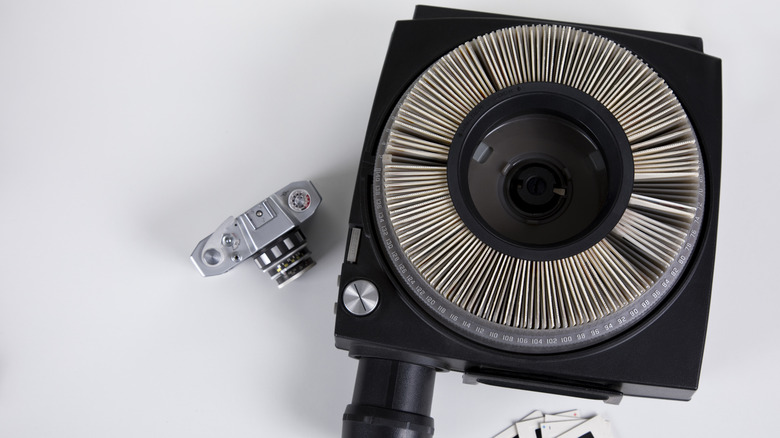
In the 1980s and 1990s, people didn't yet have the joy of sharing vacation photos to social media and family group chats as soon as they were taken, but they could look forward to a night of sharing all those slides with family and friends on their return. So many had family members who had retained a treasure trove of old images from birthday parties, weddings, holidays, and other significant occasions, and in some cases, they're all that's left of many of the people depicted in them. It's true, of course, that services allow for some such content to be transferred to digital, but this depends on the expertise available, potentially risking losing the original.
Those who wish to make use of the original technology on the formats they remember can hope that they will always have allies who can repair, service, and source the machines they require to do so. In 2024, SilvergrainClassics magazine interviewed two such people: Manfred Schmidt and Thomas Fassung, the managing directors of heidi-foto. This store in Munich, Germany, has specialized in analog photography and slide projectors for decades.
Both acknowledge that the format is niche and has become increasingly challenging, with Fassung telling the outlet, "Nevertheless, the procurement of film has become difficult ... prices have risen enormously." Nonetheless, the team boasts the expert knowledge that anybody still looking to use such a machine could need. "If someone only wants to look at a few old slides occasionally, they are ideally equipped with a single-image projector from Leica, for example," Schmidt notes. "The devices are robust and easy to use. If someone frequently looks at slides because projection is an integral part of their presentation style, there is no getting round a Rollei MSC twin."
The Filofax

The pager, really, is the epitome of a device that has one job and performs it with aplomb. Mobile phones also became popular around the same era, but ended up doing absolutely everything else in addition to their original purpose: communication. Another piece of equipment that many a busy 1980s professional would always have had on hand is the Filofax, a large and varied personal organizer for storing names, addresses, documents, other contact details, and work essentials together in one place.
This, too, is often simply seen as a job for a smartphone or other digital software today, but there's no doubt that there's still an advantage to keeping all of this information collated and kept together physically. For those finding their screen time notching up ever higher, it can be an enormous breath of fresh air to spend a little time with a pen and paper, and it seems that Filofax itself acknowledges this. FLB Group managing director Susan Graham told The Drum in August 2024, "We aren't trying to convert people who use digital back into paper, but we are enhancing the paper experience."
Through additional features such as wellness and fitness information to complete, and app functionality that allows the digital and paper realms to be kept synced, the Filofax has remained relevant in its niche, and its appeal could continue to spread. With QR code/app compatibility, and maybe a return to functionality similar to the Anoto text-scanning pen the devices used back at the turn of the Millennium, perhaps it could become a fully-fledged office titan once more.