

Don't Suffer With A Slow Water Heater – Try These Solutions Instead
A water heater is a crucial component in modern homes. It works quietly and tirelessly to provide an immediate, constant supply of hot water for showering, cleaning dishes, and other basic life functions. But despite bringing comfort and convenience, it's an appliance that we tend to take for granted until it breaks down or surprises you with a pool of water in your basement.
Sure, the appeal of water heaters from top brands is that they can last six to 15 years on average with proper maintenance. Still, terrible habits like doing the really complex repairs yourself and neglecting maintenance can shave off precious years from your heater's shelf life. As a result, it will begin to deteriorate, and you'll find yourself waiting in frustration for hot water to make its way to the faucet, only to get a blast of cold water instead.
When this happens, you might be tempted to contact a local plumber. Before paying anywhere from $45 to $150 an hour – just for labor — to have a pro fix an issue, you'll want to try to solve it yourself. After all, as long as you have a basic home tool kit and you don't mind getting dirty or wet in the process, there's a good chance you can resolve the issue without the help of a professional. This way, you will save money and time, and you'll probably prevent a small issue from escalating.
Flush your water heater to remove sediment and mineral build-up
Before you grab your toolkit to fix your slow water heater, it's wise you know the root cause of the problem. One major culprit behind this issue is sediment buildup in the water heater. If you live in an area with very hard water, it's possible that you're not draining your home's water heater as often as you should – experts recommend doing so once a year.
As such, minerals in the water can settle and build up in your heater over time, which, in turn, can cause significant damage if left unaddressed. It can lead to longer heating times, higher energy costs, and, even worse, excess buildup can corrode the tank. This can result in leaks, which can be quite costly to resolve. After all, if your tank has a hole somewhere, you'll probably need to replace it, and a new water heater can cost several thousand dollars, including installation.
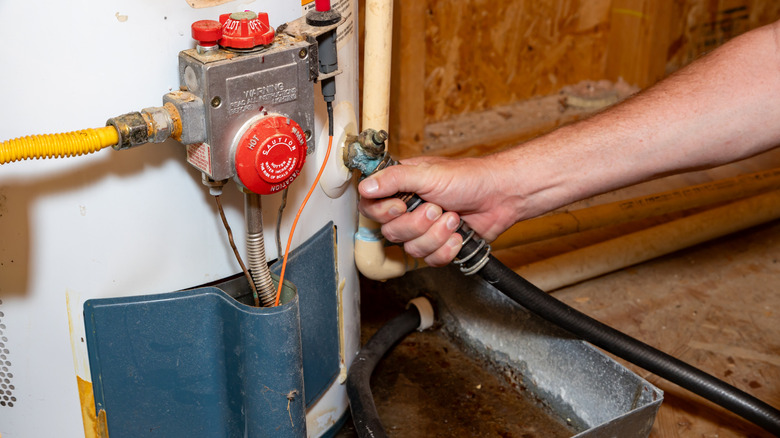
For all these reasons, if you see warning signs of limescale buildup, such as unusual sounds or reduced hot water flow, you'll want to flush your heater. Luckily, draining the sediment out of your tank is an easy DIY plumbing project pretty much any beginner can tackle. To do so, turn off the power and water to your heater and let it cool. Then, connect a garden or generic hose to your water heater's drain valve and run it into a floor drain. Open the drain valve, and while at it, turn on a nearby hot faucet to ease the process. Once emptied, turn the cold-water valve back on to remove the remaining sediment. Don't stop until the water clears. After that, close the drain valve and turn the power to the tank on.
Ways to fix common issues that might affect your water heater

Besides sediment buildup, sometimes the root cause behind slow hot water flow might be a corroded anode rod. The primary function of an anode rod is, ironically, to protect the body of your water heater from corrosion by drawing up minerals and sediments found in the water. Given its duty, over time, the rod will lose its ability to attract the minerals, and you'll probably notice signs of a failing anode rod. Think of rusty water with a rotten egg smell, or maybe strange rumbling noises.
If this happens, you'll want to replace your anode rod – in fact, it's one of the simplest, yet most effective ways of extending the life of your water heater, and experts recommend replacing the anode rod every three to five years. It's worth noting that, although you can replace your anode rod yourself, provided you're handy and have the right tools, it's best you leave this DIY to the pros. While swapping out a corroded anode rod might seem like an easy job, there's more to that, and one small mistake can lead to costly repairs.
If the anode is not to blame, you'll want to check the circuit breaker. You may sometimes find that your faucets are only providing cold water because of a tripped breaker. This can happen due to issues like electrical overloads or short circuits, so try turning off your water heater, then head over to your breaker box. If your heater's breaker is set to Off, try pushing it back to On.