

What's The Difference Between American And European iPhones?
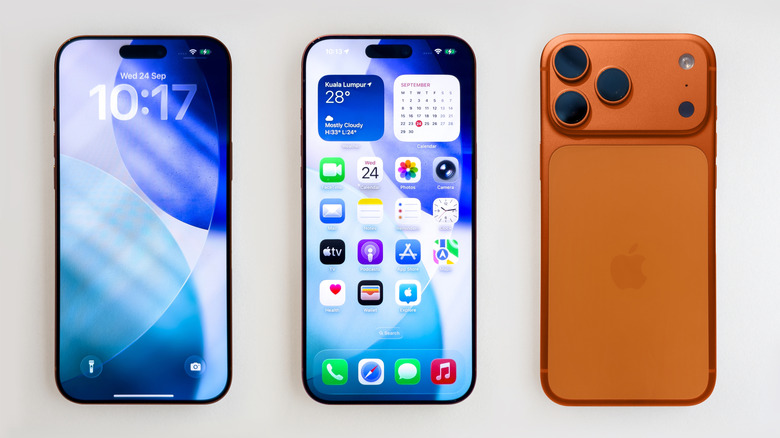
Apple is a global brand, producing high-tech electronics for consumers around the world. But even though Apple is the industry's top smartphone manufacturer, that doesn't mean all iPhones are designed the same way from one country to the next. When it comes to American and European iPhones, specifically those sold in the European Union (EU), the biggest differences come down to hardware, SIM support, and network requirements.
American iPhones typically support mmWave 5G hardware, a very fast but short-range form of 5G that is used by U.S. wireless carriers like AT&T and Verizon in some high-traffic areas. European iPhones often use sub-6GHZ 5G, which actually gives much wider coverage, though peak speeds are usually lower than mmWave, depending on conditions. The reason for this difference is that mmWave 5G networks are much more common in the U.S. than in Europe. The high cost and infrastructure needed for mmWave 5G use outside the U.S. has limited its adoption.
American and European iPhones also handle SIM cards differently. Recent U.S. iPhone models, like the iPhone 17, are eSim-only, meaning there isn't a removable SIM card. Though eSIM phones have their pros, it's not all roses, and Apple does offer more flexible SIM options in Europe. European iPhones typically have a physical nano-SIM slot along with internal eSIM, giving carriers abroad more options for travel connectivity. Also, iPhones sold in EU countries must adhere to the CE standards, which marks them as compliant with EU environmental, health, and safety regulations.
European iPhone features beyond hardware
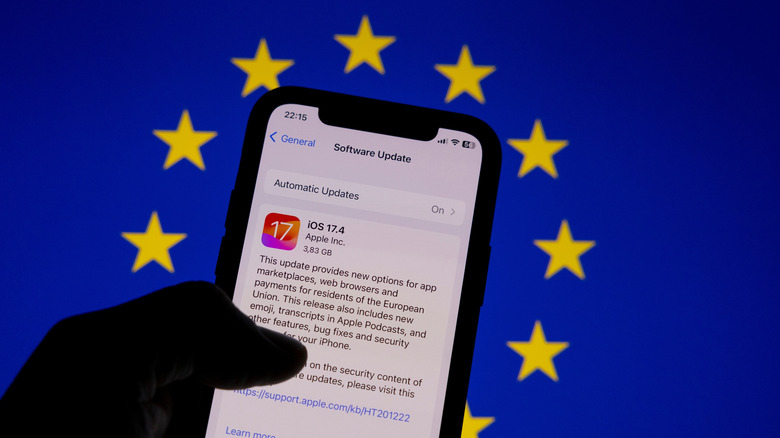
There are differences between iPhones sold in America and Europe beyond their physical construction, most notably in how payments are accepted. That's because of the European Union's Digital Markets Act (DMA), which applies to iPhones sold in EU countries. The DMA requires Apple to add the ability to use alternative payment options outside the App Store, a platform that changed the way we get software on our devices. This also includes enhanced safeguards and disclosures for EU consumers before they make any purchases.
The DMA also mandates that users in EU countries have the opportunity to use the web browser of their choice. As a result, Apple has included a default browser choice screen for iPhones sold in EU countries using iOS 17.4 or later. This means that Safari isn't automatically the default option, which meets overall EU regulatory requirements. Software developers also gained the ability to distribute apps to those iPhones, which led to Apple's App Store changes in 2024. European iPhone users could choose apps from third-party stores or through direct downloads as well.
iPhone customers in EU countries also benefit from different warranty and consumer protection standards than users in America. Under current EU law, all sellers, including Apple, must provide a minimum two-year legal guarantee that covers all faulty and misrepresented products. This gives EU consumers rights beyond the Apple one-year limited warranty for iPhones and other devices sold in America.