

This Pocket-Sized Gadget Is Designed To Lock You Out Of Addictive Apps
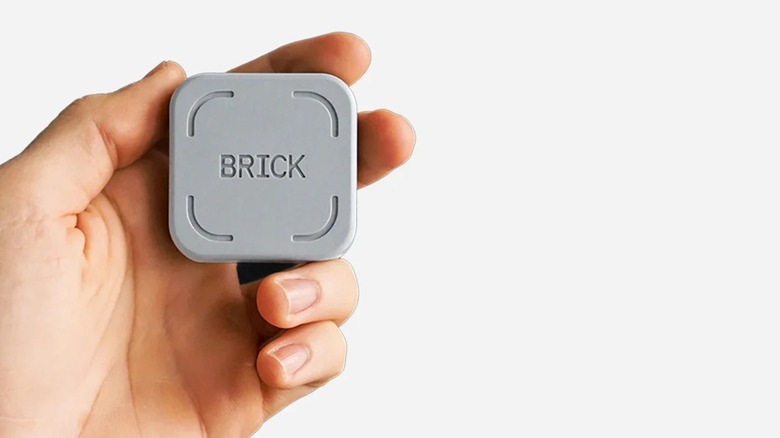
In a world where every app competes for our attention, it's no wonder phone addiction is a growing complaint. While there are many gadgets designed to enhance focus, your phone can be a productivity hub, too. Still, let's be honest, with social media companies designing every aspect of their apps to keep users hooked, a constant barrage of increasingly concerning news alerts, and all the other digital distractions we've grown accustomed to, how can the average user expect to maintain focus without getting sucked into a black hole of doomscrolling?
That's where Brick purports to enter the picture. It is a small, plastic square, about the thickness of a large smartphone, which contains an NFC key. When paired with the companion app, the company (of the same name) claims it's the solution to your phone addiction. Much like your iPhone's Apple Screen Time feature or Android's Digital Wellbeing, the Brick app will lock you out of the apps of your choosing or restrict the time you can spend on them before they lock you out. The crucial differentiating factor is that you cannot unlock restricted apps without tapping your phone to the Brick device itself.
But is Brick really the quick fix it claims to be? We are awash, of late, in gadgets that claim to curb your digital dopamine addiction. There are minimalist phones and dumb phones, time-locking phone safes, and innumerable apps aimed at keeping your smartphone from getting in the way of your productivity. Brick is certainly a unique product, but it's far from the only one in this niche. To figure out whether it's a silver bullet or snake oil, we combed through product documentation, user reviews, and took a look at alternative digital detox tools you can try.
Brick breaks your phone on purpose to keep you focused
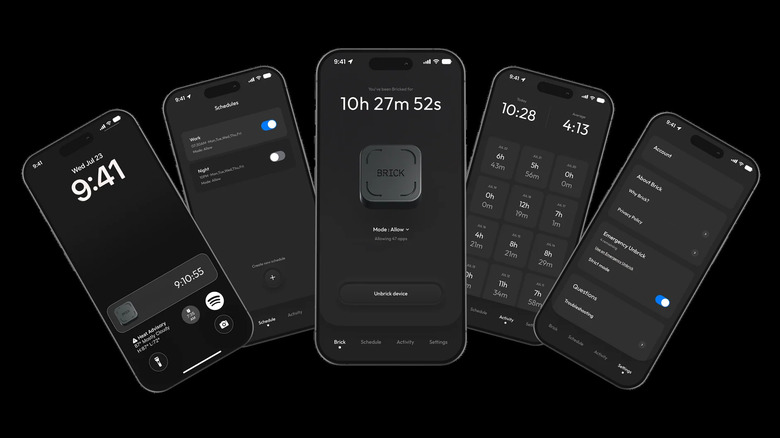
There are many strategies available to those who wish to reduce smartphone use, but Brick takes the cold turkey approach. After telling the app which other apps you'd like to block your access to, you simply tap your phone to the Brick, and they become inaccessible. Unlike your phone's built-in app restrictions, you cannot ignore the block or add extra time to the meter. Only once you again tap the Brick with your phone will they become accessible once more. There is even a Strict Mode, upon the activation of which you cannot uninstall the Brick app or fiddle with blocked apps to regain access. This requires device admin access on Android.
The obvious question is what happens when you lose your Brick. Brick will give you five free "emergency unbricks" for when you misplace your Brick but urgently need to get back into an app. Allowing only five such uses is clearly designed to ensure that you won't cheat, but after they're used up, you'll need to file a petition with Brick in order to receive any more. The system is great for those who can leave the Brick at home, but reviewers for The Independent and Consumer Reports report giving in to temptation and unlocking it. Sure, you could stick the Brick in another room while you work from home to force a physical action between you and Instagram, but it won't be a total shut-out.
Brick will let you create up to ten custom modes, so you can choose which things are being blocked and restricted depending on the situation — blocking social media apps during work hours, work apps at home, and so on. You can also create schedules to activate particular profiles at set times.
Brick is competing with secondary phones and little guys who live in your screen
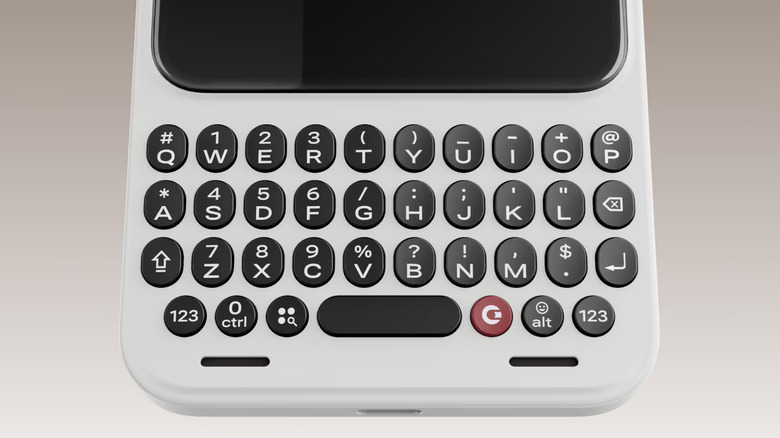
Brick is far from the only tool aiming to set you free from doomscrolling. Gadgets and apps have attempted to fill that niche for a long time, to varying degrees of success. Last year saw a marked uptick in such products breaking through, at least among gadget enthusiasts. Minimalist phones hit a stride in 2025. There was the Light Phone III, a bespoke smartphone with a black-and-white operating system that can make calls and texts, pull up directions, play music and podcasts, and not much else. The bluntly named Minimal Phone was similar in its approach. More recently, the Clicks Communicator brought back BlackBerry nostalgia with a phone designed to be great at messaging. Although it promises to be a great all-around Android phone when it ships later in 2026, the Communicator's form factor is ill-suited to distracting apps that waste your time.
But those solutions require you to embrace an entirely new phone. So, what about apps you can install right now without spending a dime? Minimalist Phone Launcher works on both iOS and Android, replacing your home screen with a black-and-white list of the basics and providing the expected timers and app restrictions. Or, if you simply want to put your phone away altogether, try Focus Friend (iOS/Android), wherein an animated kidney bean will knit socks on your screen, losing its progress when you give in to the temptation of scrolling. Forest (iOS/Android) is similar, but with growing plants. Many people will find themselves simply disabling or ignoring these solutions, but they may be worth a try before dropping cash on a second phone or a Brick.