

16 Ways DIYers Can Use Milwaukee's Laser Level, Other Than Building A House
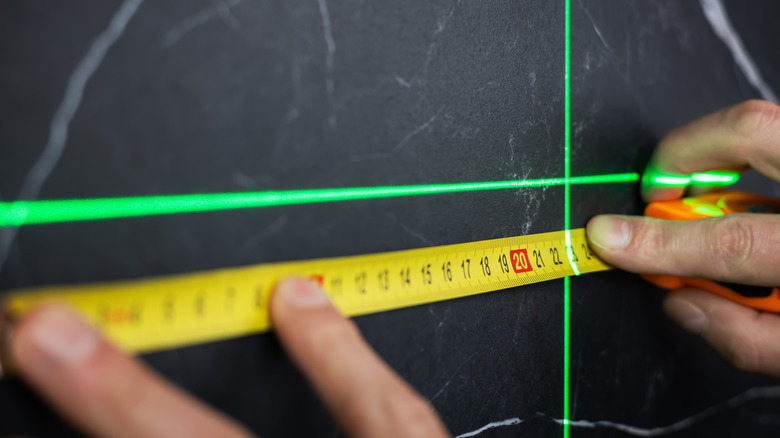
Milwaukee's M12 laser level is the definition of fun and functional, and it does so much more than your average bubble level tool. As with other laser levels, Milwaukee's version projects a beam of light onto your work surfaces. Instead of limiting itself to a small area, the beam travels up, down, and side to side to create a level line you can use to guide your next steps. And once it's set up and turned on, it's completely hands-free, so you can keep working without stopping to check levelness after every little tweak.
Such a useful piece of equipment is obviously important when building a house, but it can be useful for small-scale projects, too. The average DIYer has plenty of reasons to invest in this type of leveling tool. Here's a look at 16 ways you can use a Milwaukee laser level, even if you're not building a whole house.
Create a photo gallery wall with precision

A gallery photo wall looks effortless when done right. In reality, it usually starts with a person standing in the living room, holding a frame in one hand, a tape measure in the other, and a look of consternation on their face. But a good laser level can remove the guesswork from the process and make things move smoothly, faster.
Eyeballing each frame takes some serious guesswork and confidence. You never notice what's off kilter until you hang the second photo, and then the third. Milwaukee's laser level will keep all of your photos in line without losing your mind. Use the green laser beam to map out focal points on the wall and arrange your gallery design before you start. Keep the laser in place to ensure you stay aligned as you work, so you don't have to redo it. Your eyes can enjoy a professional-looking photo gallery without stumbling over uneven lines and imperfections.
Cut stick-on tile sheets without guesswork
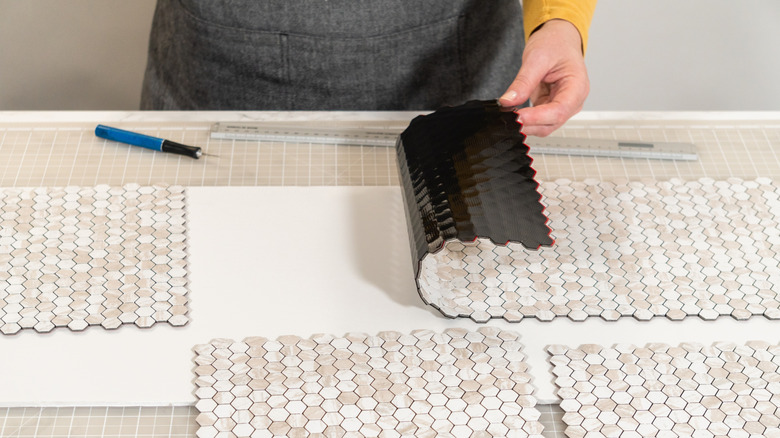
Stick-on tiles have become the new cheat code for renters, or for homeowners who can't make up their minds. These peel-and-stick tiles give you a cheap way to dress up your home without a long-term commitment. But just like with regular tile, these tile sticker sheets need to be laid with care and precision. Otherwise, you might not realize the pattern is drifting until you're three sheets in.
While it looks easy, there's more to it than cleaning the wall, peeling the tile, and sticking it in place. You want to make sure that grout lines still line up by the time you reach the other end of the room, especially if you're having to cut tile sheets to size. A laser level can help with all of the above, giving you a guideline so you don't drift off at an angle. Use the laser beam to ensure you're cutting each row dead straight, lining up corners, and keeping a consistent pattern. The result is an intentional design, and no one needs to know that you used the peel-and-stick method.
Spot low sections in your yard
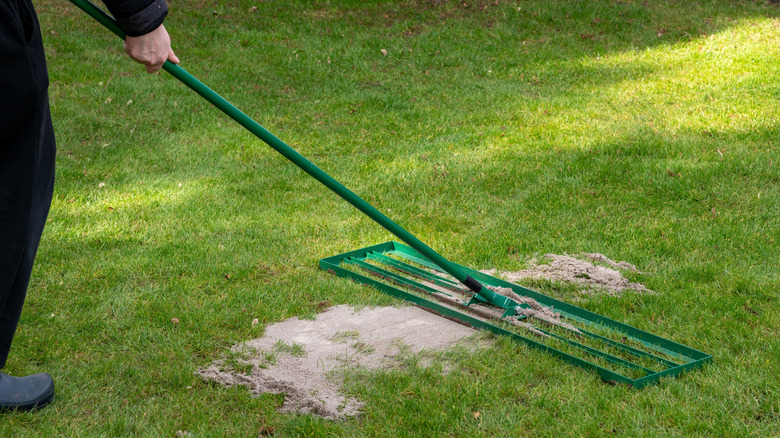
Your yard might look flat, but one good rain will point out all of its imperfections. And once the sun comes out to dry things up, you might forget where those low spots were in the first place — which keeps you from doing anything about them. What you really need is an easy way to spot the problem, ideally before the next big rain. A laser level is the answer.
Milwaukee's laser level can give you new perspectives quickly, rain or shine. Set it on a tripod and run the beam over your yard. Low spots on the ground will reveal themselves, so you can mark them and decide how to address them. This is a helpful cheat code when you're planning new yard projects, like improving drainage in a certain area or figuring out where to add new soil. Even better, it takes just seconds to tell you what you need to know about your yard's terrain.
Find or make level spots in your yard for pools or trampolines
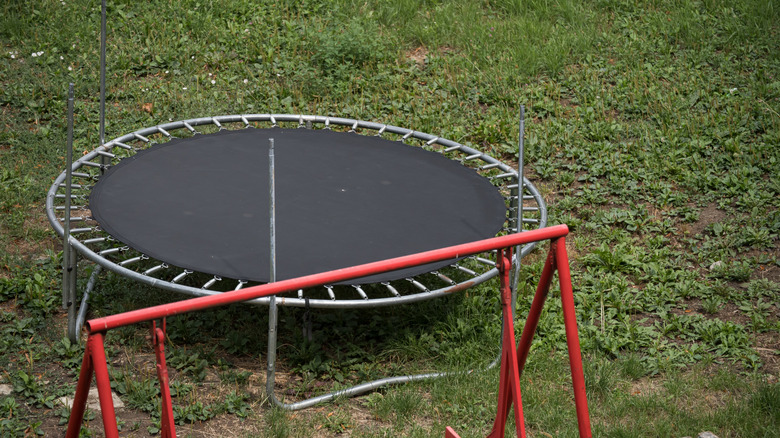
A level yard is nice to have. But it's absolutely essential for anyone who wants to build something that requires stability. This is always the case with swimming pools, trampolines, hot tubs, outdoor sheds, and similar items. These additions are large and heavy, and even a small difference in height from one end to the other can put stress in all the wrong places. Whatever you're building won't look right when it's finished, plus it might be unstable to the point where it's not safe.
You might use your laser level to narrow down locations in your yard first. Then use it again once you've found that ideal spot and get nitpicky about its levelness. Precision matters with these types of projects, and a laser level adds visual depth and a whole lot of confidence to the mix. Instead of guessing with a flat board and a bubble, you can rotate layouts, shift a few feet at a time, and get the full view before you lay the groundwork. It's an affordable way to avoid making time-consuming mistakes.
Ensure your new flooring is level
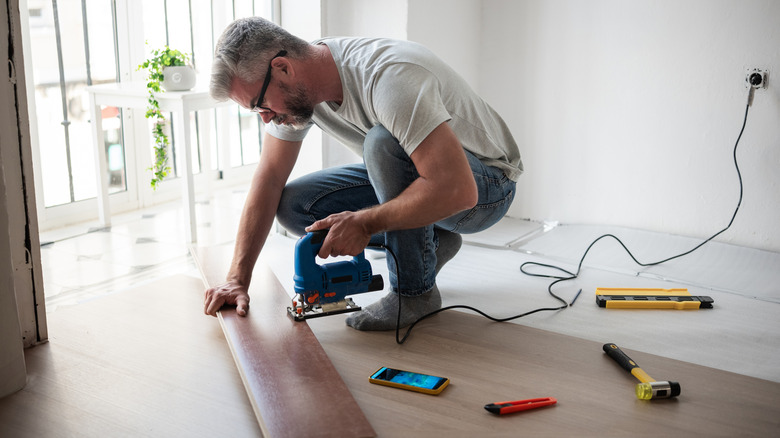
Leveling new flooring isn't something you'll do every day, or even every year. But when the time arrives that you're ready to upgrade your home's flooring, you'll want to do it once and only once. You're going to walk on this floor every day, probably multiple times per day, and any little variance in height will make itself known to your feet.
Milwaukee's laser level can come in handy with this type of project. It can reveal issues you might not notice with the naked eye. For example, a low spot might indicate an issue with the subfloor. A plank might be raised slightly higher than the others. By the time you're done, your room can feel smooth and put-together in a way that's hard to explain but easy to appreciate. Even if you're just trading one carpet for another, it's better to take a little extra time to ensure it's just as level (or more so) when you finish.
Properly fit windows and frames

Windows are another opportunity to use Milwaukee's laser level, though it's not one you'll use every day unless you install windows for a living. Still, when you do have projects like this come up, a laser level can take some of the time, pain, and guesswork out of the process.
There's nothing quite as irritating as a crooked window. Other than the lopsided way it looks, it will also affect how you hang your curtains or blinds, the trim, and even how the light hits the room. The laser becomes a second set of eyes. You don't have to rely on hunches or "good enough" installation. When you're done, all the caulk lines will look even, and the window will open and close without scraping. You might not get many compliments, but at least no one will be talking about how off your windows look.
Create unique tile layouts like an expert
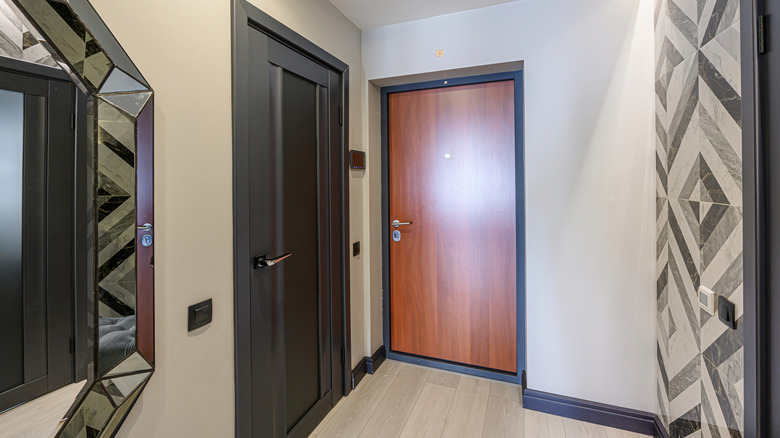
Creative tile designs look fun on Pinterest, but they're risky in real life. Without careful hands, they almost never turn out the way you want. Trends like herringbone, chevron, or alternating runs sound like a good idea until you start laying the tile and realize how quickly a pattern can get off course.
Laser levels like Milwaukee's can make projects like these feel less daunting. They make it easy to say "yes" to trying something new and out of your comfort zone. Once you line up your laser, you can start measuring and marking out your tile pattern with a clear structure. Depending on the size of your space and the tiles themselves, it's a process that would be nearly impossible with a regular bubble level. Having a laser on at all times lets you pause, take a step back, and reassess your work so you don't get too deep in the weeds if you make a mistake.
Get clean lines when painting wall designs or murals

Painter's tape isn't always enough to get crisp, clean lines when you're painting, especially when that tape arranges to form some sort of design. No matter how many times you measure, your starting point at the top of the wall doesn't always meet the same spot at the bottom. Even a slight slant is enough to throw off your whole design.
If you're painting a unique design on your wall, you'll want to mark it with a laser level first. Use the laser to show you where the painter's tape needs to go. It gives you clear guides that a regular level can't match. It will save you a whole lot of measuring and marking, not to mention the frustration that comes with slight variances in your lines. You don't have to measure and re-measure with every brush stroke. It's a simple way to make your homemade mural look less homemade.
Hang curtains right the first time

Curtains and all their hardware can be a hassle to hang. They're not easy to eyeball, especially if you're stretching them across multiple windows. You might think you have it all figured out, but when you're done, one panel hovers gracefully over the floor while the other panel is kissing it. Even if you're lined up perfectly with the window, your curtains might hang askew because something else is off, like the trim or the window itself.
Milwaukee's M12 laser level can correct a crooked curtain. Instead of starting with a rod and hardware, you start with the room itself. The laser runs a clean line across the entire area where you want to hang your curtains. You can see the big picture while you tweak and adjust your mounting spots before drilling. Take the opportunity to play around with height and length, then mark your brackets and proceed with confidence.
Align and level fencing sections

If you're installing a new fence or making adjustments to an existing one, a laser level like the M12 is essential. With fences, you're working with multiple short sections spanning long lengths. While each section might look even and sturdy, looking at the whole fence at once may tell a different story.
A laser level can help you spot every dip or wave before you finish the job. As you set posts and secure panels over uneven terrain, you can trust the constant presence of the laser beam to keep everything in line. This means not having to resort to pesky string lines, or worse, having to dig up posts that have already been set. Your fence can look clean from every angle with a lot less effort (because fence installation is time-consuming enough). It all comes from taking time to line things up right the first time.
Install drop ceilings that look professional
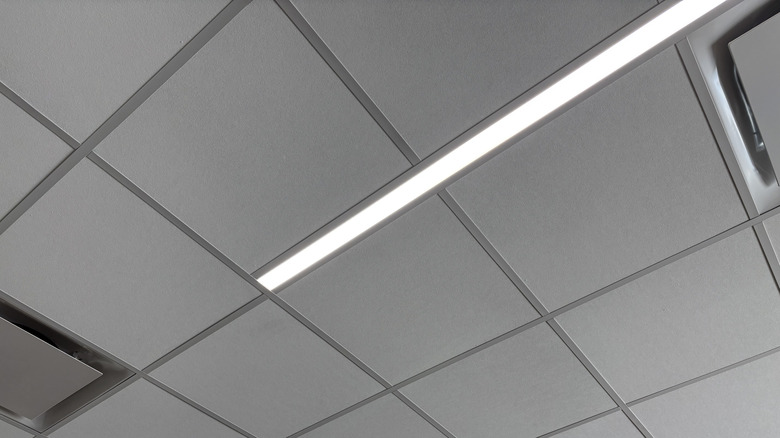
There's very little forgiveness when a drop ceiling isn't perfectly flat. A single tile that sits too high or low give it away instantly. Using a laser level throughout the process can help. Even if you're using chalk lines, you have to consider that other elements in the room might not be level, and those chalk lines can only do so much. You might be dealing with slanted walls or sloped floors without realizing it, and that can throw off any "eyeballing" you do.
The laser level can reveal these and other issues you might not think to look for. You can maintain the height of each grid section regardless of differences between walls and floors. There's no need to check every section with a bubble level. Just glance at the laser light and keep moving. Having clean, consistent lines as a guide makes everything else easier.
Add trim or molding to walls and ceilings

Trimwork seems simple enough — until you start doing it. Maybe you didn't quite angle the corner enough while you were cutting, or maybe the first piece you nailed wasn't completely straight, which will throw off the placement of your second piece (and then your third piece). Whatever the case, you can get cleaner, straighter lines when you have a laser guide.
No one wants to spend extra time shaving off bits of trim or molding here or nudging a piece there. Since the laser can stay on for as long as you need, it acts as a constant guide while you work. You have a clear starting point and as many subsequent markers as you need. It beats taking out a handheld level every time you make a move. The result is usually a professional-looking space where trim complements the room instead of distracting from it.
Map a site layout for projects

Some people treat every room or spot in their yard like a blank canvas. They envision all the things they can do in that space and how much they can fit within it. But big projects can fall apart quickly if you don't have a clear layout. Even with the best materials and a dream vision, spacing that feels off or doesn't line up can make everything else harder.
Laser levels like the M12 can add some grounding and reality to your project before you begin. Maybe you want to turn your backyard into a patio or social hot spot, or set up an event in an empty lot. Whatever the case, laser beams will help you mark straight lines and square corners to keep your project contained. This makes it easy to line up walkways with physical structures or place equipment pads where they belong, for example. You can spot potential conflicts early before they interfere with the end result.
Line up plants and irrigation systems over long distances

Planting a few flowers is easy. Lining up dozens of plants across your entire property is a bit more challenging. Things might start straight, but they have a tendency to curve as you move down the yard. By the time you're done, the row looks like it wandered off on its own. Using a laser level throughout the process can help to create a neat-looking array.
Whether you're planting trees or shrubs or installing an irrigation system, a laser level helps you make a plan before you start. You can use the beam to map out a planting route. Use the laser throughout the process, or just keep it on long enough to stake out specific points along the way. Digging and planting take too much effort to do twice. A laser level can help you avoid simple mistakes and make sure nothing crosses or wanders where it shouldn't.
Install large pieces like cabinets or shelves
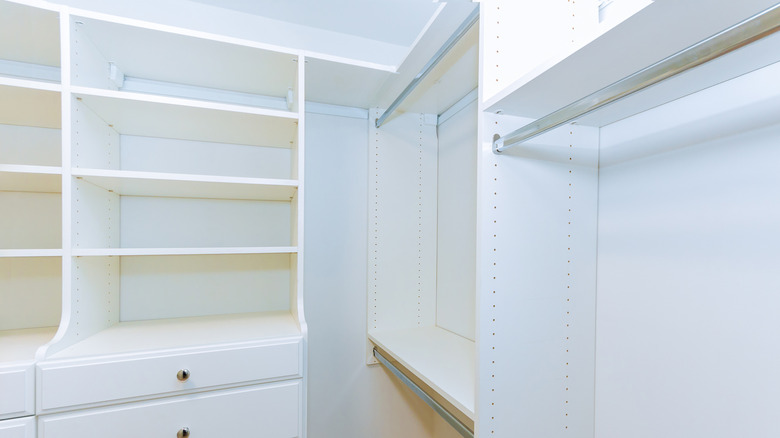
Big pieces can make small mistakes look obvious. A cabinet system or shelf that's off by even a fraction of an inch can throw the whole wall out of balance. Plus, the contents may end up drifting or rolling to one side (or slide off altogether). And once those large, heavy pieces are anchored, fixing them feels like too much of a chore.
Using a laser level helps you do the job right the first time. You can line up the tops or bases of your cabinets and shelves in one fell swoop and know exactly where to drill next. A thin, glowing line is the only target you need. Multiple pieces all reference the same clean line of sight instead of each other's mistakes. The hardest part will be the lifting and installation instead of the prep work that takes you to this point. At the very least, you'll save some time for yourself and protect your walls from some unnecessary holes.
Level a deck or patio

When installing a new deck or patio, there's no room for error when it comes to a level surface. One low corner can cause water to pool where it shouldn't. It puts too much in some areas and not enough balance in others, which can weaken the structure and shorten its lifespan. With a laser level as a guide, you can avoid small issues that will eventually turn into major problems.
Milwaukee's M12 laser level comes in handy at every stage of your deck or patio build: grading, pouring, digging, framing, you name it. You can start the project with a level foundation, keep the framing aligned, and create the right slope for drainage so you don't end up with water damage later. Adjustments to a project like this are easier when they happen early. And when you're done, everything should feel right: the furniture sits flat and water drains where it should. Walking barefoot on the deck or patio surface feels smooth and stable. Starting with a level playing field makes a difference.