

15 Vintage Motorcycles That Have A Surprisingly High Resale Value
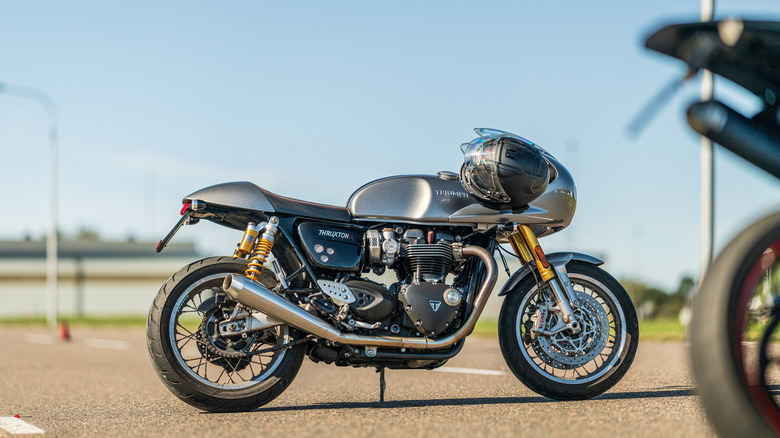
Most bikes tend to depreciate like falling anvils, immediately losing a chunk of value when ridden off the dealer lot, and then about 10% more each year for the first few years. After a while, (common belief is after about five years), the depreciating slows, and the vehicle retains what little value it has left. That statement, of course, depends heavily upon the make, model, rarity, and condition of the bike in question.
However, certain vintage motorcycles completely defy that rule, holding their value quite well against the test of time. Some of the bikes on this list — many of which are among the most iconic motorcycles of all time — have retained 50% of their when-new value. Others still sell for their MSRP, and yes, we've accounted for inflation. A few models have also appreciated so heavily that they sell for many times their original MSRP, even when inflation-adjusted.
For the purposes of this post, we are defining "vintage" as any motorbike that was produced in the year 2000 or before. It was around this time that modern tech like ABS and fuel injection systems were becoming standard on bikes, and design languages were also fundamentally changing. With that said, here are 15 vintage bikes that laughed at depreciation curves.
Honda CB750
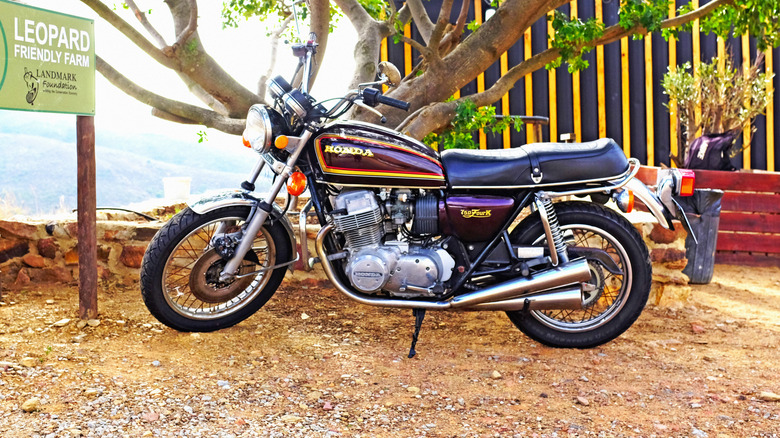
First up, the Honda CB750 is widely considered (by enthusiasts and experts alike) to be the first "superbike" to ever exist. The first-generation CB750 ran for exactly a decade, being in production from 1969 to 1978, and was initially revealed at the Tokyo bike show. It is safe to say that most of the world was caught off-guard by the CB750 as it had something extraordinarily revolutionary (for the time, anyways): a four-cylinder engine. More specifically, the bike had an inline-four engine that was fed by a lone overhead cam, with a bore of 61 millimeters alongside a stroke of 63 millimeters.
For those doing the math; that's a displacement of 736cc, which isn't quite at the 750 mark, but OEMs have a tendency to round their engine displacements up. Either ways, we're not complaining, as the CB750 truly was a class apart. It had an electric starter, it had flamboyant 4i4 exhausts that were absolutely doused in chrome, and it looked gorgeous. When new, the original CB750 would cost $1,495, though today, values are closer to $6,600.
Yamaha RD 350
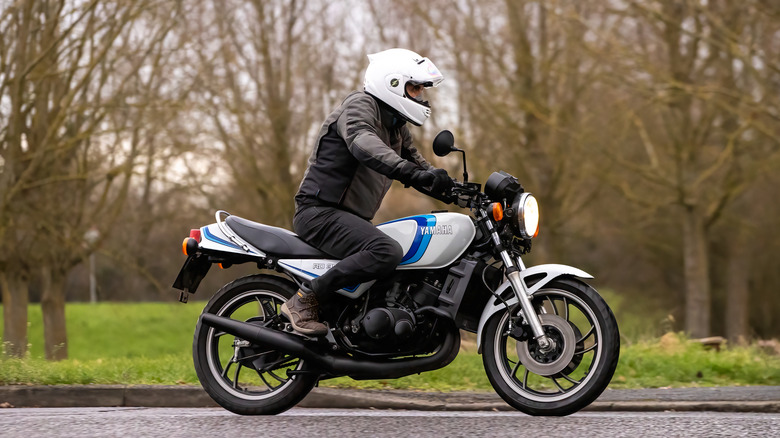
The R350D was released in 1973, intended as a successor to the legendary Yamaha R5 350, which was quite popular at the time. The engine was largely a carry-over from the R5, with the bore and stroke copy-pasted over to the new model; though several new technologies were also added, chief among which were reed valves, "borrowed" from the Yamaha adventure bike category. This engine made about 39 hp at a screaming 7,500 RPM, along with 24 lb-ft of torque, and was mated to a five-speed transmission featuring chain final drive.
For those wondering, the "RD" in the name is an acronym for "Race Developed", even though today some may scoff at the 350cc displacement figure. Though not as impressive in terms of dollar values; in strict percentage terms, the RD350 is right up there with triple-digit appreciation. When new, it used to cost under $900, with a base MSRP of $839. These days, however, selling prices easily saunter past the $5,000 mark for examples that are in good nick.
Kawasaki Z1 900
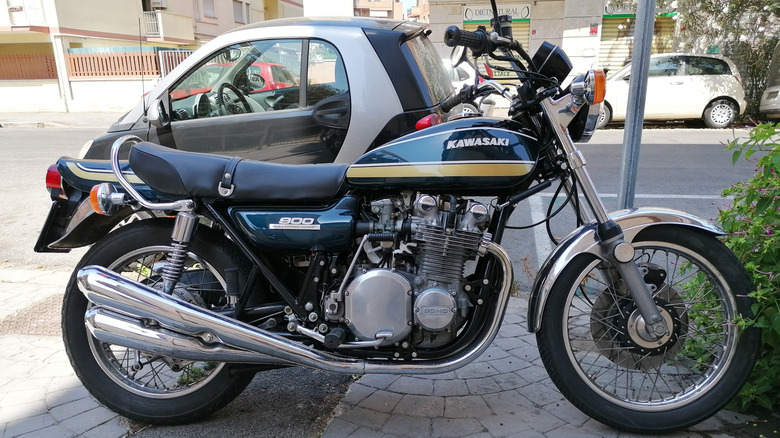
Even though the R350D was a good investment, this next one blows it out of the water. The Kawi Z1 900 was an amazing machine from the factory, but even so, many owners chose to bore out the engine (a process that is known as a "big bore" conversion in enthusiast circles) and turn the bike into a cafe racer motorcycle. However, for our purposes, we'll look at the stock configuration on the bike. For starters, the engine had a displacement of 903cc across four cylinders; which came about courtesy of a stroke of 63.5 millimeters and a bore of 63.5 millimeters.
This engine (making it the fastest bike in the world at the time) would be mated with a five-speed transmission that would drive the rear wheel via chain final drive, with a disc brake in the front and drum at the back. In terms of power output, everything put together gave the Z1 900 figures that were quite respectable for the time, coming in at 82 hp at 8,500 RPM, alongside 54 lb-ft of torque from a more palatable 7,000 RPM. And as far as prices go, the original sticker price for one of these back in 1972 was $1,895; but today these models frequently cross the $10,000 mark if and when they come up for sale.
Suzuki GSXR-750
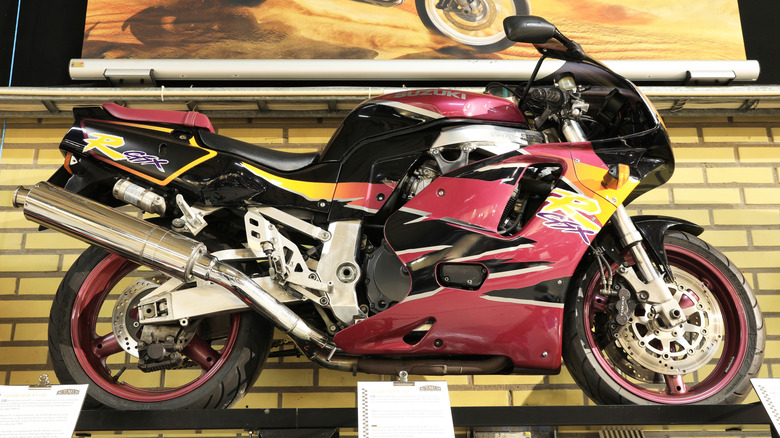
The Suzuki GSXR-750 takes us back to 1985, the glory days of sportbikes. At the time, the bike world rivalry was heating up, which explains why the Gixxer 750 (an affectionate nickname used by the bikers of the era) had such a loaded-out spec sheet. The engine displaced 749cc across four cylinders and featured a bore of 70 millimeters and a stroke of 49 millimeters.
The transmission was a six-speed unit with a wet multi-plate clutch and disk brakes, with the whole thing riding on 120/60 tires at the front and 160/60 tires at the rear. Final drive was of a chain nature, and notable features on the model included quad-caliper front brakes and a 5.5-gallon fuel tank. In terms of price, it would run buyers a cool $4,499 in 1985 dollars, which, adjusted for inflation tallies to $13,500 today. On the rare occasion of one coming up for sale these days, prices can be expected in the ballpark of the $4,000 mark.
BMW R80GS
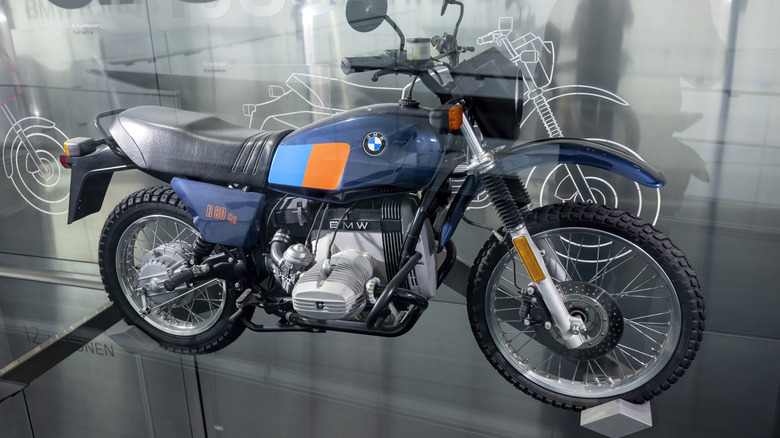
Next up, we have one of the best BMW motorcycles ever to have been made: the BMW R80 GS. This legendary adventure touring bike was a bit of a Frankenstein project, cobbling together bits and bobs from various models that had come before it, and it quickly became a segment-leading icon. And the segment that we speak of is none other than the now-famous DS segment, where the letters stand for "Dual Sport."
These refer to bikes that are good both on paved roads, as well as on trails where earlier only motocross machines would dare to venture. A fun fact that only the most well-versed enthusiasts know is that "GS" stands for Gelande-strasse, which literally translates to "off-road on-road" in English. The Mercedes G-wagon, derived from the military Gelandewagen of the 80s shares the first part of the name — if you didn't know now you know.
Anyway, back to the R80 GS, that featured a two-cylinder engine that displaced 797cc, and was paired with a five-speed transmission. This powertrain made the princely sum of 50 hp and 42 lb-ft of torque, and was priced at $4,800 in 1980. Today, models can sell for upwards of $4,000, which should surprise nobody.
BMW R90S
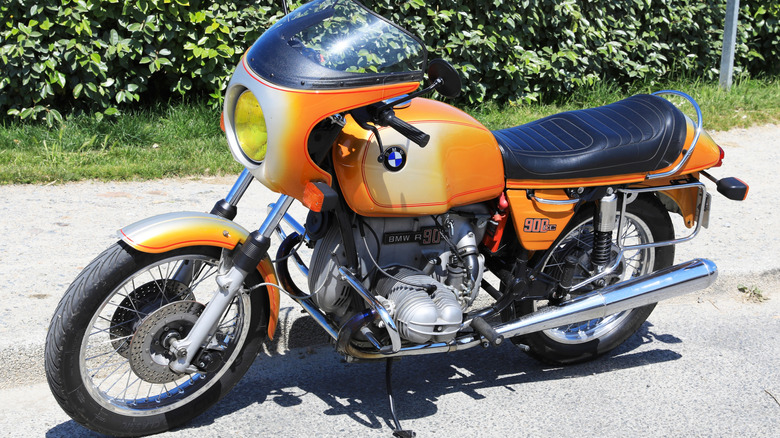
Next up, the BMW R90S, which was released way back in 1974. This is definitely one of those BMW motorbike models that absolutely needs to make a comeback (which can also be said for the R80 GS that we covered above). The engine in the thing was a 898cc two-cylinder unit with a bore of 89 millimeters and a stroke of 71 millimeters, with fancy new technologies and elements like dual disk brakes and a custom handlebar fairing. The engine would be mated to a five-speed transmission that had shaft final drive, and the entire thing would come in at 474 pounds.
In terms of power output, figures were stellar for the time period, coming in at 67 hp and 56 lb-ft of torque, which was available from a respectable 5,500 RPM. Surprisingly, the base MSRP for the R90S was lower than for the R80S, coming in at $3,430 when new. Today, even R90S "project bikes" – which is a nice phrasing for examples that aren't ship shape – sell for $10,000 and above.
Honda XR650R
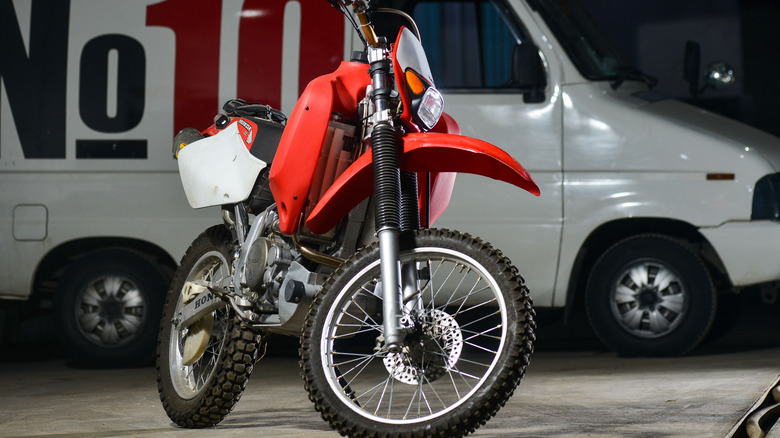
This next model didn't appreciate in value, but it did retain quite a bit of its sticker price. Allow us to introduce the XR650R from Honda, that sold for $5,999 when new in 2004, but that sells for around $5,000 in today's market. We like to compare the XR650 to the Toyota Land Cruiser; as it too, was rugged, reliable, with absolutely zero frills, and just a tad bit overpriced. And when we say no frills, we mean it: the front suspension was telescoping, the rear was a pro-link adjustable mechanism, the starter was kick-only, and the wheels were aluminum.
It came with a 649cc engine that had one cam and one cylinder, making 61 hp and 47 lb-ft of torque at an eye-watering (and eardrum-shattering) 5,500 RPM. This engine would send power to the rear wheel via chain final drive routed through a five-speed transmission. Production for the model ran from 2004 to 2007, which is when this particular bike was discontinued, though Honda continues to offer newer, smaller models in the class even today, such as the XR150L.
Ducati 900SS
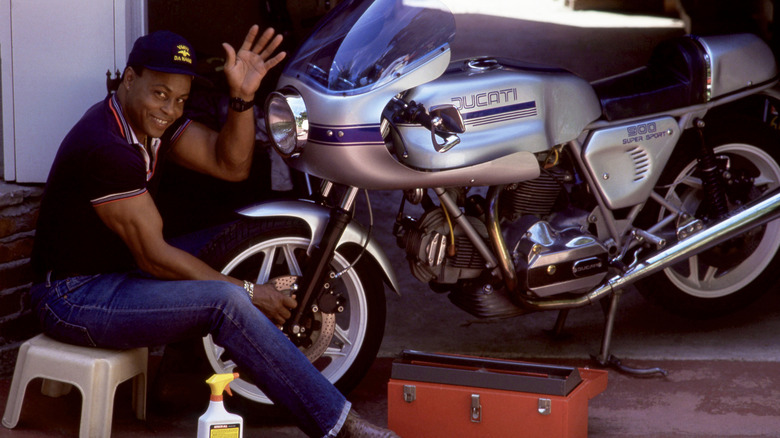
We're back to Europe with this one. With "Super Sport" right in the name, the Ducati 900SS had an 864cc engine that spread displacement across twin cylinders with a bore of 86 millimeters and stroke of 79 millimeters, mated to a five-speed transmission. This setup produced the ungodly figure of 80 hp along with 57 lb-ft of torque from 6,500 RPM, which explains why the bike was so dominant in motorsport. Though we couldn't find a reliable source that listed an MSRP for the "regular" 900SS, we do know that the top-shelf Ducati 900 SS version retailed for $6,000.
If we were to make an educated guess, the MSRP for the 900 SS would be about $1,000 less than that figure, but either way, it pales in comparison to the prices these bikes fetch today. As they were never sold in the U.S. as domestic models, we looked at pricing data from across the pond in the U.K., where these bikes sell for over $30,000 in the rare instances where they come up for sale; so good luck getting an import.
Harley-Davidson FXRS
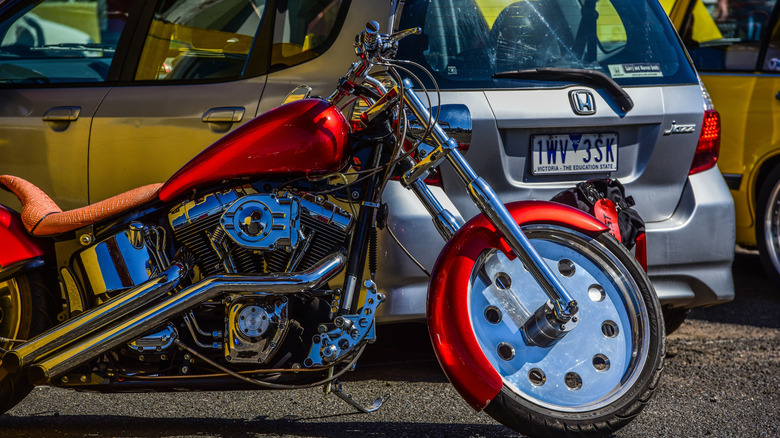
Our first American-made motorcycle on this list comes to us in the form of the Harley-Davidson FXRS, colloquially known as the Low Rider. It wouldn't be an exaggeration to say that the FXRS was one of the most significant motorbikes in the history of Harley-Davidson. By all rights, the FXRS was right up there with the FXST, which was the first Harley to receive the new Evolution, or "Evo" engine after the disastrous AMF years. The Low Rider also came with the all-new (at the time) Evo engine that displaced 1,337cc across two cylinders in a V-Twin layout, with a bore of 89 millimeters and a stroke of 109 millimeters.
The transmission was a four-speed unit that delivered power through chain final drive, featuring a quarter-mile time of about 14 seconds. In terms of pricing, we don't have exact data, but since a Super Glide II ran buyers an eye-watering $6,999 back in 1984, the FXRS was probably similar, and readers will probably be surprised to learn that today, these bikes still sell for around $6,000. Of course, depending on condition and mileage, that price could (and does) climb way higher.
Triumph Bonneville T120
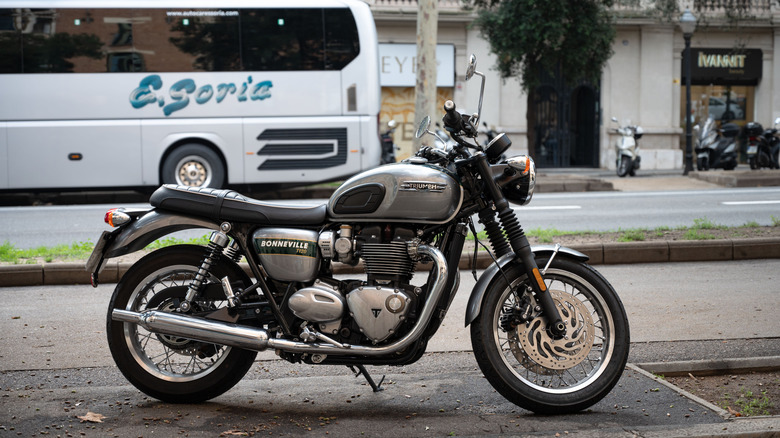
Affectionately known as the "Bonnie," the Bonneville T120 was a force to be reckoned with in all aspects. It was fast, good looking, and honestly not that expensive, being a lot of bike per dollar. It was manufactured during the 1960s and partially into the 1970s by the British company Triumph, who are still in business today, building commuter and cruiser bikes.
The T120 came with a 649cc engine that spread this relatively modest displacement across two cylinders, and was paired to a four-speed transmission that had chain final drive. Power figures were above average, coming in at 46 hp and 38 lb-ft of torque, and the bike featured drum brakes with telescopic suspension at the front, and shocks at the back. As far as pricing goes, units today can commonly sit in the ballpark of $9,000, which is pretty good from a retained value perspective, given that the as-new MSRP was $1,309 back in the day.
Honda VFR750R RC30
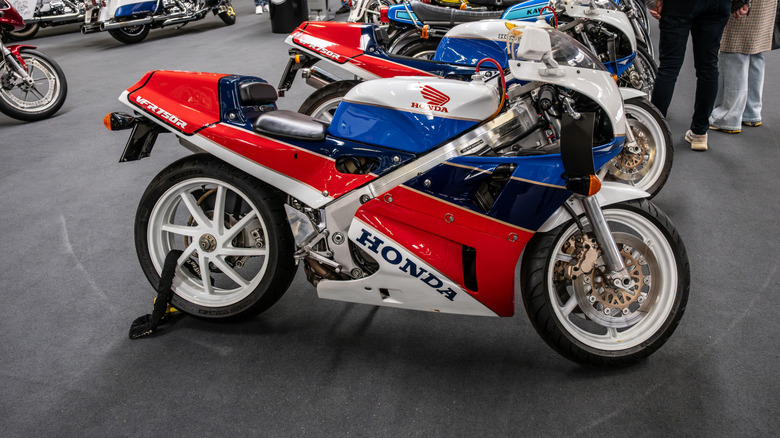
If there's one thing that this motorbike is, it's a mouthful – Honda were apparently just banging letters and numbers together and calling it a name. That quirk aside though, the RC30 was a fantastic bike, with power coming from a four-cylinder 748cc engine that had a bore of 70 millimeters and stroke of 49 millimeters. This would be paired to a six-speed transmission that would turn the back wheel via chain final drive; and the overall powertrain had the respectable output figures of 112 hp along with 53 lb-ft of torque at 10,500 RPM.
Notable features about the bike were the use of carbs from Keihin, forks from Showa, and fact that the engine was liquid-cooled. The model was released back in 1987 and was available to retail buyers until its discontinuation in 1990, being succeeded by an uprated-displacement model. Pricing-wise, the MSRP was $14,998, but units today can go for anywhere between $20,000 to north of $40,000.
Yamaha XT500
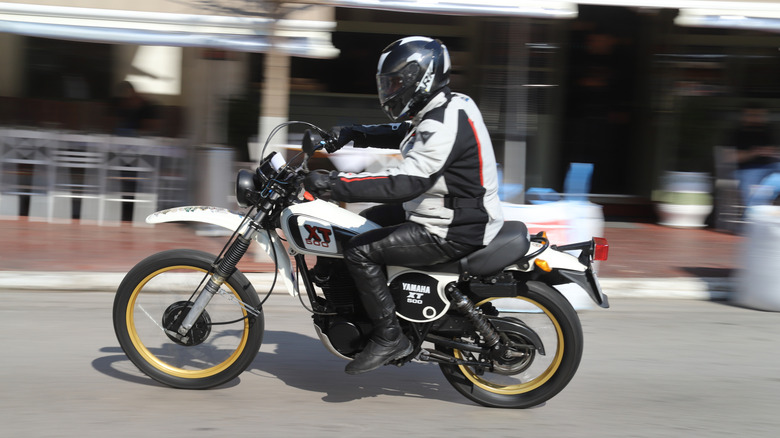
There can be no doubt that dirt bikes are immense fun; and the introduction of a sub-$2,000 motocross bike that suited most ages was a welcome addition to the industry in the 70s. Released in 1976 and running until 1989 (1990 in some markets), the Yamaha XT500 redefined affordable motocross riding for everyone. The single-cylinder engine displaced 499cc, and was paired with a five-speed transmission.
This powertrain made a modest 30 hp along with 28 lb-ft of torque at 5,400 RPM, and had chain final drive. With all that said, the performance was actually alright, with the bike finishing the quarter mile in 15.02 seconds, and clocking an impressive 84 mph speed at the end of said quarter mile. When launched in 1976, the XT500 carried a sticker price of $1,400, but given its legendary provenance, examples can sell for more than $3,000 today, and not infrequently at that.
Kawasaki KLR650
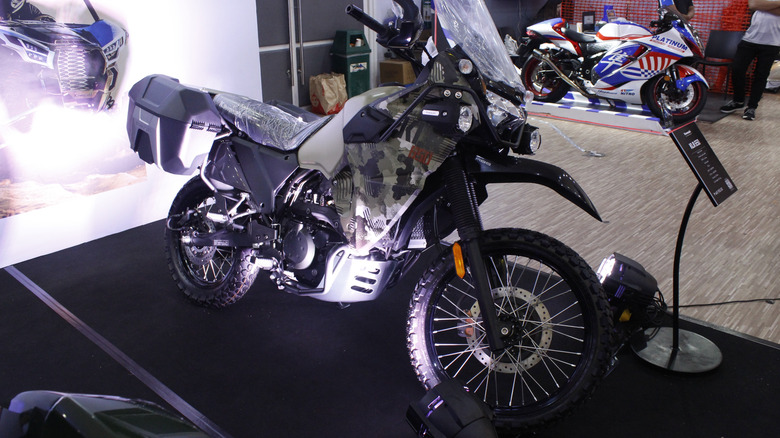
Much like the BMW motorbikes we covered earlier, the KLR 650 from Kawasaki is also a heavy-hitter in the Dual-Sport segment. And we mean "heavy" both figuratively and literally, given that the KLR 650 had a running order weight of no less than 337 pounds. Luckily, this specimen wasn't exactly lacking in the power department, getting its grunt from a single-cylinder unit that tallied up its displacement via a bore of 99 millimeters coupled with a stroke of 84 millimeters. This engine would then be mated to a five-speed powertrain with chain final drive to give us a total displacement of 651cc.
Readers are requested to note that there have been multiple generations of the KLR 650 — indeed, the bike is still in production today, and is available new as a 2026 model — but we're referring to the old generation that ran from 1987 through 2007. Coming to the price; when new in 1987, the KLR 650 would have caused a dent the size of $3,499 in buyers' pockets, but at present, examples fetch around $2,500 on the used market.
Honda Monkey Z50
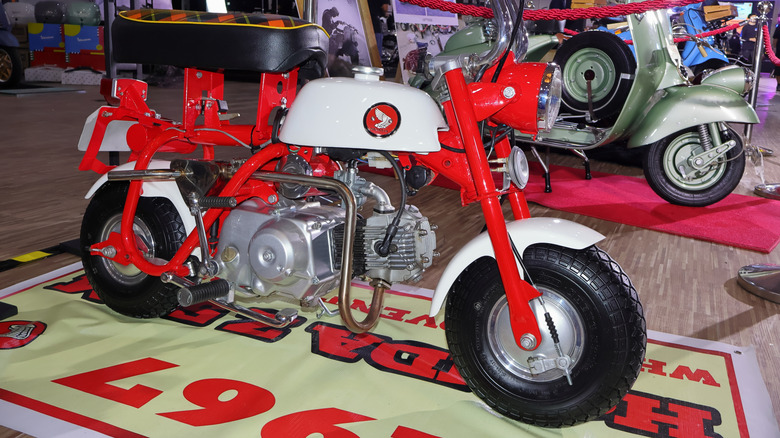
The Z50 by Honda has quite an interesting backstory and history, having started off as a 100cc bike made for an amusement park in Japan, called the Z100. That was in 1961, but towards the end of the decade, in 1967, Honda decided to release an even smaller version with a 49cc engine; which they dubbed the Z50; and the rest, as they say, is history. It had a somewhat automatic transmission (semi-automatic), it had bright paint schemes, front suspension, and, of course, the now-legendary folding handlebars.
It was hugely popular, though in America we got a slightly modified version (called the Z50A), and Honda sold over a million over its production run. The MSRP was $239, but units that have been taken care of today can fetch over $3,000 when they hit the market, and it's understandable why. The Z50 was a cult icon that basically paved the way for the mini bike segment to explode, and got a lot of people into motorbiking as a hobby.
Suzuki DR-Z400S
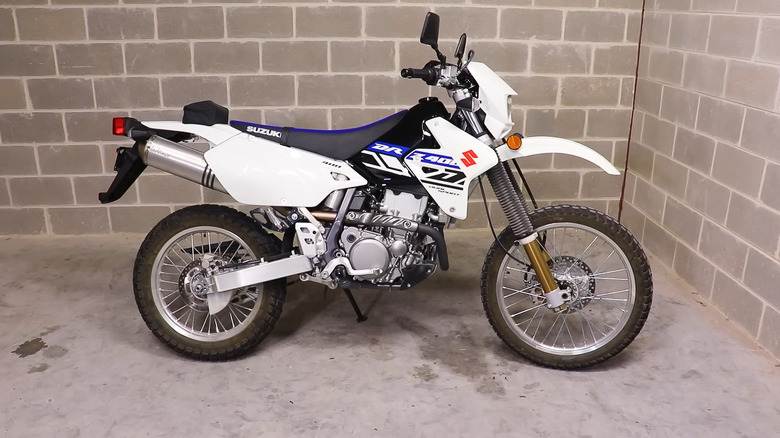
Lying right at the border of our self-imposed threshold on what classifies a bike as "vintage" is the DR-Z400S by Suzuki, which was released in 2000. From then, it enjoyed a production run until 2009, when it was phased out. Weighing 240 pounds and only being given a 398cc engine, the engineers had their work cut out for them, at least with regards to the power-to-weight ratio of the bike.
However, the mad hatters at Suzuki managed to cook up a storm, as the DR-Z400S came out the gates with power figures of 39 hp and 18 lb-ft of torque from one cylinder, mated to a five-speed transmission. Also worth mentioning are the slightly (but not very) odd bore and stroke figures of 89 millimeters and 63.5 millimeters respectively. And now, coming to the price: a new DR-Z400 in 2000 would have cost a prospective buyer the magnificent sum of $5,349; which seems like a lot until you consider that today, this bike sells for about $3,500. Talk about retained value.