

Are LAN Cables The Same As Ethernet Cables?
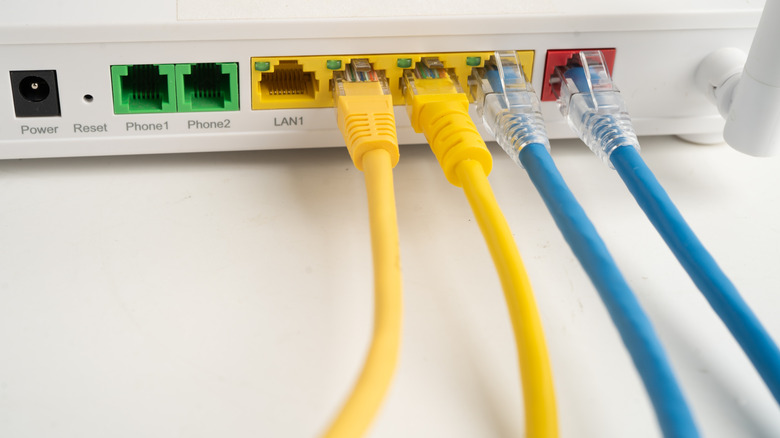
Unless you have the technical know-how, setting up devices like home computers and other electronics like a TV with a LAN port can be daunting. You might get stuck searching for YouTube videos that explain what you need to know. For example, all Ethernet cables are LAN cables, but not all LAN cables are Ethernet cables. The difference is the type of cable each term refers to and how it's used in a network setting.
LAN stands for Local Area Network, and a LAN cable, which has become a catch-all term, is used to hook up devices in one location. Think about your home, workplace, or any centralized environment that utilizes computers, printers, and routers. The purpose of a LAN cable is to transmit data back and forth between these devices. An Ethernet cable is a specific type of LAN cable that meets defined networking standards and is commonly used in modern local area networks. Other cabling types, like fiber-optic cables, can also serve as LAN cables in certain network setups.
When it comes to actually making the connection, if your LAN cable doesn't have the RJ45 clip at the end, it won't fit into your Ethernet port. On older or specialized devices, your Ethernet cable might not fit into a non-RJ45 LAN port for the same reason. However, the RJ45 connector is standard on most modern devices. That's why ports are often labeled both LAN and Ethernet, as the Ethernet cables used today can be plugged into either label.
The standards behind LAN and Ethernet cables
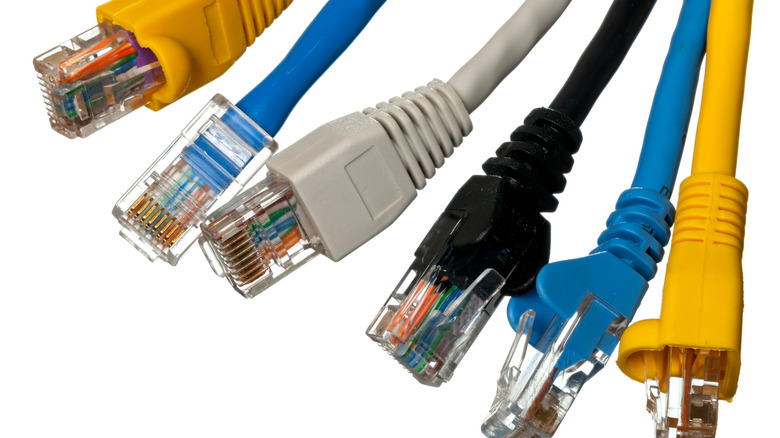
Modern Ethernet cables, which can come in a variety of colors, including blue, are classified by different categories, including Cat5e, Cat6, and Cat7, among others. These terms dictate what the performance level of each cable is, based on bandwidth and overall speed. Modern LANs use these cables, which are composed of internal twisted wiring, because they meet today's standards. Data can be reliably transmitted over these cables, which is why they're so interchangeable.
Cabling standards for modern Ethernet and LAN cables are set by a number of different organizations. For example, the American National Standards Institute (ANSI) and Telecommunications Industry Association (TIA) define such standards, including the ANSI/TIA-568 series. This covers the construction of the cables themselves as well as their performance. There are also the International Organization for Standardization (ISO) and International Electrotechnical Commission (IEC) that dictate global standards, like ISO/IEC 11801, which ensures international compatibility. The Institute of Electrical and Electronics Engineers (IEEE) defines how data is actually transmitted over those cables.
But even with today's cable technology, real-world performance can be affected by everything from cable length to electromagnetic interference from other devices. There are also variables like temperature and the manner in which cables are physically installed that can impact performance as well. Even without too many smart devices slowing down your internet, a great signal won't mean much if your cables are compromised. In that case, you likely won't get the speed or quality that you're looking for.