

How To Prevent Cylinder Wall Scoring From Killing Your Car's Engine
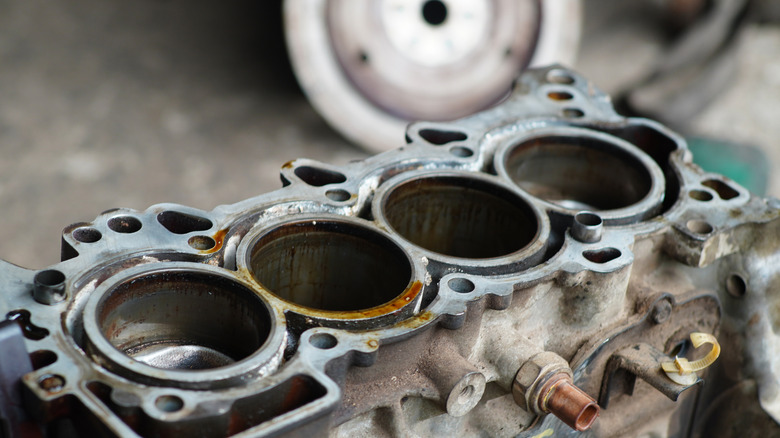
Cylinder wall scoring is something that many car owners rarely consider. It's actually a silent killer that can wreak havoc on engines, leading to costly repairs or even engine replacement. Cylinder wall scoring is a form of progressive mechanical failure where the lubricant film between the piston rings and the cylinder walls is compromised, leading to a worst-case scenario of metal-on-metal contact. Drivers will know when this has happened due to abnormal noises stemming from under the hood, in addition to other symptoms like abnormal engine vibration and poor acceleration.
The drop in engine pressure will show with a lowered compression ratio, making hill-climbing and rapid acceleration labored and slower. Drivers can prevent this dreaded problem by being proactive; if you hear a weird noise or the car's performance simply feels "off," go get it checked out. Tests on used oil can show if increased particles of iron, aluminum, and silicon are present, which may point to bore scoring.
Using the highest quality gasoline available, avoiding long periods of idling, and waiting for an engine to fully warm up before big loads helps prevent scoring. Furthermore, using the correct engine oil is paramount, which is why it's best to seek out the best oil available – ideally with some molybdenum additives in it. Car owners should also ensure they're using a great oil filter – along with regular changes at the recommended intervals — for example, to avoid potential costly cylinder repairs.
Know the score
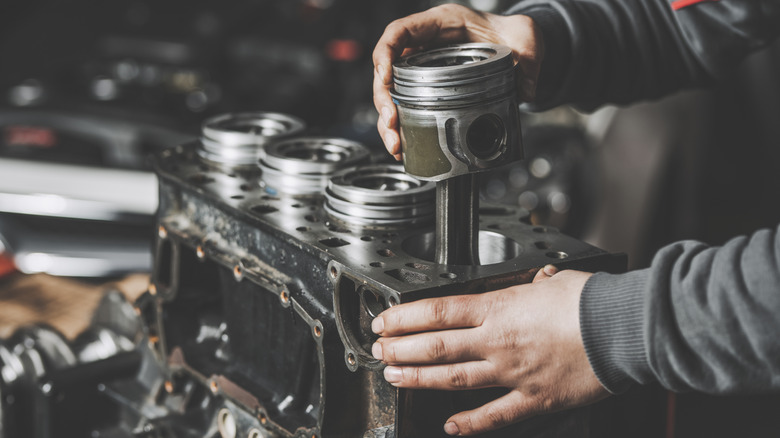
But what causes cylinder wall scoring? An unhealthy engine is the culprit, thanks to using poor-quality or the wrong type of engine oil that isn't able to provide adequate lubrication. In vintage cars, a disregulated cooling system can lead to very high engine operating temperatures, and in turn, pistons expanding due to the thermal instability. A heat-distorted piston geometry can scratch the cylinder bore, leading to permanent damage.
Other causes include abusing a car by revving it way too high for too long, which can break down the oil's viscosity, and unattended engine knocking or pinging, lugging a (manual gearbox) engine excessively, carbon buildup, and dirt or a foreign object getting into the oil. Indicators of bore scoring include the aforementioned abnormal engine noise, increased oil consumption, piston misfiring, and soot accumulation in the tailpipes and bumper cover.
What this all boils down to is that this problem will likely be noticed if you're in tune with your car and know when it's not sounding or performing normally. If this does happen to you, thankfully, you're not necessarily doomed to an engine replacement if the damage isn't too severe, as it may be repairable with polishing and new piston rings. A mechanic can determine the fate of the engine, and through a decision matrix, tell you whether you need to replace the engine and whether it's worthwhile, relative to the car's value.