

4 3D Printed Tools That Are Actually Useful
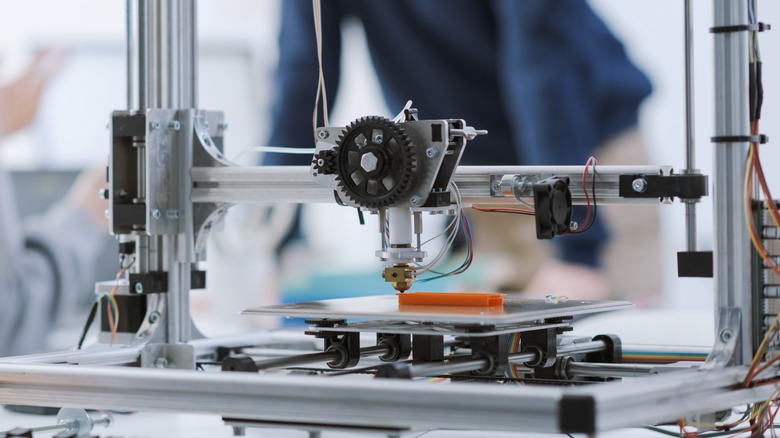
3D printers have come a long way in recent years, allowing users to print just about anything they can think of. Typically, this leads folks to use them for fun hobby-based projects, like miniatures and environments for tabletop games, fidget toys, and other trinkets with little use. At the same time, others have found 3D printing perfect for making items they can actually use well, for example, upgrading their home. Looking online also reveals numerous 3D-printable tool options that are surprisingly effective.
Over the years, talented 3D modelers have created designs for a variety of tools and tool accessories. As a result, one might think that they can print an entire toolbox if they choose, but one should be careful how they go about doing so. Filament can be key in this context, as some tools require specific materials that prioritize durability, flexibility, or other qualities to work effectively. The necessity of elements like supports during printing and the need to specify specific layer measurements should be specified as well. It's also essential to review past user experiences and see whether any issues with certain prints were recurring; this way, you can avoid such designs.
With that in mind, there are plenty of 3D tool prints worth going for. Here are a few that come highly recommended from users, provide specific print guidelines for your benefit, and accomplish their advertised task once printed.
1. 3D printed soldering cable holders are simple yet effective
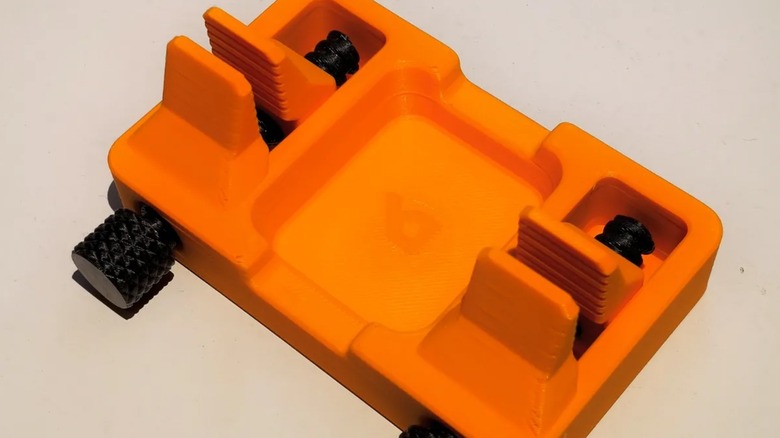
If you've ever soldered, you know that in some situations, you can run out of hands in a hurry. It can be a pain to hold wires, the soldering iron, and the solder itself correctly while bringing all three together. Fortunately, there are plenty of ways to get around this struggle, like with Printables user VC Design's solder cable holder. This 3D print features two adjustable clamps to hold cables in place while they're soldered together. No specific filament is required, and it's stated that supports aren't necessary for a successful print. Thousands of people have liked and downloaded this design, and the reviews are overwhelmingly positive.
For something a little more involved that serves a similar purpose, there's the design by user B M A. This is a multi-piece design that requires two left and two right clamps, two spring tensioners, one base, two clamp bolts, and two bolts to keep the clamps attached to the base. While the print description doesn't specify which material to use, most reviewers chose PLA or PETG — two of the most durable consumer-grade 3D printer filaments – and found the final result perfectly suitable.
2. 3D printed scraper tools get the job done
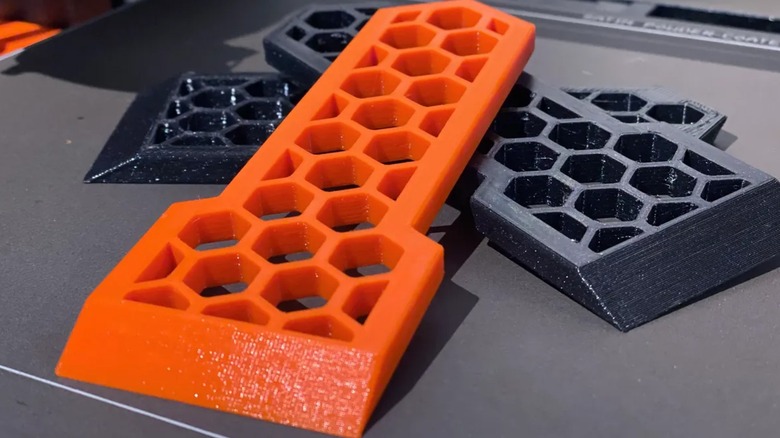
Scrapers are simple tools in any context, since they're basically hard edges for removing a range of materials from a surface, with durability being crucial. If they can't scrape without breaking, what's the point? As it turns out, there are some strong scraper options in the 3D printing world that are well-suited to various needs. One trusted model is the ice scraper by user Genghis on Printables, which is both capable and easy to grip. They specify at least 4 wall layers, a wall height of 0.2 millimeters, and at least 15% infill for optimal construction. Material-wise, they feel PLA is good, but ABS/ASA or PETG would increase durability. At any rate, it beats the other ways to remove snow and ice from a car without a scraper.
Another option many have come to trust is by visle on Printables, known simply as the HexScraper. It features a hexagonal pattern on the handle and is specifically intended for scraping 3D prints off the build plate, though it could theoretically handle other scraping tasks. The description advises that each layer is 0.15 millimeters or less in height, so that the scraping edge is capable of getting under your fresh prints. Uses folks have found for it range from scraping old engine sealant to removing glue residue, with PLA and PETG among the most common materials used across the board.
3. A 3D printed nail holder tool could save your fingers
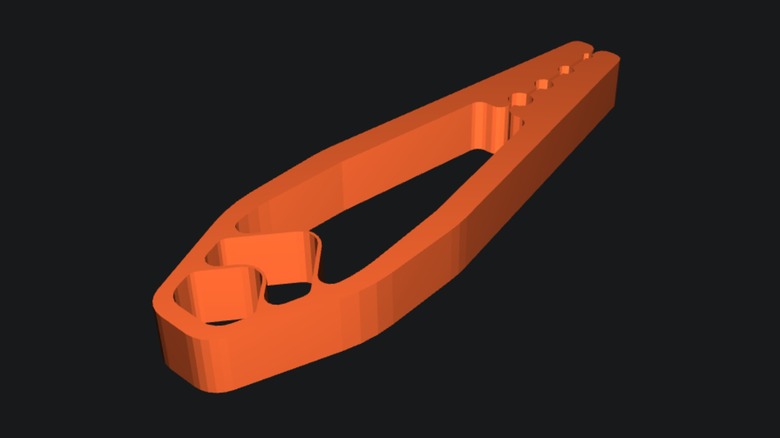
It's never fun when you're working on a project involving nails, you set the nail where you plan to hammer it, and you crunch one of your fingers by accident. While being more careful could prevent such painful mishaps, your 3D printer could come to the rescue as well. VC Design on Printables came up with a nail holder tool that, as the name implies, holds your nail in place as you hammer it into a surface. The holding end accommodates four different nail sizes, and the bottom allows you to hold it in place without getting in the way of your hammer. The description recommends printing it with PETG, though some of the thousands of likers and downloaders successfully used other materials, such as PLA.
This design is more versatile, as it can hold multiple nail types, whereas others take a more specific approach. Case in point: the IKEA nail holder tool by Thingiverse user 3Dstreaming, designed to hold the smaller fishing nails frequently seen on IKEA furniture backing boards. Since it's intended for just one nail variety, it only features one hole at the top, and the overall design is much thicker for a better grip on such tiny hardware. For this nail holder tool design, no specific filament type is mentioned.
4. 3D printed vise models can help out in light-duty contexts
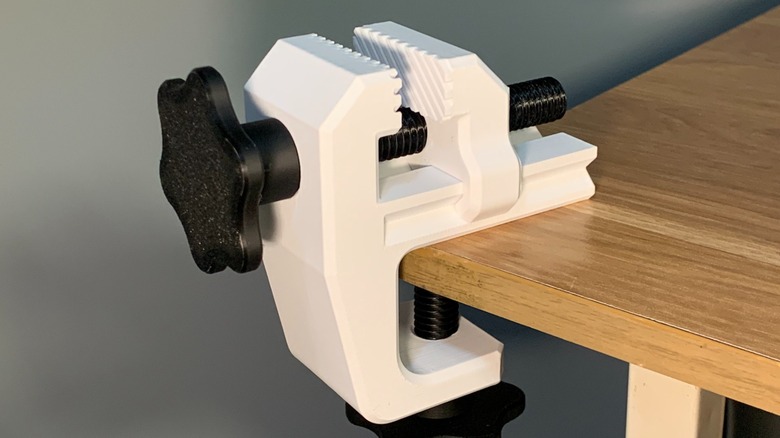
A vise can be a must-have tool for some, freeing up a user's hands while working. Many 3D modelers have taken it upon themselves to craft 3D-printable vises of their own, with many of these attempts proving quite functional and popular. MakerWorld user STLsupplier came up with a design that looks and functions like a typical iron or steel bench vise, though isn't quite as heavy-duty. It isn't intended for workshop use, but for hobbyists in need of something to hold onto items being painted or sanded, or for working on electronics, it's a huge help. The spindle hole needs supports when printing, and PETG, PLA, and TPU, specifically for pads, are among the materials recommended by those who've printed.
Another MakerWorld model, this one from user Ms, has also won over a lot of 3D printer enthusiasts. Much like the other model, this one is best used for light-duty applications to avoid potential breakage. It's designed to clamp onto the edge of a desk, with the crank in the back opening or closing the vise. Based on the written reviews, most have printed this vise model using PETG, though some found PLA to work just fine. TPU was also frequently used to create the clamp pads to avoid scratching.
3D printers are fascinating inventions, with their print capabilities even earning them a place in the tool world. Knowing where to find the right files and choosing the right 3D printer for you means the sky is the limit as to what you can create to make your hobby or business pursuits just a bit easier.