

You're Wasting Electricity With This Common Daily Habit
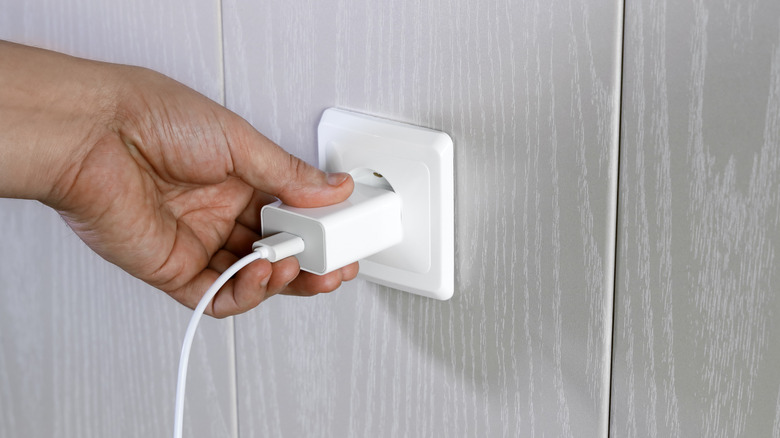
There's often an important balance to be struck with energy use. In a busy household, or if you're moving from room to room, cleaning or rearranging furniture, it's impractical to check every single device in every room. Leaving the occasional light on in a room you're about to return to again will add a negligible amount to your monthly energy bill, but the little things we do will add up. There are things we do without a second thought, such as putting one of our many devices on charge.
From smartphones to tablets and laptops, it can feel like all our daily essentials are conspiring so that one is always in need of charging. But how often do we note when they hit 100% charge and unplug them immediately? We might leave something charging before heading off to work or going to bed, knowing that it'll be full when we need it again, but that can also be a bit of a waste. The WWF, as part of its global campaign to promote more responsible energy use, notes that charging a smartphone for a very long period of time (such as plugging it in before you fall asleep so it's ready and waiting in the morning) can cause unnecessary wear on the battery. As the process generates heat, there's a potential danger of fire too, which is why this is one device that you should unplug when it isn't being used.
Little and often can lead to a big problem
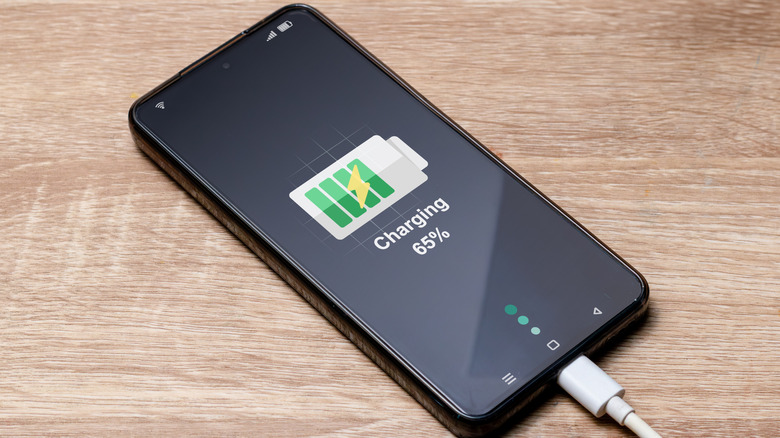
Leaving devices plugged into chargers when their battery is full often results in a small trickle of charging to keep the phone at maximum capacity. The average smartphone charger uses negligible battery power compared to a more power-hungry technology, like your dryer. The UK price comparison service U Switch reports that a tumble dryer will consume an average of £1.24 (approximately $1.64) per hour of use, while a charger would use about £0.01 over the same period. This is when a device is actively being charged.
In September 2017, Cadex Electronics marketing communications manager John Bradshaw explained to Time that there's "no need to worry about overcharging as modern devices will terminate the charge correctly at the appropriate voltage." The idea is that a phone will charge up to full and then stop taking in more power. Apple Support notes that an iPhone will use Optimized Battery Charging, which remembers a specific user's charging habits and learns when it is likely to be plugged in for an extended period. "Your iPhone will delay charging past 80 per cent in certain situations," the resource reports, noting "the algorithm aims to ensure that your iPhone is still fully charged when unplugged." The devices also have a feature that reduces the current the phone takes in when nearly fully charged.
The lurking specter of phantom power usage
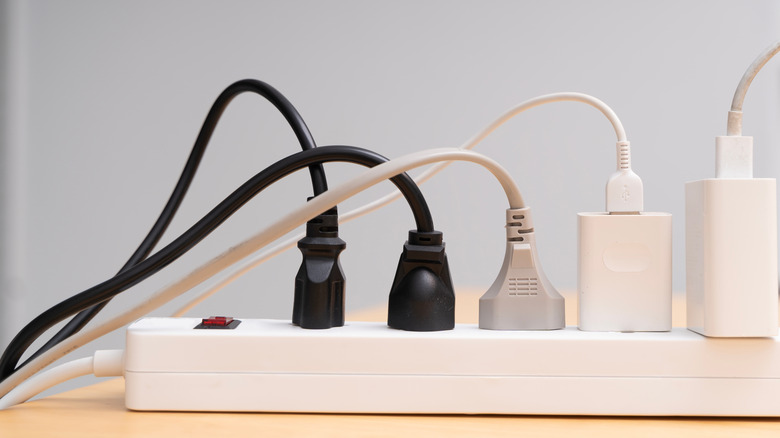
Smartphones are among the devices we leave to charge most often, and typically have protective measures that limit potential damage to the battery. This can mean that it's perfectly safe to leave your device charging overnight, but the practical choice isn't necessarily the most wallet-friendly one. Phone chargers use electricity when they're just plugged in. Like so many devices, a little standby power is consumed while they are off. This also means that a fully-charged smartphone will still be using some power when plugged in, even if it's a negligible amount.
Natural Resources Canada provides some interesting perspective about just how quickly these issues can add up, noting that phantom power can account for as much as 10% of a household's energy bills. It's very easy to forget to unplug a charged device or its charger, particularly if you're used to leaving certain things on standby. In a gadget-heavy household, though, it can make a noticeable difference if you make the effort. It can also be rather safer. If you have a lot of chargers or other devices in a power strip, for instance, you run the risk of overloading them, and so being vigilant can ease the pressure there, too.