

Are Smaller Wheels Really Better For Winter Driving? Here's What To Know

When winter weather strikes, many of us have no choice but to get into our cars and head off to work, school, or even the grocery store if we forgot to stock up on snowstorm staples like milk and bread. Four-wheel or all-wheel drive may help, but snow-covered and icy roads can be intimidating and dangerous. Your speed, experience, and even the wheels or tires you have on your vehicle are all important factors when navigating winter driving.
Many people use the terms "wheels" and "tires" interchangeably, but they are actually two different things. The wheel of your car is the metal structure that the tire is mounted on. It includes a hub that connects the wheel to your axle. Tires are the rubber part that grip the road and that you have to replace due to wear and tear.
0If you live in a particularly snowy region of the world, you may want to consider putting winter tires, or snow tires, on your vehicle during those colder months. Winter tires are typically made of a softer rubber compound that should give your vehicle better grip on slippery surfaces. They also have a different tread design to help increase traction. But what about your wheels? It turns out you may want to consider replacing those as well. Downsizing both your tires and your wheels can help improve traction and give you a safer ride on those snowy roads.
Downsizing your wheels
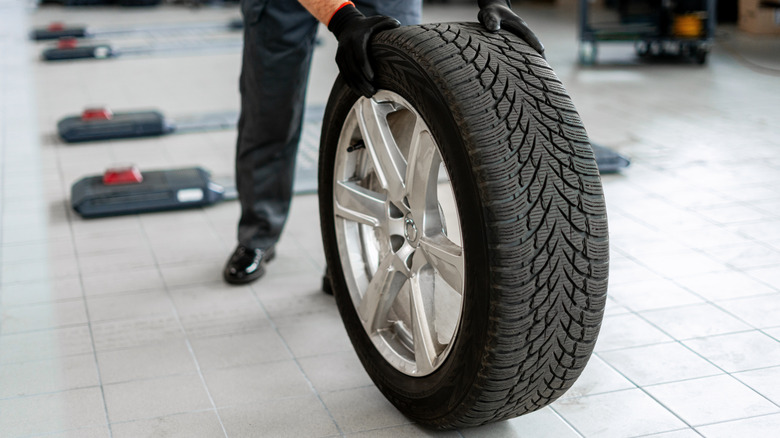
If you elect to downsize your wheels for the winter months, you may have to buy another set of tires as well, unless those new wheels are compatible with your current set of tires. Buying new tires and wheels will obviously cost you a bit more than simply putting on a set of winter tires, so is it worth it? It really depends on your vehicle and driving situation. If you expect a lot of snow or you just aren't very comfortable driving in winter weather, you may feel better prepared and safer with smaller wheels.
A smaller wheel will allow you to put on a narrower tire with taller sidewalls, which should more easily cut through unplowed roads. These narrow tires concentrate your vehicle's weight into a smaller surface area and provide better grip. Those taller sidewalls will also absorb bumps and jolts better, giving you a smoother ride.
Finally, instead of alloy wheels, steel wheels will hold up better in winter against road salt, snow, and ice. They're also more cost-effective than alloy wheels, giving you a bit more budget to select the best snow tires for the job.
Additional perks to snow tires

If you're replacing your wheels, you should take the time to invest in a good set of winter tires as well. In addition to a different compound of rubber, these tires tend to be narrower. This will give you an improved ride in the snow, and you may also see better gas mileage with narrow tires versus wider tires. This is down to friction — less friction equals less fuel consumption, and narrow tires produce less friction than wider tires due to their decreased surface area. Winter tires also perform well on cold, dry roads, because the softer compound heats up faster for better grip. Just remember, they likely won't do any better on icy roads than your typical wider tires.
If you're thinking, tires are expensive, and now you want me to buy a second set along with a new set of wheels — we don't blame you. Tires are expensive, but a set of snow tires and smaller wheels means less wear and tear on all-weather or summer tires, which will stretch out their life. Switching out our wheels and tires based on the season may be a pain, but it's worth it if you typically see a lot of snow. If you don't want to swap seasonally, you may want to consider buying a narrower tire if you live in a part of the world where shoveling snow counts as a workout.