

Do You Have A Tire Leaking Air? It May Not Be What You Think
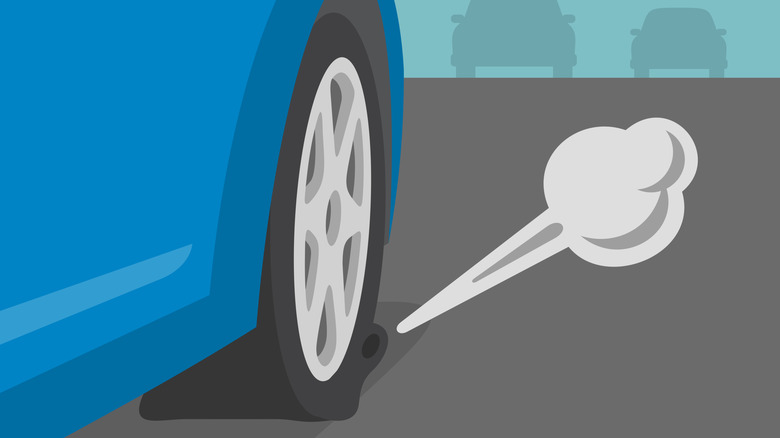
A slow-leaking tire undoubtedly ranks among the more frustrating problems you might encounter as a car owner, as it not only trips your car's TPMS (Tire Pressure Monitoring System) on the regular, but tends to require frequent trips to a service station for air. But those trips must be made, because driving a vehicle with low air in a tire is actually pretty dangerous, and can also contribute to decreased fuel economy.
Given the stakes, it would obviously pay to try and diagnose the problem with quickness, and there are a few common culprits when it comes to a slow leaker, such as faulty valve stems and minute punctures in the tire. While you're investigating, be sure to check the bead seal, which securely bonds the tire to the wheel's rim, preventing the release of air. You can do so by spraying a sudsy compound of soap and water over the suspected tire where it meets the wheel on both sides of the tire. If you see bubbles emanating from any part of that area, it means a bad bead seal is almost certainly the culprit.
Needless to say, a bad bead seal can lead to the sort of slow leak that leaves tires in regular need of air, even when there's no actual damage to tire itself. It should go without saying that, once you diagnose the issue, you'll want to fix the leak ASAP. Here's what needs to happen if you find a bum bead seal.
What to do if your tire is leaking air from the bead seal
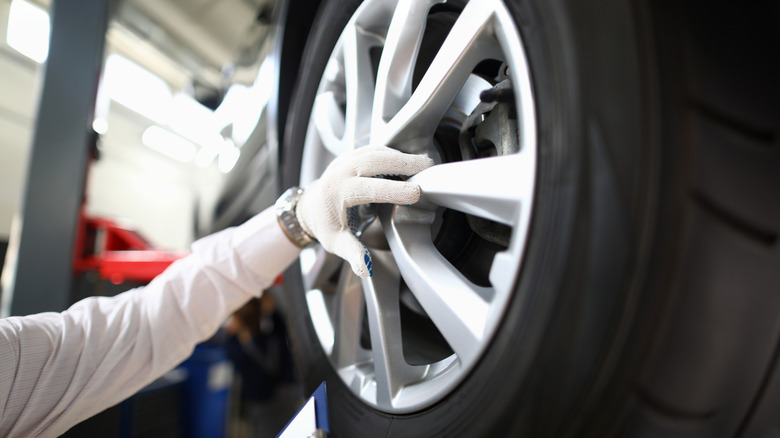
The leaking air may be the result of excessive dirt or rust collecting in the region of the bead seal. A bum seal can also be the result of damage incurred by a wheel or tire that regularly comes into contact with potholes or excessively bumpy roadways. Likewise, the sort of inadvertent curb bumps that so often cause damage to the wheel or outer wall of a tire can also create problems with the bead seal, resulting in the slow release of air. So, the next time you run a wheel up onto the curb, you'll want to keep a close eye on your tire's air pressure readings to ensure the seal wasn't damaged.
The question then becomes what to do if you discover such a leak. As it happens, you may be able to fix the leak yourself by merely cleaning the area where your wheel seals with the tire. In some instances, a bead sealing compound may also be needed. Whatever the case, you'll need to "break the bead" by deflating the tire and separating it from the rim to accomplish either task. You may also need a heavy-duty farm jack to achieve the necessary separation, which means this may not be a job suitable for beginners just learning the automotive ropes.
But if you've got the gear, you need and know your way around a tire, fixing the leak is a pretty doable task. Otherwise, you might be wise to make a quick trip to an automotive professional of your choice.