

5 3-Cylinder Engines That Are More Powerful Than Most V6s
Although turbocharging has long been part of the automotive industry, and adding boost to an engine has always been popular among race car builders and enthusiasts, the degree to which modern cars have embraced turbochargers is remarkable. From the 1980s through to the 2000s, it was rare to find a turbocharged engine in something other than a performance car, but today many companies incorporate turbocharged engines across their entire lineups.
What this means, of course, is that today's smaller turbocharged engines make horsepower and torque figures that would formerly only be found in cars with much larger engines. These days, it's not uncommon at all to find turbocharged four-cylinders that make more power than most V8s. Likewise, we are starting to see some even smaller, three-cylinder turbocharged engines that make power that would put many older V6s to shame, and some that even outgun most modern V6s.
Thanks to turbocharging, an engine type that was once found only in tiny, fuel-sipping runabouts is now powering an increasing number of both mainstream family cars as well as high-performance specialty vehicles. Here are five of the more impressive three-cylinder engine offerings out there today, which power everything from rally-bred hot hatchbacks and popular SUVs to highly experimental racing cars.
Ford Fiesta ST 1.5-liter
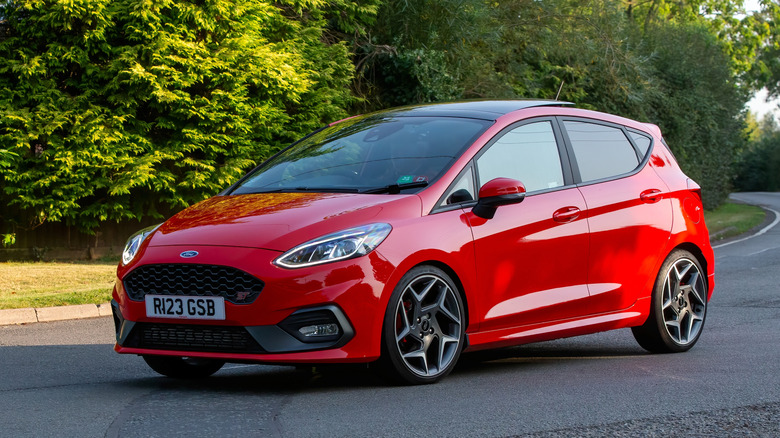
Starting in the early 2010s, Ford began introducing turbocharged engines across its lineup at a rapid pace, putting its EcoBoost-branded turbo engines in everything from subcompacts to full-size F-150 pickup trucks. Ford has made three-cylinder engines as small as a 1.0-liter, but for European Ford enthusiasts, it was the 1.5-liter turbocharged engine in the Mk7 Fiesta ST that represented the Blue Oval's three-cylinder at its best.
At 197 horsepower and 214 pound-feet of torque, the Fiesta ST's engine wasn't a powerhouse, but those are still numbers that most 1990s V6s would be envious of. And the engine was an ideal choice for a light-weight, subcompact hot hatchback when mated with a six-speed stick. In Europe, the same engine also powered the enthusiast-oriented Ford Puma ST crossover, but in North America, we are most familiar with the less-powerful, more mainstream version of the EcoBoost 1.5-liter that powers vehicles like the Bronco Sport and Escape.
Though the four-cylinder Mk6 Fiesta ST of the 2010s was a cult favorite in the US market, American enthusiasts never got to experience the newer three-cylinder Fiesta ST, which Ford never imported. Unfortunately, the whole Fiesta line was discontinued by Ford back in 2023, but the beloved ST models are likely to remain enthusiasts' favorites for years to come and are an easy pick to be a future classic.
Toyota GR Yaris 1.6-liter
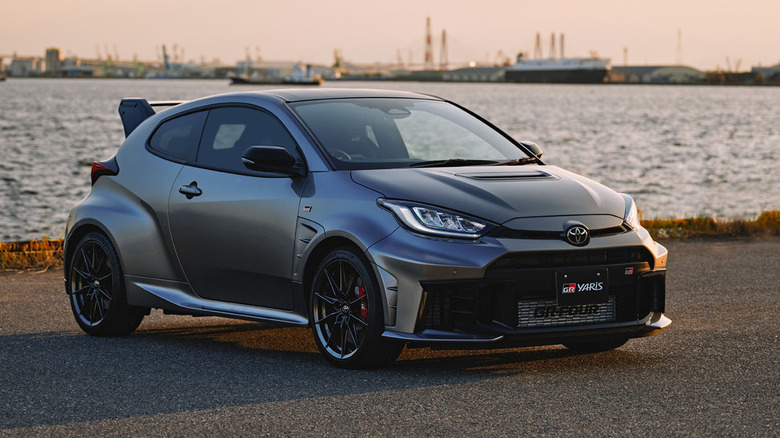
When it comes to high-performance enthusiast vehicles with three-cylinder engines, Toyota is at the top of the game. And the company has achieved that in a relatively short span of time. It all started back in 2020 when Toyota debuted the GR Yaris, which instantly became a hot hatch hero. The GR Yaris wowed enthusiasts with its wide-body styling, GR-Four AWD system, and turbocharged three-cylinder engine mated to a six-speed manual transmission. The car was like all of Japan's turbocharged, AWD legends remixed for the 2020s, but despite the best wishes of enthusiasts, the GR Yaris would not be sold in America.
Initially, the GR Yaris made 257 horsepower from its 1.6-liter G16E-GTS three-cylinder engine, which is a serious amount of power for a car of the Yaris' size and more horsepower than many V6 engines twice its size. Later iterations of the GR Yaris have since gotten even more powerful as Toyota has further pushed the G16 engine platform, and Toyota also developed a new eight-speed automatic transmission that would handle the G16's power. The GR Yaris, perhaps more than any other car, has shown that in the right platform, with the right supporting equipment, a tiny three-cylinder engine can bring world-class performance and driving fun.
Nissan Rogue 1.5-liter

Not all of the industry's most powerful three-cylinder engines need to come in hot hatchbacks or sports cars. When it comes to more mainstream applications of the 'triple' as some gearheads call the three-cylinder engine, Nissan's 1.5-liter, turbocharged, variable compression ratio engine from the Rogue crossover is quietly one of the more impressive small powerplants out there today. Rated at 201 horsepower and 225 pound-feet of torque, this tiny 1.5-liter engine makes the same kind of horsepower you used to get in your typical 3.0-liter V6 – and with a lot more torque.
As we found in our review of the 2025 Nissan Rogue, the 1.5-liter engine is more than adequate for typical CUV use. Sure, the engine's performance in a larger family SUV isn't going to light anyone's hair on fire, but the fact that Nissan is getting those kinds of V6-like numbers from a mainstream, mass-market 1.5-liter three-cylinder is quite remarkable.
With that kind of power potential, we'd love to see the team at Nismo get a hold of this engine, add a manual transmission, and drop it into a lighter-weight hot hatchback to help get Nissan back into the sport compact market. Because how cool would a Nissan version of the Toyota GR Yaris be? If there's one possible drawback, though, it's that Nissan's VC engines have thus far proven to have some questionable results when it comes to reliability,
Nissan ZEOD RC 1.5-liter
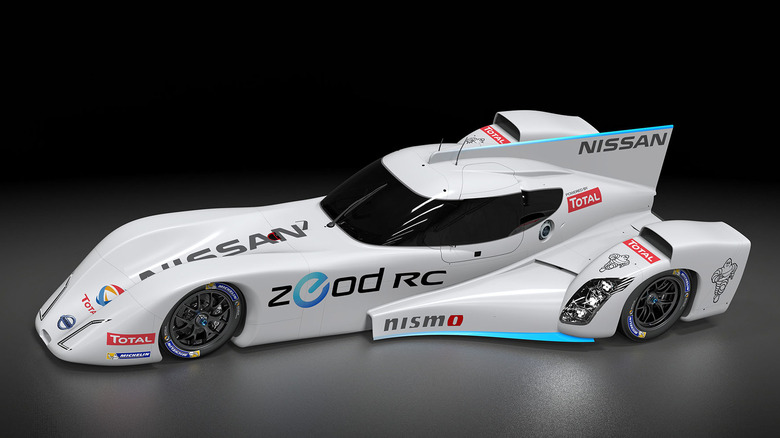
Not all of the great three-cylinder engines have come in road cars. In fact, one of the craziest three-cylinder engines ever built came in a race car that was equally funky looking. It was called the Nissan ZEOD RC, which Nissan built for the 24 Hours of Le Mans in 2014 as a motorsport showcase for both its electric and gasoline powertrain engineering. The ZEOD RC's two electric motors are nothing uncommon today, but what was – and still is – more special was its 1.5-liter three-cylinder gasoline engine.
The turbocharged, three-cylinder DIG-T R engine displaced 1.5 liters and made a very substantial 400 horsepower. But it wasn't just the engine's output that was crazy; its physical dimensions were equally wild. The entire engine weighed just 40 kilograms (88 pounds) and was so physically small that it could be classified as carry-on luggage while traveling.
At the time, Nissan advertised the engine as having more power per kilo than a Formula 1 racing engine, which makes sense given how tiny the thing was. Although it's been well over a decade since the ZEOD RC was built, and its competition results at Le Mans weren't too great, thanks to its unique powerplant(s) and its even more unique shape, it's absolutely one of the more memorable race cars of the 2010s.
Toyota GR Corolla 1.6-liter
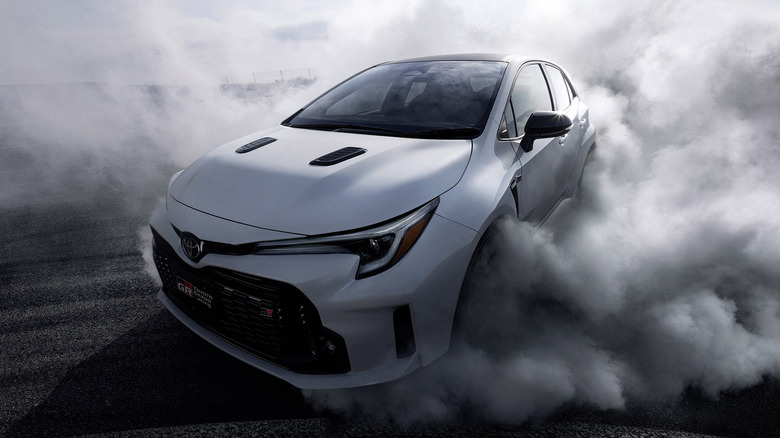
After seeing the success of the GR Yaris, and more specifically how much North American enthusiasts wanted a taste of its rally-bred, three-cylinder performance, Toyota rolled out the GR Corolla for the 2023 model year. For the most part, the GR Corolla follows the same formula as the GR Yaris, taking the basic Corolla Hatchback platform and injecting it with all the Gazoo Racing DNA.
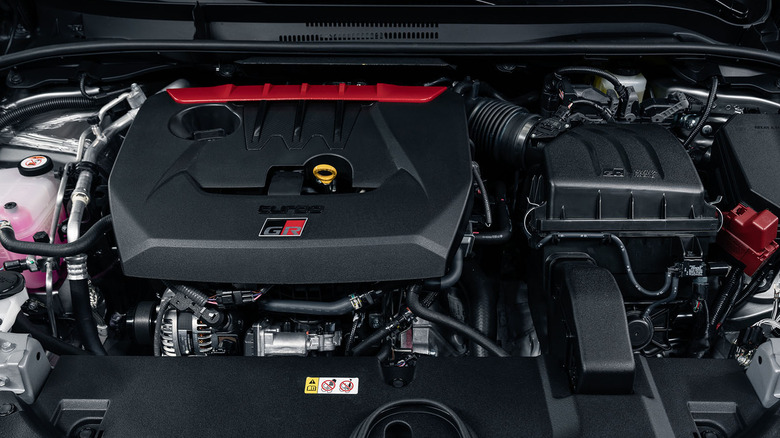
Because the five-door Corolla is a larger, heavier car than the Yaris, Toyota worked the G16 engine for even more power, with the latest 2025+ versions of the GR Corolla making 300 horsepower and 295 pound-feet of torque from its 1.6-liter turbocharged three-cylinder engine. Though it has a larger footprint than the Yaris, the GR Corolla has nonetheless proven to be a fantastic hot hatch driving experience. Compared to the more common, turbocharged four-cylinder enthusiast cars out there, the GR Corolla's unique engine character and sound make it further stand out from the crowd. And that's before you get to the other stuff like its standard six-speed manual transmission, adjustable AWD system, and twin limited-slip differentials.
Whether it's in the GR Corolla or the forbidden fruit GR Yaris, the Toyota G16 engine is more than just one of the impressive three-cylinder engines ever built. This little 1.6-liter is one of the most fascinating engines of the 2020s, and has followed other Toyota favorites like the legendary 2JZ-GTE in becoming one of the great performance engines of its time.