

How Long You Can Expect Your New Fire TV Stick To Last
We may receive a commission on purchases made from links.
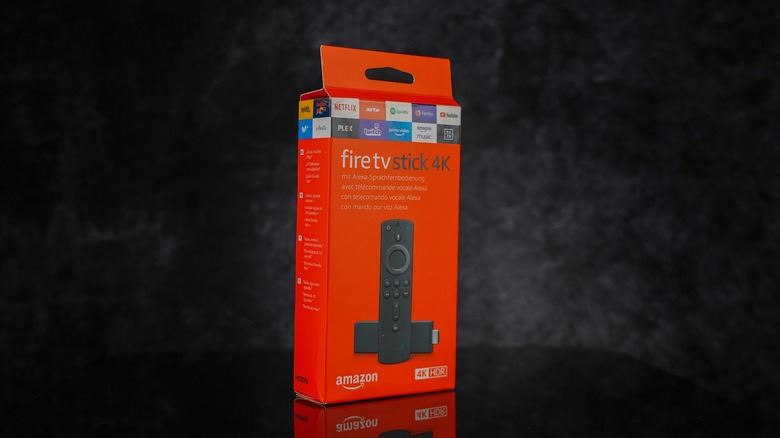
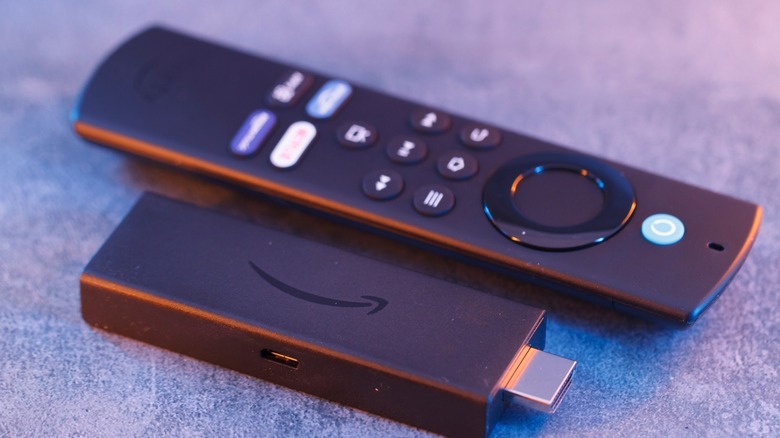
One of the quickest ways to breathe new life into your TV is to connect and set up an Amazon Fire TV Stick to it. Physically, it resembles a large USB drive, but you'll notice it uses an HDMI connector that slots directly into the back of your TV or monitor. An Amazon Fire TV Stick is essentially a mini computer that connects to Wi-Fi and unlocks access to a wide selection of streaming platforms like Netflix.
There have been several versions of the Fire TV Stick, but they've all carried the same affordable pricing. For not a whole lot of money, you can add smart functionality to your TV. At the time of writing, the newest model of the Amazon Fire TV Stick has a list price of $50, supports 4K output, and even lets you control compatible smart home devices you have set up. For years, Amazon's Fire TV lineup has used Fire OS at its core — an operating system based on Android. Now, Amazon is switching to its in-house Vega OS for lower-end devices like the Fire TV Stick 4K Select.
Regardless of which Amazon streaming stick you end up going for, you can expect smooth performance with high-quality playback and compatibility with most essential streaming services. These streaming devices are also built quite well, so assuming your Fire TV Stick doesn't physically break, the only factor determining its lifespan is software support — which, according to Amazon's documentation, is at least four years from the date you purchased it.
Why software support matters
The four-year promise that Amazon provides means that current-gen Fire TV Stick products will continue to receive the latest Fire OS or Vega OS updates at least through December 2029. Software updates bring not just new features or occasional design revamps, but they're essential for squashing bugs and ensuring your device runs optimally. It's the same concept that applies to Android or iOS updates — remain stuck on an outdated version long enough, and you're at a greater risk of running into security vulnerabilities.
That said, your Fire TV Stick won't simply stop functioning after the four-year mark. Apps and services are built with backward compatibility in mind, and keep providing updates for outgoing versions of the operating system as well. What's more likely to warrant an upgrade is performance. As apps get new updates with visual overhauls, they end up demanding more processing power to run smoothly.
If you've noticed your Amazon Fire TV Stick running slowly, aged hardware is likely a big culprit. Though you can uninstall unwanted apps hoarding your device's storage and clear cache for apps you use, you will eventually be left with a Fire TV Stick that's simply incapable of keeping up with newer apps and heavier interfaces. If you're rocking a streaming stick from a decade ago that surprisingly boots up, you still might run into compatibility issues with the latest app versions of streaming platforms.