

5 Simple Tips To Help Keep Your Lawn Mower Tires From Going Flat
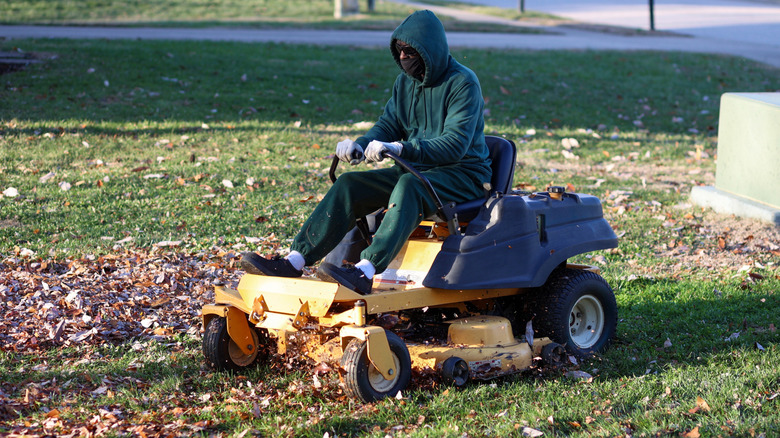
Picture this: You've been meaning to tend to your overgrown lawn for awhile, and you finally carve out time to tackle the grass before the weekend slips away. You head to the garden shed to fire up your trusty riding lawn mower, and the wobble of a flat tire greets you. If you've been in this situation, you know the frustration that comes with it — your plans are instantly derailed, and you probably have to spend the next hour surveying the environs and troubleshooting your tires to find the cause.
Now, lawn mower tech has evolved over the years, and the quality-of-life implications of never having to worry about a flat tire are significant, especially for push mowers. Despite advancements across the various genres of mowing, pneumatic tires are still a weak link in an otherwise well-oiled machine. That status quo is persistent for obvious reasons; they're not as robust as car tires, and obstacles like jagged rocks and varying environmental conditions can punch a hole in a riding mower's tire fabric.
So, how do you avoid the frustrating experience of discovering a flat tire? We've outlined some preventive measures below that will keep your lawnmower rolling smoothly. We've also covered tips on how to maintain your lawn mower.
Use a tire sealant

Liquid tire sealants are particularly effective for maintaining your tire pressure. The process of applying a sealant is relatively straightforward — you inject a specialized sealant into the tire tube through the valve stem, and centrifugal force distributes the sealant evenly across the tire's inner surface as it rotates. When a thorn, nail, or any other sharp object penetrates the tire, the released air pressure immediately forces the sealant into the puncture point.
The liquid solidifies once it comes into contact with air, creating a plug that covers the hole — and this process is almost instant. It's an example of a textbook set-it-and-forget-it solution; the sealant can sometimes last for an entire season, depending on the type used.
These sealants are also handy for old tires starting to show their age. As rubber ages, it develops microscopic cracks and pores. Although most of these cracks aren't visible to the naked eye at a cursory glance, air seeps out slowly through them. A single application of tire sealant can help stave off your chances of developing a flat with an old tire — and at a fraction of the price you'd pay to get a new one. It is important to note, however, that these sealants are only a temporary solution. You should ideally have good tires and a clean environment, so you still need to investigate what's damaging your tires.
Maintain correct air pressure
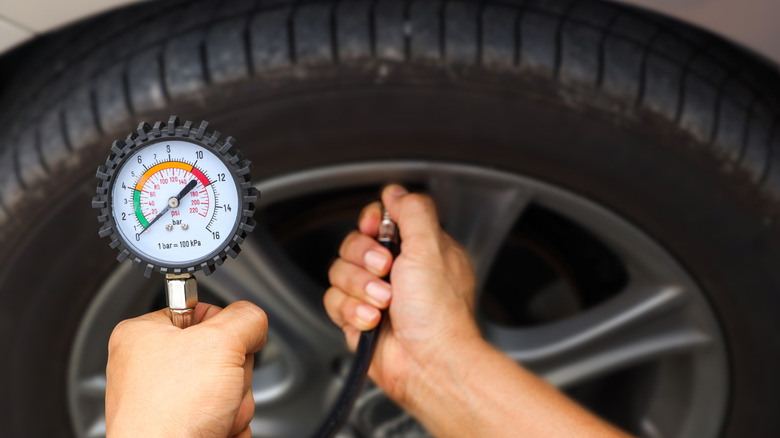
A common mistake owners of riding lawn mowers make is neglecting their tires until they are visibly deflated. You could save yourself so much time and stress by simply monitoring your tire pressure at regular intervals with a gauge — it takes less than two minutes per tire, and will help you avoid an awkward Saturday morning flat discovery down the line.
When you neglect to check your tire pressure regularly, chances are they will eventually start operating below the recommended PSI (typically between 10-14 PSI for lawn mowers, though you should confirm with your owner's manual). In such a scenario, the sidewalls flex excessively with every rotation. This constant bending generates heat and stress on the rubber, creating hairline cracks known as dry rot.
Bead leaks and uneven wear are other causes of flat tires that result from low pressure. The bead of the tire is the section that stays in contact with the rim, and it holds its shape to ensure proper operation. At low pressures, the bead may detach from the rim, allowing rapid loss of air pressure even if the tire is not damaged. So, the summary is, check your tire pressure — and beware of pumping them with too much air as well.
Clean your yard before you mow
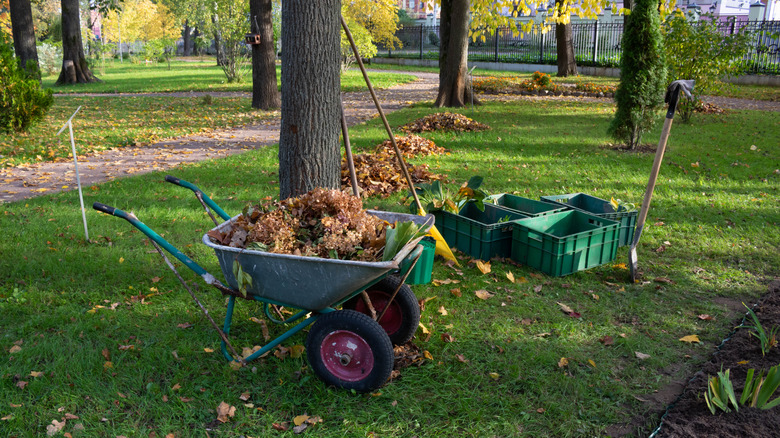
An old axiom exemplifies this tip — prevention is better than cure. Many lawn mower flats are caused by debris hiding in your grass, and a clean survey of the land before running your mower over it could preserve your tire integrity. An unsuspecting patch of grass could be littered with fallen branches and thorns from nearby trees, particularly if you have hawthorns, blackberries, or rose bushes on the property. If you've had some construction work done recently, or your home is on the older side, rusty nails, screws, and broken glass may also be scattered across your lawn. These unwanted materials can damage your lawn mower beyond its tires, and they can also become hazardous projectiles when the blades spin at their characteristic high speeds.
Start at the edge of your mowing area and walk around with your eyes searching the grass for any imperfections. In particular, check any patches of tall grass that catch your attention — any debris that even resembles a threat should be removed from the property. You might miss a few errant rocks, but running this land survey should significantly reduce the risks to your lawn mower's tire health.
Proper storage
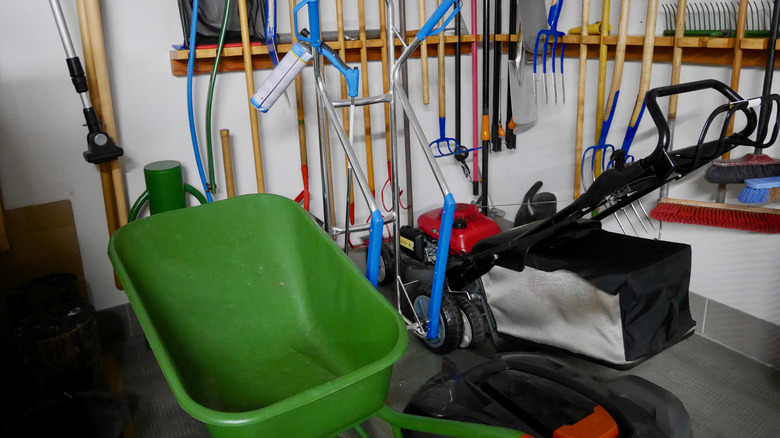
Where you park your mower during the off-season matters a lot for the health of its parts. A concrete garage floor may seem perfectly reasonable to house it, but concrete is actually hostile to stationary tires over time. When a lawnmower sits in the same spot for months, it develops flat spots — areas where the rubber compresses and loses its round shape under the mower's weight. That translates to a bumpy ride when you restart operations in the spring. Beyond compression, there's also a risk to the rubber; the concrete removes moisture from the tire, which causes it to become brittle over time and crack, particularly in cold seasons.
Placing cardboard sheers, rubber mats, or wooden blocks under each tire during storage periods can combat this phenomenon. These materials create a barrier to stop moisture from escaping from the tires, while distributing the mower's weight more evenly to minimize flat spotting. On the other end of the storage spectrum is leaving the lawn mower outside with no protection from the elements. UV exposure and high temperatures can cause cracks in rubber by drying out these compounds.
You should store the lawn mower in a cool shed with the tire precautions mentioned earlier to preserve it properly. The concrete also removes moisture from the rubber tire, causing it to become brittle and crack, particularly in cold seasons. SlashGear has a guide on how to prepare your lawn mower for winter.
Routine tire and rim inspection
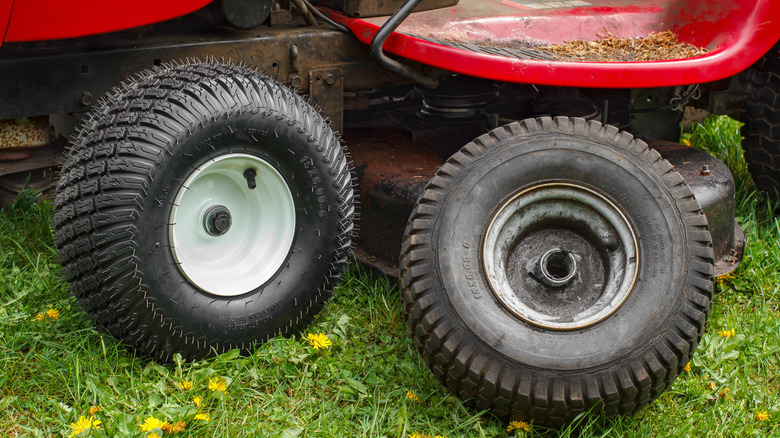
Routine maintenance goes a long way in preventing flat tires on your lawn mower. Look for cuts and any irregularities, such as bulges and flat spots, which may negatively affect the condition of your tire. Materials such as small stones and nails may also have worked their way into the tires — catching these early will help avoid unanticipated flats.
Although people assume the tire is responsible for any loss of air, it's not uncommon for the rim to be the cause. Worn and corroded rims are parts of riding lawn mowers that get little attention, but this shouldn't be the case. The rim's primary job is to strengthen and support the tire while providing a smooth and uniform surface for the bead to seal against. A bad rim can make your tire leak, even if it has no punctures.
Corrosion from moisture exposure creates patches that disrupt the airtight connection. Bent rims also create gaps that allow air to escape regardless of tire condition, leading to situations where you might even pump your tire to the proper PSI only to find it flat again days later. Once in a while, remove the wheel and examine the rim surface for any rust, dents or irregularities by running your finger along the bead seat. To prevent rim damage, avoid hard surfaces when mowing and store the mower in a clean, dry place away from chemicals and harmful elements once you are done.