

Is It Okay To Leave Your Home's Heat On All Day? Here's What Experts Say
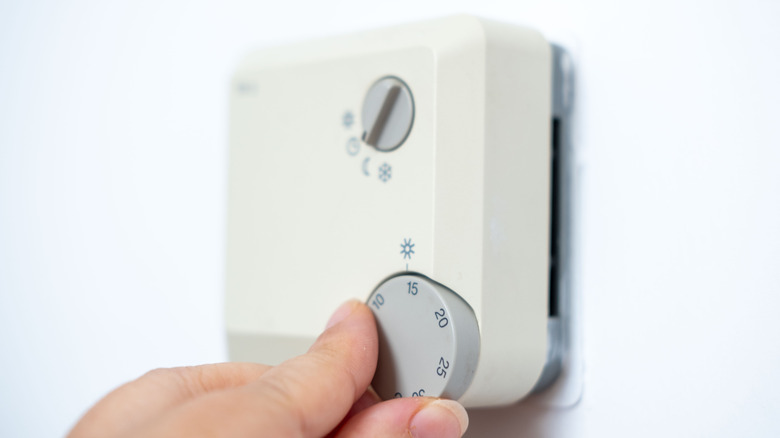
While we can alter our habits to be more energy-conscious and (hopefully) reduce those bills where we can, it's an unavoidable fact that, in the coldest and hottest weather alike, we need to be able to manage the temperature of our homes. It can be difficult to know what the best solution is, with some believing that maintaining the same low level of heat throughout the day can be more efficient. Typically, though, this isn't the case. The CEO of Scotland's Aventus Eco, Sean Hogan, explained the issue to Woman & Home. Hogan said that a heating system that's always operating is continually losing heat to the outside in very cold weather, so "over 24 hours, this constant work, even just to keep a 'background' temperature high, adds up to a lot."
More work for your home heating to do, of course, translates to more that you're ultimately going to have to pay. This isn't to say that you can't do just this if you find it most comfortable, but that it's often going to be more costly. What you can do instead, Electric Radiators Direct heating expert Stephen Hankinson told the outlet, is ensure that your heat is working the hardest when you need it most. Hankinson notes that "switching your heating on for a short burst first thing in the morning when you wake up [...] takes the edge off the chill [...] and sets your home up for the day without wasting energy by running it for too long." The key seems to be avoiding either using it when it isn't needed or using it at a temperature that's higher than needed. Turning your air conditioning on and off every day could potentially harm the unit and make your bill more costly too.
The thinking behind leaving a home's heat on all day

Part of the reasoning is that, if your home becomes very cold (overnight, for instance), it's going to take longer to heat it up to an optimal temperature. The hotter you need or like it, the longer. In a typical case, the issue is that never shutting off your heat goes against the way that it was created to operate. A-Temp Heating and Cooling's Erika Friedrich works extensively with HVAC systems and reports to Livingetc that "heating systems are designed to work efficiently in cycles, meaning they heat your home quickly and then shut off until needed again." There's also the concern that the initial starting up and building to the desired temperature consumes a lot of energy too.
Once again, some experts dispute this. Super Brothers HVAC Expert Alex Atkinson states to Livingetc that the notion that "it is cheaper to leave the heating on all day, as it saves the big surge of energy required to turn it on and off" is "in most cases [...] just not true." The truth is that continuous heat equals continuous heat loss. Atkinson adds that this is especially the case in a poorly-insulated home. The U.S. Department of Energy supports this conclusion, explaining that the important thing is to maintain a temperature as close to that of the conditions outside as possible while keeping yourself safe and comfortable. A greater difference between the two results in a greater expense. Ultimately, though, the most important thing is to know what's better for your household. Leaving your heat on all day isn't recommended, but that isn't to say that there aren't limited cases in which it will prove beneficial.
When can you leave your home's heat on for such an extended period?
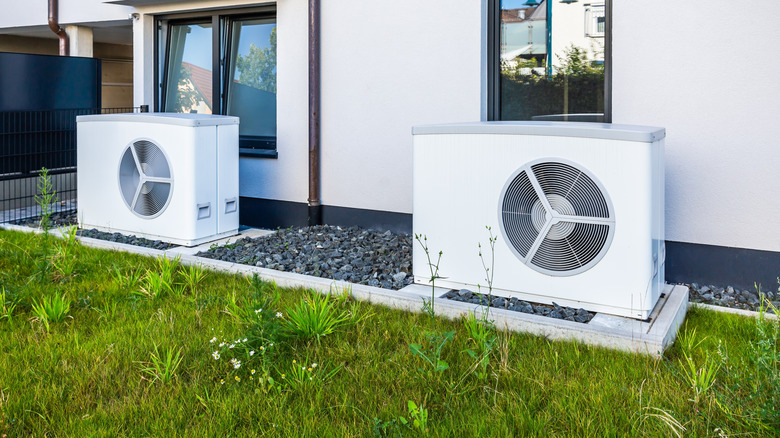
Ultimately, your home is yours and, provided you're within your means and aren't working up a gigantic energy bill unnecessarily, you're typically free to heat it as you see fit when you have the option (renters may not have the option for instance). Whether it's a practical and more efficient choice from a bills point of view, however, may be a different matter. Heat pump users, for instance, may find that the reverse is true. EDF Energy reports that air source heat pumps are capable of warming a home much more efficiently than alternatives such as a gas boiler, and that they are capable of being set so that they boost the heat they provide as it gets colder outside.
The system is designed to be left to steadily heat a home, rather than reaching temperature extremes as a boiler would. This is a system with which it's advised to achieve a warmth that you're happy with and then and then leave it to run. The outlet concludes, "one of the first lessons that air source heat pump owners learn is that it costs less to keep your heat pump running all the time, day and night than it does to turn it off and on." They can be an excellent solution, regardless of what one extremely common heat pump myth may tell you. In short, it's typically true that leaving your heat on all day can be considered somewhat wasteful and often more expensive in terms of energy costs. Instead, solutions like thermostats and timers allow you to set the heat for when you get up in the morning, when you arrive home from work, or whatever best suits your household as a whole.