

Cleaning Out Your VHS Collection? Here's How To Dispose Of Them The Right Way
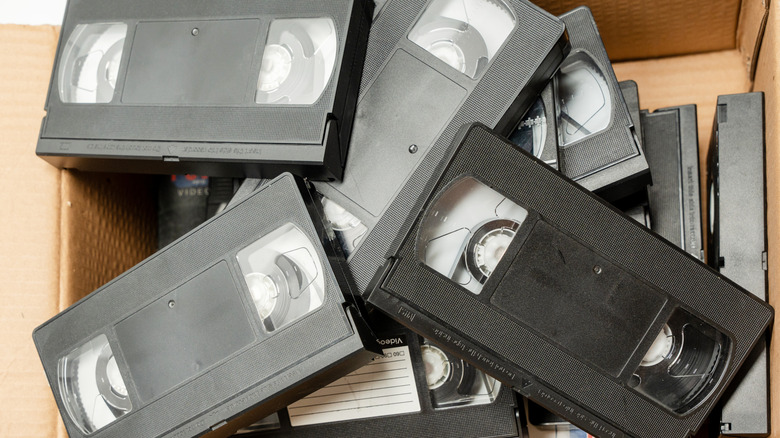
In the midst of a big clear-out of drawers and cupboards you rarely venture into, you'll probably find a little more than you bargained for. Perhaps you didn't realize just how many VHS tapes you still have, for instance. From home movies of birthday parties from long ago to that copy of "The Lion King" that you bought in 1995, any VHS collection is sure to be a real nostalgia trip just to look through. Today, though, they're surplus to requirements for many. We can watch those movies and shows on streaming services and convert those old VHS tapes to more modern formats.
Some VHS tapes are worth way more than you might think. If yours aren't particularly valuable, though, and you have a lot of commercial ones, you might simply want to clear them out to make some room in your home. If that's the case, there are some important things to bear in mind. For instance, many VHS tapes lack significant value today, but their unique composition means they contain chemicals that complicate recycling. In 2016, GreenDisk COO Mickey Friedman noted to Earth911 that GreenDisk does "about as good as you can" when it comes to recycling them, but notes, "the outside casing is made from different types of plastic, and that can be recycled; it's the Mylar tape that really can't be." This tape can potentially be harmful, the outlet goes on, because it features trace amounts of metals. As a result, it can be dangerous to dispose of the tapes as regular household waste, and it can be difficult to find a specialized outlet that can recycle them properly. Still, VHS owners looking to clean out their collection do have options for doing so responsibly.
The difficulty of recycling VHS tapes
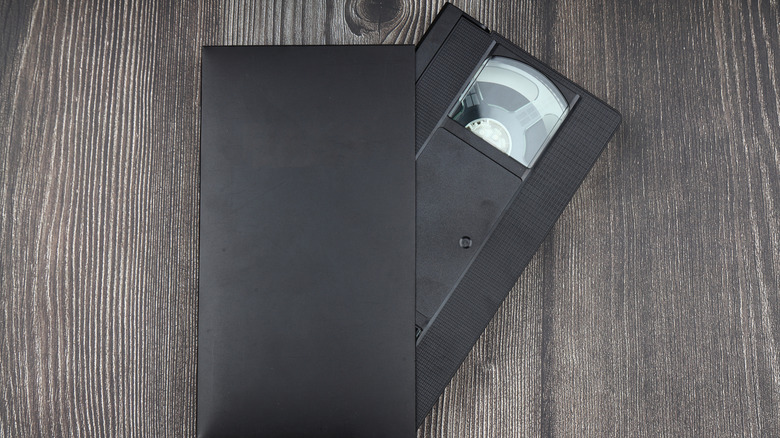
A tape of the format is instantly recognisable as a great, rectangular plastic slab. This has helped lots of them survive in quite good condition for so long (a little like the cartridges of a Nintendo 64 console), but there's much more to a cassette tape than that. The trouble is, VHS tapes work primarily through the magnetic tape itself, which stores the associated audio and/or video. For this to work, though, the tape had to be magnetized, and there's the rub: this required a coating of metals such as chromium, which allowed it to deliver the signal. It is also, unfortunately, the reason why VHS tapes can be classified as electronic waste. This means that such tapes, particularly those that are worn or damaged, could harm the environment if simply discarded with other household waste.
The United States Environmental Protection Agency notes that it often requires specialized recycling services when they reach the end of their functional lifespan or when the owner is simply finished with them. The agency reports that it suggests "using certified electronics recyclers to manage unwanted used electronics." The process of recycling itself, it goes on, "includes sorting, dismantling, mechanically separating, and recovering valuable materials." Though a lot of VHS tapes can still be quite common to come by and so have rather limited value today, this isn't to say that there may not be a collector out there who doesn't covet a very particular tape you'd like to clear out of your collection, and so listing them online can make a little cash and brighten a VHS enthusiast's day. These are the people who know what VHS actually is and how it works.
Other options for taking care of VHS tapes
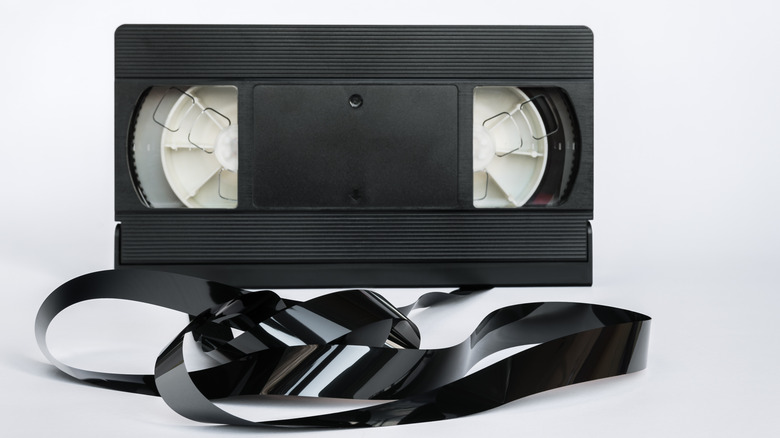
Recycling services vary by location. For example, in Suffolk, in the east of England, the local council notes that video and cassette tapes cannot be conventionally recycled, except for cassette tapes with the tape removed. This length of fragile material, the official website explains, "gets tangled in the recycling process," so the tape must be removed first. The resource adds, "the easiest way to remove tape is to unscrew the cassette and remove the reels." Otherwise, tapes of both varieties may be put into regular household rubbish.
Wherever possible, it's best not to dispose of a tape at all. Washington's city of East Wenatchee's Waste Wizard tool suggests options from the NCW Sustainable Community Facebook group to Craigslist listings and the Wenatchee Senior Center Thrift Shop. It also adds that "damaged items including their cases can either be recycled (e.g., mail-in service) or placed in the garbage." In many areas, then, VHS tapes can be disposed of in household waste, but it's preferable not to do so because it can be wasteful and even potentially harmful.
Local recycling services that can handle your media properly are an excellent option, but they depend on what's available near you and the types of items they'll accept. Another possibility is a larger-scale project. GreenDisk, for instance, declares itself to be "The Leading Recycler of Electronic Media in the United States," and offers various services allowing users to fill a box provided by the company with their media and then dispatch it to them. Secure data destruction can be included as appropriate, and the service covers a broad range of formats, including VHS, cassette tapes, DVDs, and microfilm.