

Stuck Trucker Faces The Consequences Of Dodging Chain Control
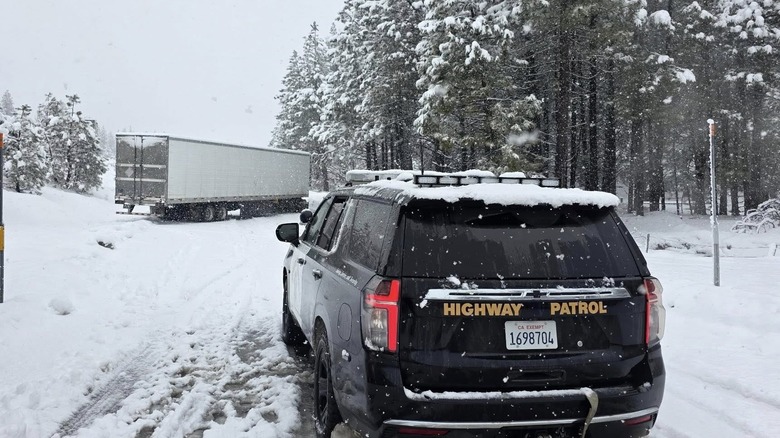
The California Highway Patrol has been busy this winter, having already saved a stranded trucker on Christmas Eve who listened too closely to their GPS. The trucker had followed their GPS to a road that wasn't plowed, getting themselves stuck and requiring the Grass Valley CHP to tow them to safety.
Less than a week into the new year, and the CHP, this time out of the Truckee office, had to save a trucker who didn't think chain control mattered to them. During winter weather, many areas that get high snow totals may require drivers to put chains on their tires. The metal chains attached to tires can help give more traction than just using the rubber of your tires. That extra traction gives drivers more purchase on the potentially icy road.
However, the trucker the Truckee CHP had to save believed they could travel over the Donner Summit, a pass that receives an immense amount of winter weather. The driver didn't utilize chains on their tires and had to be towed by the CHP off the Donner Summit. Not only was the driver stuck, but since they drove without the required chains, they were also fined. Depending on how severe the violation was, that could run them up to $500.
Who needs tire chains?
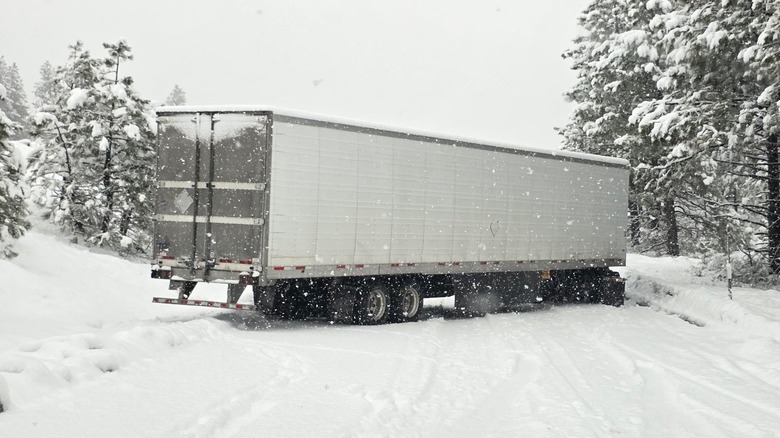
Every state in the country has laws that pertain to using tire chains in winter conditions. As you may expect, states that get more severe winter weather and mountainous terrain have stricter laws regarding chains than states in the South.
California has three different levels of chain requirements depending on the weather. An R1 sign means that chains, traction devices, or snow tires are required on the drive axle of vehicles without four- or all-wheel drive. That means if you own a rear-wheel-drive vehicle, the chains need to be on the rear wheels. An R2 sign indicates that chains or traction devices are required for all vehicles except for four- or all-wheel-drive vehicles with snow-tread tires on all four wheels. Finally, an R3 indication means that chains or traction devices are required on every vehicle with no exception.
Colorado has a somewhat similar law to California, with two types of chain laws depending on the situation. A Level 1 means that single-axle vehicles must chain up, trucks must have all four drive tires in chains, and commercial vehicles must have snow tires or chains. When Level 2 is active, all commercial vehicles are required to chain all four drive tires.