

12 Of The Most Underrated Home Improvement Tools
We may receive a commission on purchases made from links.
From essential repairs like handling a leak in the laundry room or fixing a buzzing light switch, to major overhauls to your back deck or bathroom, home improvement can mean lots of different things. But no matter the task, you'll almost always need some kind of tool to support your efforts and ambitions. Some of the common ones include circular saws and drills, but more of the heavy lifting often comes from the underrated heroes of the toolshed. For every lawnmowing task you complete, there's a blower or broom and shovel that must come out to handle the cleanup work. No matter what you may be cutting, measuring with a tape, laser, or square comes before the saw blade even touches the material.
I'm a homeowner with lots of experience tackling projects around the house. My enthusiasm for DIYing it comes from a youth spent tinkering with and fixing stuff at home, and certainly an added aversion to paying someone else for the privilege of working on something I could do myself. I'm no professional, but I have a good measure of confidence, built through many years of working on all sorts of projects and wielding lots of tools. These 12 staples are some of my most important pieces of gear. While the impact driver turns heads, a more subtle implement like an adjustable work platform, I find, delivers far more utility across jobs.
The humble mattock
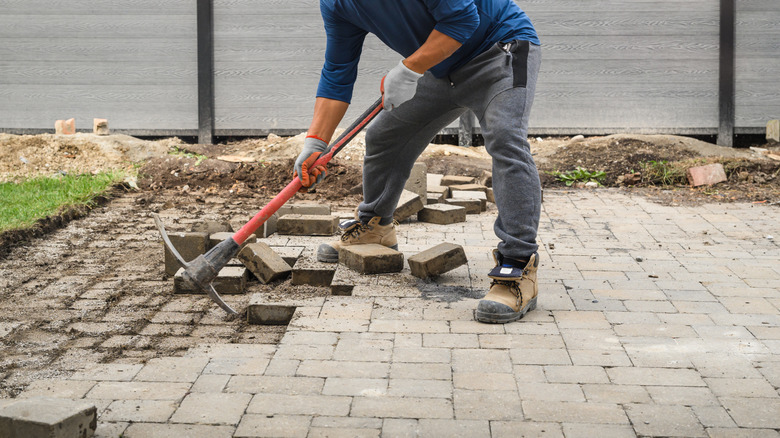
The mattock is probably my favorite tool. Working outside in the yard is special to me, delivering a bit of nostalgia that calls back to my youth while also providing a means of beautifying the greenspace around the house. Lots of tools come into the picture when handling even the simplest gardening or landscaping tasks, and I've even recently taken to using an unpowered reel mower on occasion for a different kind of experience and cut of the grass. But nothing compares to the brute force and yet still nuanced potency of the mattocks. This tool is half garden hoe half axe (or pick). The mattocks provides in two primary formats, with a horizontal, flat blade on one end and either an axe head or a pick protruding in the other direction. I'm partial to the axe-style option. I've only ever used old mattocks, whether it be my dad's or grandfather's, or the one I own now. Mine was bought on eBay for just a few bucks and was forged nearly 100 years ago; it's still going strong.
The interesting thing about this tool is that it's designed to seat itself on a handle without actually being fixed in place. This makes it extremely portable. These tools are ideal for cutting down trees or dealing with overgrown bushes, and they can handle digging tasks when performing maintenance on sprinkler systems or in tilling a flowerbed or raised planter ahead of new additions. An option similar to mine is the Estwing 5-Pound Cutter Mattock.
Self-adjusting wire stripper
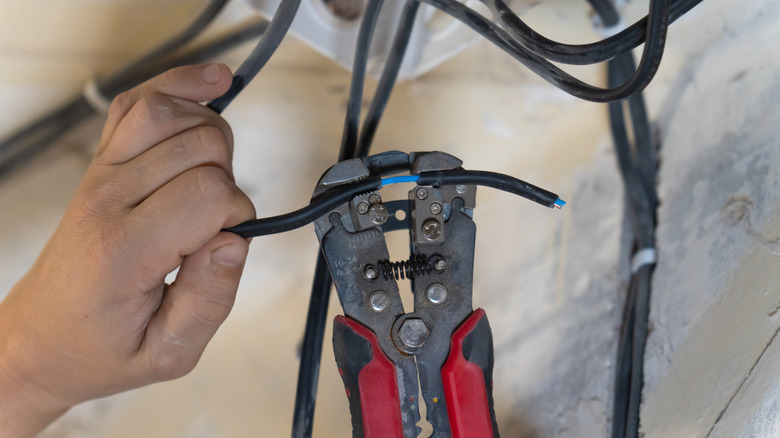
A self-adjusting wire stripper is a non-negotiable tool for electrical work, and one that you'll kick yourself for ever living without. There are plenty of mistakes DIYers can make while performing electrical repairs, but not having the right tools for the job is one that's completely avoidable. The pace at which you can complete a wiring job with the help of this tool is astounding, and it makes for a much more satisfying project overall. Mine's a Stanley model, but the Irwin Vise-Grip Self-Adjusting Wire Stripper is, a dare say, a superior tool to my own. Irwin is one of the best hand tool brands you'll find, with a potent mix of high quality and low pricing. It also helps that Irwin makes tools across a gigantic cross section of the marketplace, giving buyers something that can help them get the job done regardless of the tasks they're facing.
This tool features independently mobile, clamping teeth that bite down on the wire in question before ripping apart from one another as you continue to apply pressure to the handles, cleanly tearing off the outer sleeve as it moves. It's a tool that delivers one-handed operation, and the Irwin model features a ProTouch grip for enhanced comfort — mine is fairly hard and sometimes demands a two-handed grip for thick wire. This model can handle wire from 10 to 24 AWG with additional cutting and crimping elements found within the handle dimensions.
Head lamp

No matter the jobs you frequently tackle, illumination is critical. There are plenty of excellent mechanic's work lights that come in clutch to support tasks in difficult conditions, but no lighting tool can compete with the direct, simplified brightness of a headlamp. These don't have to be fancy affairs, and a multipack option like the Energizer 4-Pack Headlamp Bundle offers a cost effective means of adding more than enough illumination to your toolbox to support you and a few helpers.
A headlamp delivers light right to the spot your eyes are focused upon. More importantly, it removes the need to physically hold a lighting tool and actively point it where you need the light. Anywhere you look, you have hands-free light without issue of fuss. Coupled with some other, larger lighting solutions, you can easily tackle projects in crawlspaces, attics, or elsewhere. This tool can serve as a standalone option for basic tasks like car maintenance focused on the recessed areas under the hood, or simply to help guide you out to the trash cans on a dark night without worrying about your footing.
A portable work platform
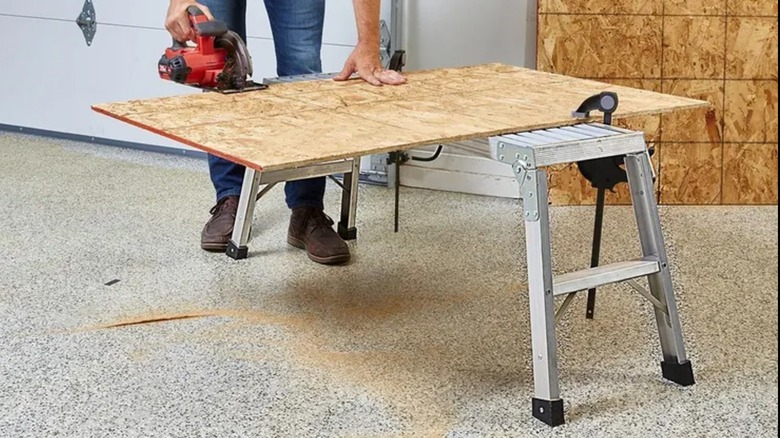
The work platform often gets overlooked in favor of a standard ladder — why invest in something that barely gets you off the ground, right? However, it's meant to solve a different problem, one that I find actually comes about during home improvement projects more often than the need to climb up to a roof or outside a second floor window. Work platforms offer adjustable height settings that give a home improver the ability to move themselves up to ceiling level to deal with tasks like crack repair or light fixture swaps.
The work platform surpasses a ladder's capability by allowing you to move around on its surface. A ladder, by contrast, provides just a single, thin ledge, and if you need to move over, perhaps to hang a curtain rod across the length of a window, you'll have to climb back down and reposition the tool. As well, these tools can double as workholding elements when you don't need to get up to the ceiling. The Werner Pro Aluminum Work Platform is the tool I use, and features a brace along the bottom of the legs for added stability. A cheaper option that can still deliver is the Franklin 40-Inch Aluminum Work Platform.
Angle grinder (a corded model)
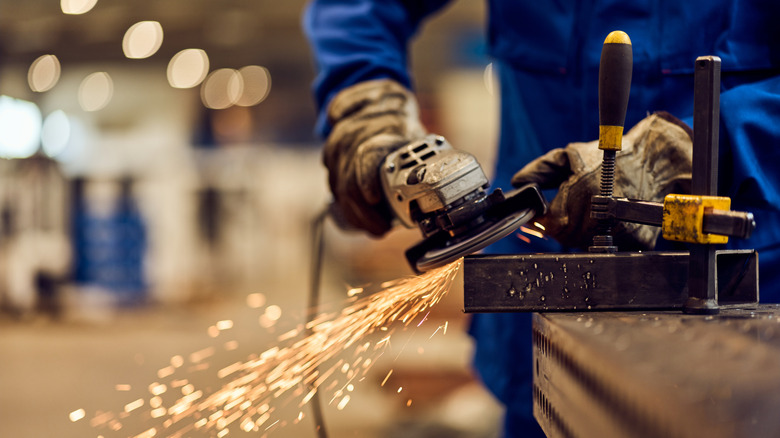
I'm partial to a corded angle grinder. I'm not a professional tool user, so I don't have the built-in need to bring my tools on the go and solve for a range of customer problems and needs. Flexibility is obviously still important, but in my mind, trading just a bit of functional range for an added and immutable safety feature is worth it. Simply put, when you unplug the grinder, it cannot be turned on, intentionally or otherwise. Mine's also one of the cheapest available models I could find at the time, and it has served me exceedingly well. In no uncertain terms, the angle grinder feels like a tool that has malice in its heart. If you allow it to dictate the terms of its use, it will attempt to hurt you. Using an angle grinder demands undivided focus and a constant, firm grip. It's also not a great idea to emulate your favorite YouTubers and remove safety features like the blade guard and side handle.
With that being said, the grinder is an amazing tool. It can do a lot of things well, although it should be noted that there are a number of interesting alternatives to the angle grinder that can often accomplish certain tasks with greater precision or effectiveness. The tool can operate as a sanding device, dense material cutter, and metal shaper or surface preparer, among others. The Hercules 11 Amp 4½-Inch Paddle Switch Angle Grinder is a classic example of a solid tool in this category.
Taping knife
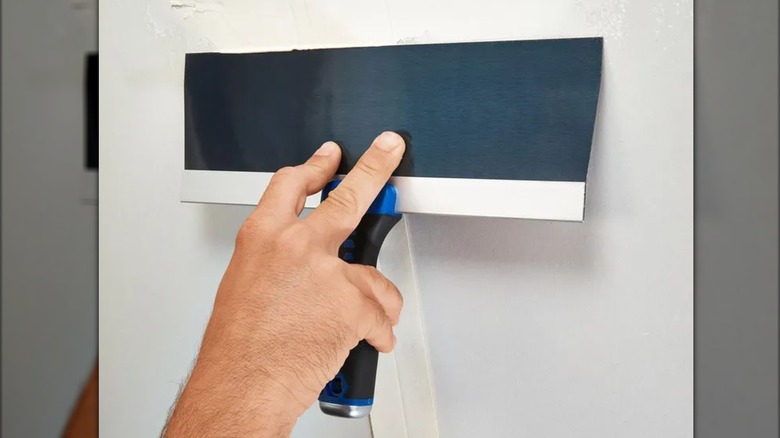
Putty knives are must-have tools for finishing tasks throughout the home improvement playbook. They're precision cleanup tools that are cheap and highly effective. However, the taping knife delivers the same basic use with a few enhancements. I had worked through most of a home renovation before I invested in one of these, and the difference was immediate and drastic. Taping knives are similarly cost-effective tools, but the extended length of the blade makes them capable of applying a far higher volume of material at a much quicker pace.
The tool also features a handle that juts out the back end and a wider face, making for something you can grip in numerous ways and angle with greater control. As a result, users can achieve nuanced pressure across the face or along an edge for tighter application and a much-improved finished product. The tool just does it better than a standard putty knife. The Quinn 12-Inch Blue Steel Taping Knife is a lot like the one I have, and it costs $8 at Harbor Freight.
Locking mole grip pliers set
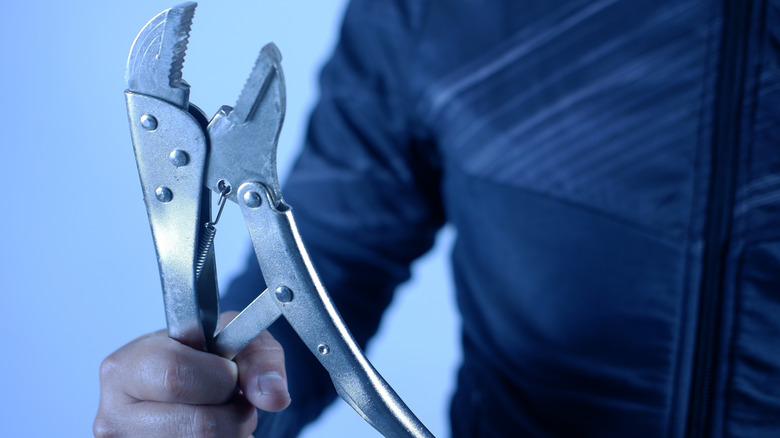
Locking pliers can often provide the same functional coverage as a standard pair of grabbers. These tools come in many sizes and formats, and I've use lots of them through the years to accomplish everything from changing out propane tanks and removing radiators to temporarily clamping workpieces. These are hugely versatile tools and the clamping jaw also provides both expansive grip strength and the ability to adjust the grabbing size required for the task.
A solid option is the Crescent 5-Piece Curved and Long Nose Pliers Set. The collection features classic mole grip style locking pliers in three sizes, and two sizes of straight jaw pliers with extended 'beaks' to provide additional reach. They come from the Crescent brand, too, making them a set you can count on. The knurled adjustment screw, angled tooth design, and coated release lever all make these pliers a high quality choice.
Steel tamper
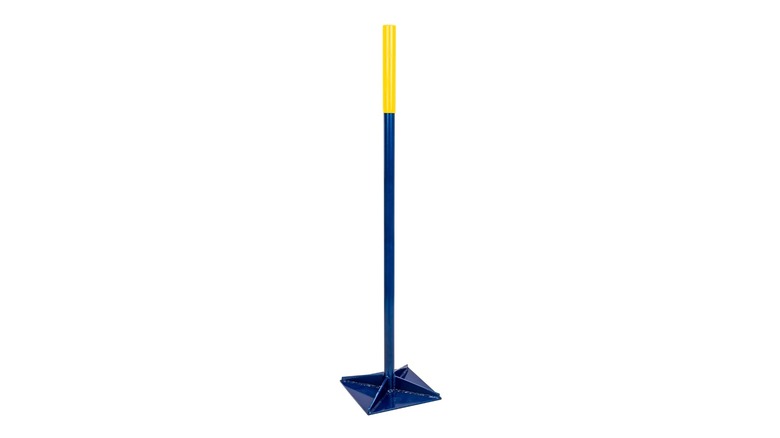
The tamper offers more utility than you might expect. I bought one ahead of laying down a paver walkway in the front yard, and assumed it would sit in the shed untouched until I either expanded that installation farther or started adding similar hardscaping to my backyard, but I've since used it for a range of other tasks in the garden. It's the ideal tool for flattening or compacting any kind of medium you may be working with. Slamming down bare dirt can give you a hard base to work with if you're installing raised bed planters, for instance. It's also a decent way to manage portions of an uneven lawn. The tool may also come in handy as a means of weighing down a workpiece or anchoring the corner of a tarp in a pinch since heft is one of its main selling points. You can even smash down your recycling or trash can's load to create extra space with the tool if you're really stuck!
The Estwing 10-Inch by 10-Inch Square Tamper features the same dimensions as mine and weighs just under 19 pounds. It's an all steel tool with a rubberized and cushioned grip at the top of the handle. The tool features welded steel ribs and a durable connection between the flattening plate and the handle.
Retractable scraper tool
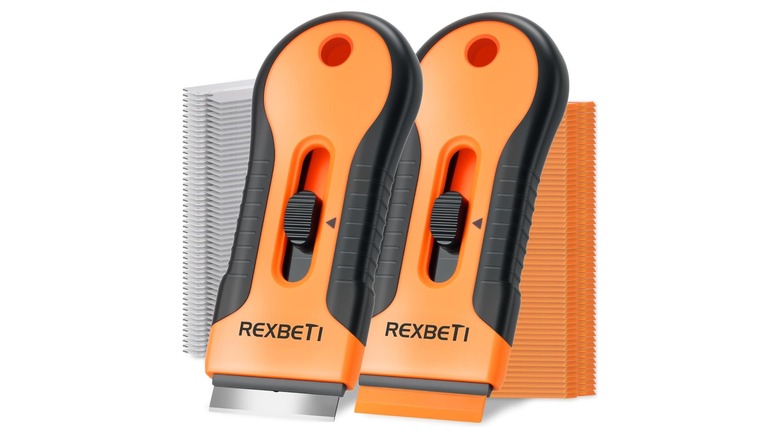
This is essentially a rehash of the utility knife, but instead of orienting the blade like a standard cutting tool, it provides something like a utility tool equivalent of a single bladed safety razor you might use to shave. The scraper gives you plenty of gripping area and a blade that's positioned perfectly to slide along the surface of a workpiece or installation. The result is a tool that can handle glue squeeze out, overenthusiastic buildups of grout, concrete, or adhesives, and more. Scraping away the remnants leftover after an installation can be challenging, especially when the work surface you're scraping is delicate or made of expensive material. A basic scraper like the Rexbeti Razor Blade Scraper Tool 2-Pack is a cheap and cheerful solution to handle these jobs with ease.
The pack comes with both standard razor blades and plastic blades that reduce the potential for damage even further. The tool body features a retractable holding component that allows you to extend the blade out just as far as you need it, helping to create the angle you need to swipe across the surface of the workpiece without damaging it. There's no need to invest in something expensive or feature rich here, a basic scraper with a metal and plastic blade option included is a great choice.
The Swanson Tool Co. 7-Inch Speed Square
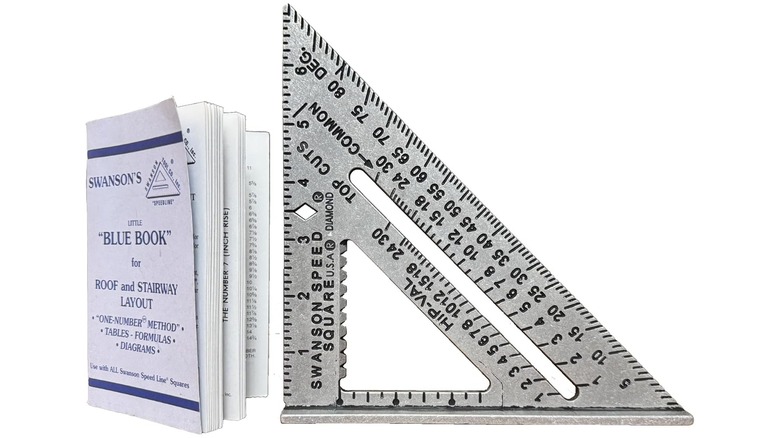
There's really no layout tool like the Swanson Tool Co. 7-Inch Speed Square. It's cheap, massively effective, and built to last. It appears to be the best option around, though other brands make alternatives with more features or functional range. Still, The Swanson model is a constant sight in YouTube videos and beyond when it comes to home improvement projects. This is the model I use, and I'd recommend it to anyone. Speed squares are a major boon for laying out rafters and doing other angled installation work, but they're equally valuable for DIYers and woodworkers making straight cuts in boards or other material.
The tool can be used as a measuring device, although its short length limits its effectiveness in this regard. Swanson does make a 12-inch model and a shorter option, as well, and those can be valuable for niche requirements. Where the tool performs its most impressive functions is in drawing lines. Putting your pencil into one of the built-in channels allows you to drag the square along the edge of a board and strike a dead-straight line all the way along. It can also support you in marking 90-degree lines along a face that will be cut with the miter saw.
A cordless oscillating multitool
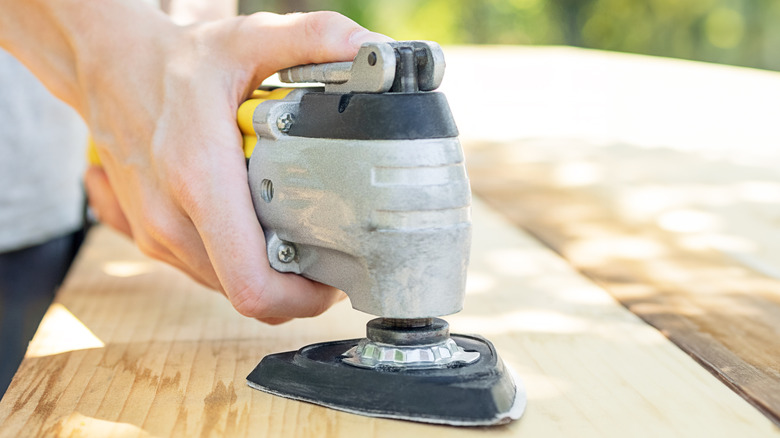
The oscillating multitool is a piece of equipment that no home renovator can do without. The cutting solution features a blade that extends forward to provide key plunge cutting capability, and it's almost certainly the only tool of its kind in this regard. I've used my multitool extensively across more tasks than I can count. But it shines particularly brightly when handling jobs like drywall installation, flooring that needs to work around (and under) door trim, and when doing built-ins that require passthroughs for wires or pipes. Multitools are also generally compatible with attachments that open up additionally capabilities, including sanding.
The Bauer 20V Variable Speed Oscillating Multitool is one of the best options available because it pairs quality features with a $40 price tag. It operates with a 2.9-degree oscillation angle and offers a six-speed variable control dial. The tool can also deliver a maximum of 20,000 OPM blade speeds while weighing in at 2.4 pounds. It's an ideal choice for renovators already working with the Bauer cordless system or thinking about making a switch (or addition).
Hand plane (a No. 4 or No. 5 model)
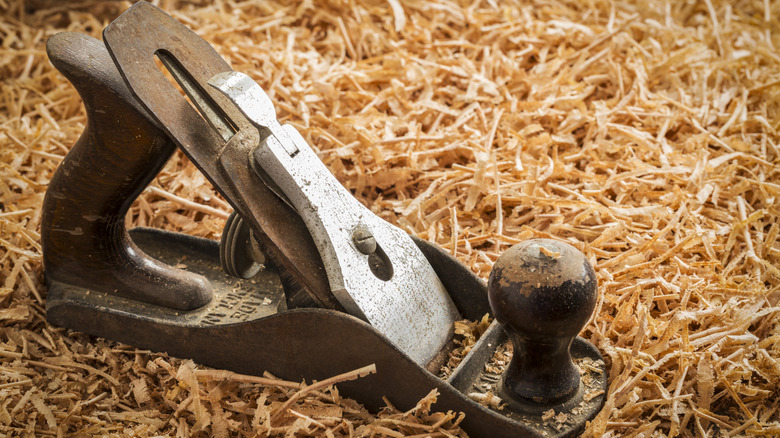
The No. 4 hand plane is a benchmark tool that's essential for woodworking, but it's an equally versatile tool in the hands of a home improver with no designs on making the jump into fine crafting. Numbered plane designations correspond to sizes laid out by the original series of metal-bodied Stanley hand planes. This naming convention standardized a range of key sizes from the tiny No. 1 (an elusive that's seriously expensive) all the way up to the massive No. 8 jointer plane. Even woodworkers won't need planes on either extreme of this spectrum. For most tasks, a No. 4 or No. 5 is the ideal choice. The larger No. 5 model can be used for both broad flattening and more detailed finish work. If you've only got the space in your garage or budget for one, either one can be an effective choice.
There are lots of options out there. Amazon carries a range of affordable and high quality Spear & Jackson planes including a No. 4 Smoothing Plane and a No. 5 Jack Plane (as in, "jack of all trades").
Older hand planes from Stanley are also great. A vintage model brings a wealth of history alongside plenty of remaining value. I have a few, and actually prefer them over newer alternatives. Vintage hand planes can be found in significant abundance, making them relatively cost effective, and make for quality finds at garage sales. I've used mine for all manner of finishing work, most recently to shave down door edges during an installation.
Methodology

These are all tools I use frequently when working on many different kinds of projects around the house. They're the pieces of equipment that I've learned are instrumental to handling my to-do list with (relative) ease and efficiency.