

China's Wind Farms Are Doing A Lot More Than Generating Electricity
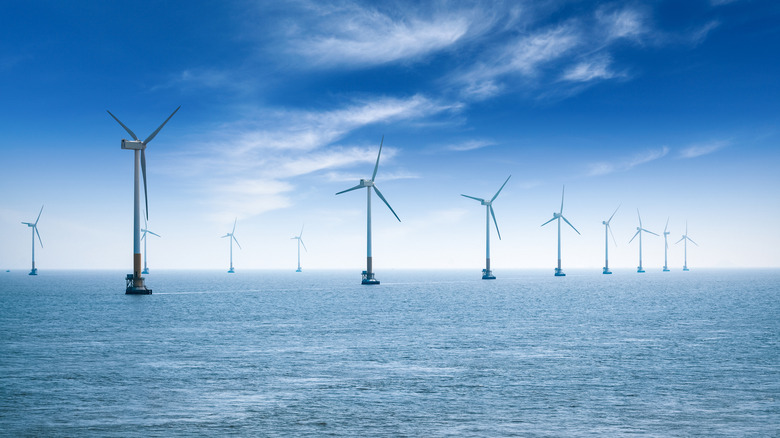
Nations around the world are dedicating a tremendous amount of resources to projects that can help reduce or restore some of the damage caused by climate change. One significant change that's taking place is shifting how some energy is produced. In October 2025, the BBC reported that an Ember study revealed renewable resources had overtaken coal as the planet's most significant source of electricity. China was an enormous part of this push: The outlet notes that, during the first half of 2025, its growth in wind and solar energy outpaced every other country in the world combined.
This dramatic embracing of solar energy's potential is helping to make energy use greener and could be the only defense against the more drastic effects of the planet's warming. It's about much more than just energy generation, though. China has previously found that its enormous solar farm was doing a lot more than just producing energy, and this has also proven to be the case for its expansive efforts in wind. A December 2025 study titled "Offshore wind farms can enhance the structural composition and functional dynamics of coastal waters," concluded that the wind farms in Chinese waters are making a positive change to the biodiversity of the regions where they were installed.
The study, published in Global Ecology and Conservation (via ScienceDirect), reports that "While OWFs contribute significantly to clean energy production, they also bring notable physical, chemical, and biological changes to the surrounding marine environment."
The regenerative effects of wind farms for local ocean life

The oceans are heavily impacted by climate change. The Atlantic Ocean, for instance, has been described by scientists as at a 'tipping point' regarding its ability to regulate the temperature of the world's waters. While offshore wind farms are large and rather imposing structures, they aren't necessarily unfriendly. The Global Ecology and Conservation study noted that the changes a nearby offshore wind farm can have on its ecosystem are considerable, and in order to investigate them further, "ecopath models were developed for an OWF area and, separately, for a nearby control area, using biological and environmental survey data collected in 2022 and 2023."
The researchers were able to put together a picture of how the two areas have developed over time and the effects that the wind farm may have had on the broader marine population. The scientists note that, for fish, the area around an offshore wind farm can be something of a safe area, "as turbine monopiles hinder trawling," and the protected status of some species allows communities to form. Other local wildlife find benefit in living in a turbine's surrounding regions or directly on its surface.
Dalian Ocean University Associate Professor Zhongxin Wu is quoted by Murdoch University: "Our results showed that in the offshore windfarm area, benthic fish biomass was almost doubled compared to the control area." Benthic fish dwell near the seafloor, and a potential reason for their abundance is that there are other organisms in the vicinity, too. Animals such as oysters can enjoy the large, strong, sturdy surface of a wind farm's turbines, which may otherwise be difficult to come by in the area.
The positive and negative environmental impacts of offshore wind farms
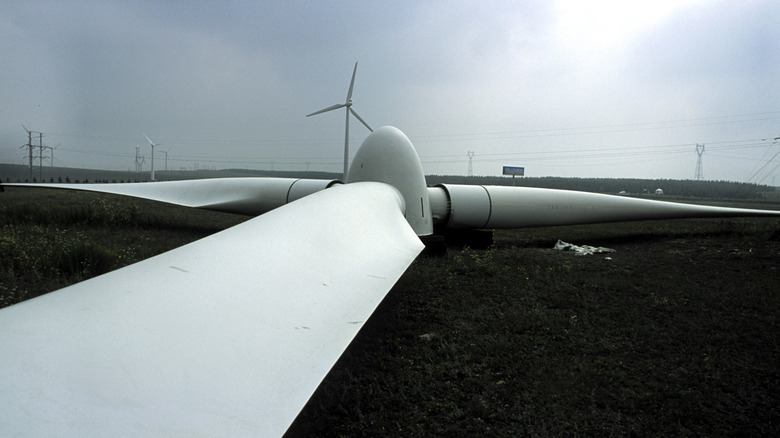
An offshore wind farm is a huge, imposing symbol of green energy. Those who live by the coast will be more than familiar with the ocean's sheer strength and its accompanying winds, so witnessing those huge turbines spinning to harness that power leaves an impression. As green as they may be, though, it's essential to remember that these are huge and considerable pieces of infrastructure. Installing huge towers with 81-meter-long turbine blades that can spin 200 meters over the ocean's waves can be a disruptive process.
Liwei Si et al note in their Global Ecology and Conservation study that the installation of a wind farm can cause damage, noise pollution that can be harmful to all sorts of creatures that live in the vicinity, also highlighting "electromagnetic interference, and habitat fragmentation, further affecting benthic invertebrates, fish, and marine mammals." The concept of decommissioning, much like what happens to an oil rig when the oil runs out, applies to it, too. It's a complex and expensive procedure on an enormous scale.
Nonetheless, there are some positive effects wind farms can have on the marine environment. To humanity, of course, they are artificial energy infrastructure, but for the fish and other creatures who find them in their domain, they can become another part of the habitat. Rather like an artificial reef or even a shipwreck, marine creatures can find havens and flourish in the most unlikely places, and can adapt their environment to their own needs.