

How Long Can An HDMI Cable Be Before You Start Losing Quality?
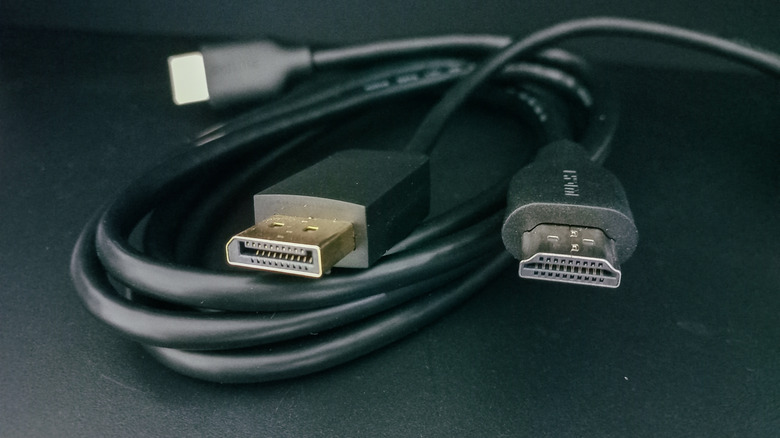
Whether you're setting up a gaming console or installing a home theater system, choosing the right HDMI cable is an important part of the process. Depending on the size of your space, you may need to use longer cables, especially if you're having to reach across the room or even into another room. But if you do, try to keep the cable around 25 feet for less. Beyond that, the signal can start to fail, and you could get screen flickering, a total loss of picture, or some of the other symptoms that would typically accompany a dying HDMI cable that needs to be replaced.
It's important to note that this typically applies to standard passive HDMI copper cables, which are the most common. Plus, what you're sending through those cables can also make a difference. For example, low-resolution 1080p video could possibly transmit just fine over cables much longer than 25 feet. But 4K and 8K signals are much more demanding in terms of data, which means shorter cables usually perform better. Higher refresh rates can negatively impact the signal as well.
Because of these caveats, two standard passive HDMI cables of the same length can perform very differently depending on the use case. So if you're unsure about using a standard HDMI cable for your multimedia setup, check your device's user manual. Most TVs and other digital equipment will give you the recommended requirements, which should help you determine what to do next.
HDMI cable options for better performance
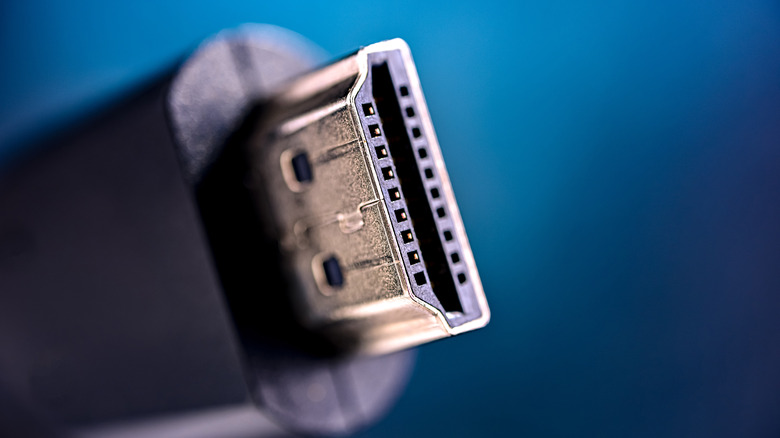
There are some workarounds that make HDMI cables unnecessary in many cases. But if you do choose to go the HDMI route and you want your cable to work better at greater distances, try an active HDMI cable instead of a standard passive one. These have internal components that strengthen the signal. This allows active cables to carry high-quality video up to 100 feet. Some active cable models can even draw power directly from the device itself.
There's also fiber-optic HDMI cables that can carry signals up to about 330 feet for a video feed. Because they send data as light instead of electrical signals, fiber-optic cables don't suffer the same signal interruption that standard cables do. That means even in larger spaces, fiber-optic cables can deliver a high-resolution video and audio without the same signal loss at greater distances.
Another option is to use HDMI extenders. These devices can carry signals from around 130 to 500 feet while maintaining good quality. However, the exact range depends on the resolution you're trying to send. The extenders work by converting your existing HDMI output into a form that can travel over cables like Cat5e, Cat6, or Cat7.