

Reports Of A Russian Weapon Aimed At Starlink Have Experts Shaking Their Heads
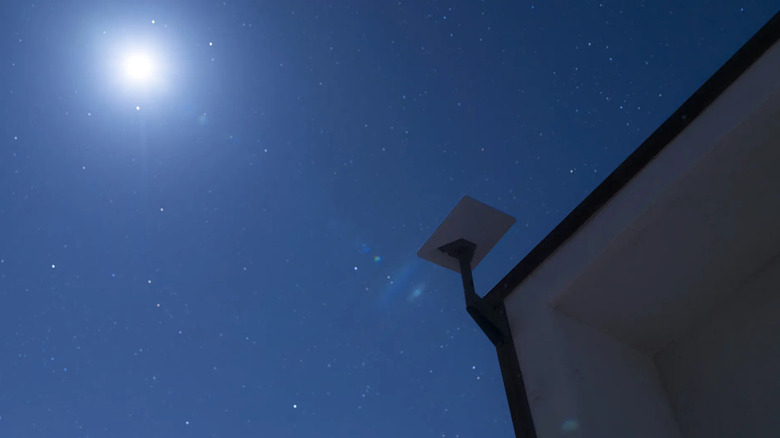
Even if you've never used the service, you're likely familiar with Starlink, the global internet service provider that depends on an array of satellites in low-Earth orbit (LEO). SpaceX launched the first Starlink satellites in 2019, and since then more than 9,000 more have joined those initial five dozen. Starlink plans an eventual fleet of over 40,000, but before that can happen Russia seems interested in knocking some of them out of commission.
In late December 2025, the Associated Press reported, "Two NATO-nation intelligence services suspect Russia is developing a new anti-satellite weapon to target Elon Musk's Starlink constellation." The unnamed services claimed Russia wouldn't target satellites individually or with electromagnetic pulse devices, but rather employ a "zone-effect" weapon consisting of a cloud of dense pellets. While any unsourced reports should be taken lightly, potential Russian interest in taking out Starlink satellites could be due to Ukraine's dependence on Starlink since Russia invaded in 2022. While anti-satellite weapons aren't new, they present a significant risk in the form of widespread debris fields that could threaten other satellites.
A "zone effect" weapon like the one mentioned is akin to firing a shotgun blast at the satellites, with one major difference. While shotgun pellets are limited by physics and gravity to a few seconds of flight, debris in space continues zipping around until it hits something or is captured by Earth's gravity field. The AP quoted defense expert Victoria Samson of the Secure World Foundation as saying, "I would be very surprised, frankly, if they were to do something like that." Brigadier General Christopher Horner — who commands the Space division of the Canadian military — wasn't so sure. After confirming that his intelligence services hadn't turned up any evidence of such a weapon, he added the caveat "it's not implausible."
Russia may just be bluffing
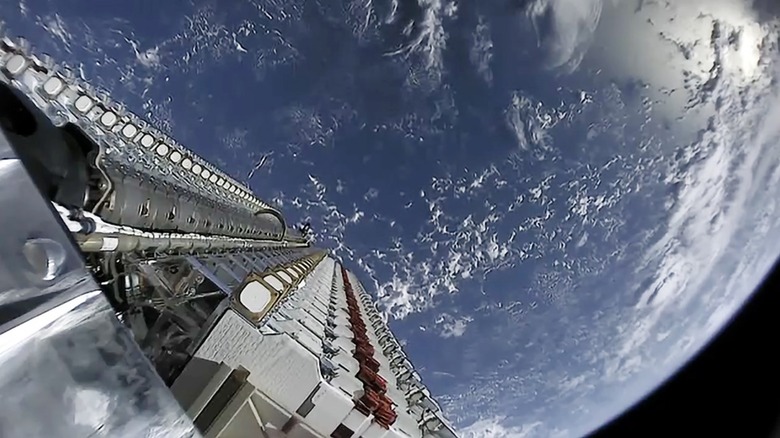
Starlink satellites travel at 27,000 km/h (almost 17,000 mph) and orbit at 550 km (341.75 miles) above the Earth. Hitting even a small object at that speed can cause catastrophic damage to the delicate structures and instruments on a satellite, and Starlink's aren't the only ones in low-Earth orbit. NASA defines low-Earth orbit as below 1,200 miles, noting that the International Space Station occupies this level of space and that it plans to expand access to "include government agencies, commercial providers, academic organizations, and potentially more."
Deploying a "zone-effect" weapon like the one described in the Associated Press' reporting would certainly cause indiscriminate damage to these satellites. The potential risks would be obvious to any rogue state on the planet, and Russia surely has scientists who understand them. Even if Russia never plans on developing or using such a device, it's possible this story has been fabricated and leaked to deter Starlink's operational support of Ukraine. Starlink is also providing internet service in Venezuela after U.S. military operations there, although that's only through February 3.
Zone-effect weapons are relatively low-tech, and Russia has a dedicated space launch agency with the ability to deploy much more capable anti-satellite weapons. Among the most powerful military air defense systems in the world is Russia's S-500 Prometheus, which can take out satellites in the near reaches of low-Earth orbit. The S-500 was engineered as a defensive weapon, but it's not a huge leap in logic to imagine it being used in a "zone effect" or other attack on Starlink satellites.