

NASA Gives Update On The Perseverance Rover's Future After 5 Years On Mars
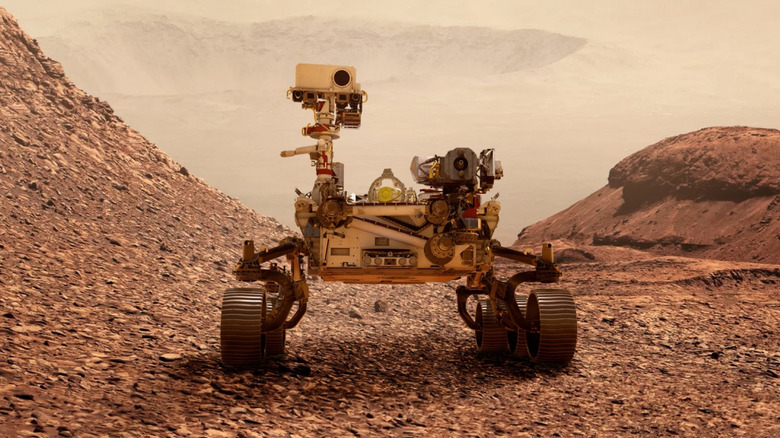
Since it landed on Mars on February 18, 2021, NASA has kept its Perseverance rover busy gathering data and collecting important samples across various regions of the Red Planet. The agency recently released an update on its upcoming plans for the rover, and it's safe to say it won't be getting a break any time soon. According to Steve Lee, the Perseverance deputy project manager from NASA's Jet Propulsion Laboratory, "the rover is in excellent shape," with its "systems [being] fully capable of supporting a very long-term mission to extensively explore this fascinating [Lac de Charmes] region of Mars."
NASA is currently directing the Perseverance to Lac de Charmes, with the aim of collecting more rock samples in the near future. Until now, the rover has spent its time exploring the Jezero Crater and Margin Unit regions, where it has made some exciting discoveries. Scientists think that one of the rock samples it collected there has evidence of the possibility of previous microbial life on the planet, and the rover's upcoming journey should enable it to collect and compare rocks between multiple regions.
Its navigation cameras have also given NASA a clearer picture of the surrounding terrain than previous rovers were able to. Perseverance's cameras even spotted an unexpected shiny object on the surface of Mars back in 2022. It was later identified as a piece of debris from the rover's landing gear, but it's evidence of the kind of visual detail that's now available to researchers.
Perseverance should be able to travel for many more miles
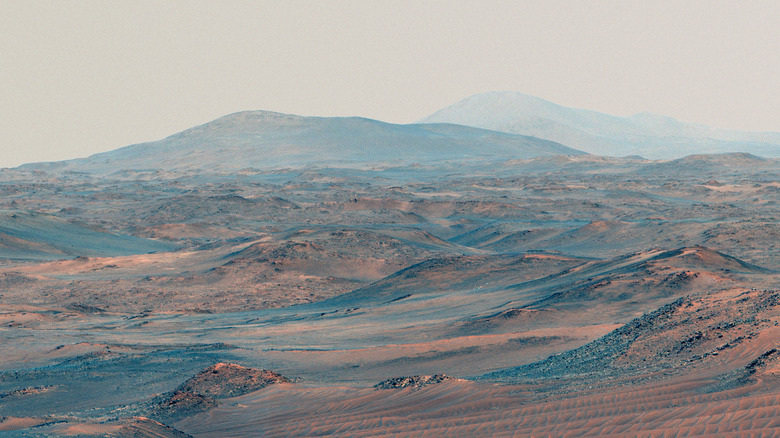
While the rover's main task is to continue to gather data and samples in the coming years, scientists are also using it as an opportunity to monitor how its components hold up over time. They've run tests on each of Perseverance's key components on Earth and concluded that it should be able to remain in operable condition for at least another five years, with the motors driving its wheels estimated to be able to travel another 37 miles.
In its first half-decade of exploring, the rover has traveled around 25 miles. It has been able to travel faster than previous rovers thanks to its autonomous driving capabilities, which can detect upcoming obstacles and then adjust its direction of travel to avoid them. According to NASA, around 90% of Perseverance's total driving distance has been covered autonomously.
The agency's researchers have also continued to improve the rover's systems since it initially landed on Mars, using Earth rocks to help design a better way to let the rover collect Mars rock samples. The rocks on Mars proved to be more crumbly than researchers had initially assumed, which was thought to be due to their previous exposure to water. To account for the unexpected finding, the researchers found similarly textured rocks in the Californian wilderness to help refine the movements and pressure of the rover's drill. The tests helped Perseverance collect the trickier rock samples, and the findings should also help NASA design even better collection systems for future rovers.