

Why Transmission Dipsticks Are Being Removed From New Cars
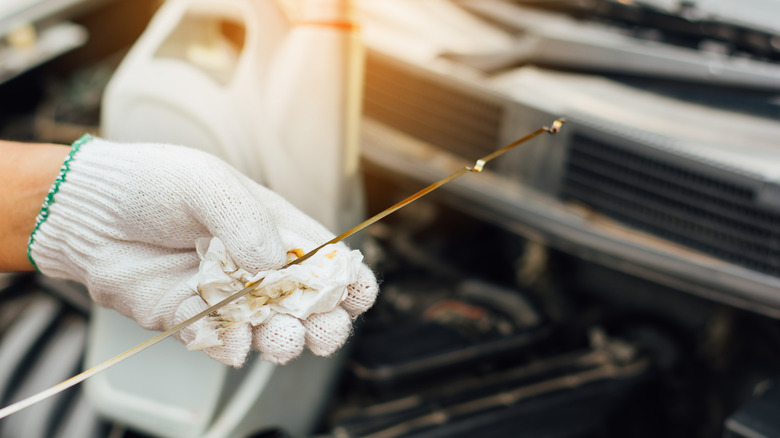
Car enthusiasts are really no different from open source programmers or home DIYers. All of them like to pop the hood on their respective toys, root around to figure out what's wrong, and then fix it themselves. Each has a passion to get their hands dirty, if you will. Well, over the last few years, car makers have increasingly been eliminating one of those "do it yourself" elements that have for so very long been easily accessible to every home mechanic — the transmission dipstick.
Along with checking the transmission fluid level and condition (via this dipstick), inspecting the motor oil using a similar dipstick (something that's also going the way of the dinosaur), radiator coolant levels, windshield wiper fluid, air pressure in the tires, and whether the air filter needed replacing were all once part of a regular maintenance "to-do list" that you could do yourself quickly and easily. However, with the technological advancements in today's transmissions, car makers feel that checking the fluid level isn't something unskilled home mechanics need to worry about anymore.
Not only is there the wayward chance of pouring the wrong type of fluid into the transmission (and possibly destroying it in the process), but more importantly, doing away with the dipstick allows car manufacturers to build transmissions with much tighter tolerances and combine it to form wholly sealed powertrain systems that are better monitored by onboard computers and dashboard warning lights, thus mitigating the risk of potential leaks (not entirely eliminating them, mind you).
Dip-sticking it to the man

As one might expect, there are two different sides to this somewhat contentious subject. On the one side, you have generations of self-taught mechanics and DIYers who've grown accustomed to checking fluid levels in their respective vehicles. Being able to personally inspect (on a whim) the color, consistency, and smell can tell you something about the state of the transmission. It also gives people the freedom to perform this task in the convenience of their own garage without all the rigmarole and extra cost of taking it to a mechanic.
The other side (auto manufacturers, car dealers, service centers, etc.) points out that sealing today's continuously variable transmissions (which, according to some drivers, might be something to avoid) all but prevents pouring in the wrong type of generic fluid (or, just as bad, overfilling it), since they now require very specific mixtures based on individual design. What's more, other high-tech components (i.e., multi-speed automatics and dual-clutch transmissions) rely on the precisely orchestrated management of hydraulic pressure and internal clearances that can't be left to a DIYer's whims without catastrophic results.
While eliminating the dipstick entirely does save the company money (which adds up quickly), it also allows them to build sealed transmissions with higher tolerance levels that may very likely need very little intervention by the vehicle's owner. Designers and manufacturers can, in turn, create cars with higher engineering performance, much better fuel economy, longer lifespans, and lower overall maintenance costs. Ultimately, it's a win-win because having one less thing to worry about when you pop open the hood isn't entirely bad.