

Qi Vs Standard Wireless Charging: What's The Difference?
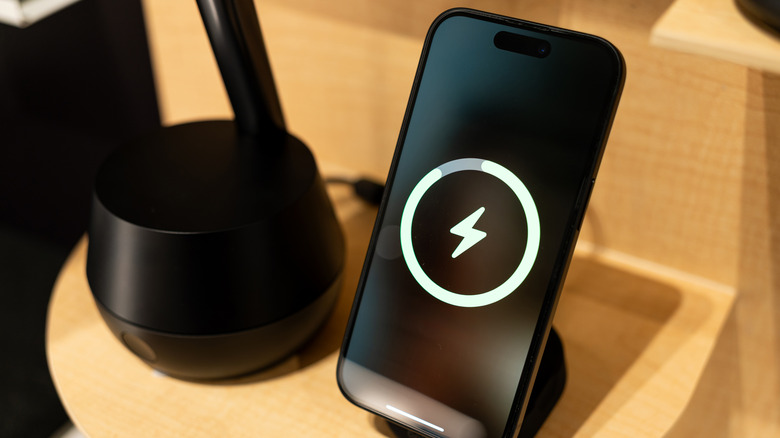
Wireless solutions have become the norm for many mobile phone users, who were once physically tethered to a wired connection. But you should ditch some bad habits when charging your devices, and you should know that the phrase "wireless charging" is actually more complex than you might think. More specifically, Qi charging is actually a wireless charging standard that most modern devices use. A charger and phone that are both Qi compatible follow the same processes for power transfer and safety as standard wireless charging.
But the key difference is that Qi wireless charging is a certified, standardized system. It ensures consistent performance and has built-in features like foreign object detection, which keeps your device from overheating. Qi charging also ensures that devices of different brands can use the same pad. This is possible thanks to interoperability and safety requirements that keep your phone and charger secure during the charging process.
In contrast, standard wireless charging is the broader terminology for the inductive transfer of power without cables. There's typically no formal certification or interoperability guarantees with the standard charging option, which means you may not have those built-in safety features. If you're curious about whether or not your wireless charger is Qi certified, look for the Qi logo or check with the manufacturer. To find out about Qi compatibility for your phone, which will need a case that works with wireless chargers, check your user manual or the manufacturer's website for specific information.
Qi's evolution as the standard for consumer electronics
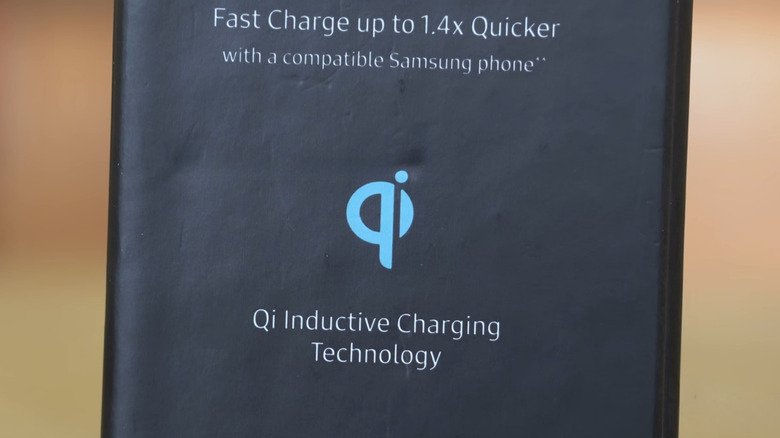
Wireless charging was nothing more than just experimental technology at one time, but the Qi standard was a major turning point in 2008. The Qi standard was created by the Wireless Power Consortium, which aimed to develop a universal approach to inductive charging. This was an important advancement at the time, as many electronic devices were limited to proprietary applications, with no inter-brand compatibility. Qi quickly became the standard for smartphones and other devices, as it was a faster and safer means of wireless charging.
But there are other wireless charging standards besides Qi. For example, Powermat, also referred to as PMA, is an alternative inductive charging standard that uses a different process than Qi. This makes the Powermat tech incompatible with Qi chargers. Although Powermat is used in some public charging stations, it wasn't as widely adopted as Qi technology, which dominates consumer electronics. Powermat technology later became part of the AirFuel Alliance, a worldwide group of digital wireless companies.
Charging technology has evolved to the point that true wireless power is now achievable, and "invisible" charging is now possible. This charging is actually done through surfaces like wood, plastic, or glass, where the unit is underneath, and essentially hidden from view. The device needing to be charged is placed on top of the surface, and power is transferred from the charger through the table or desk. Invisible charging is based on the same technology as Qi, but is more advanced overall.