

What Does GS F Stand For On A Lexus?
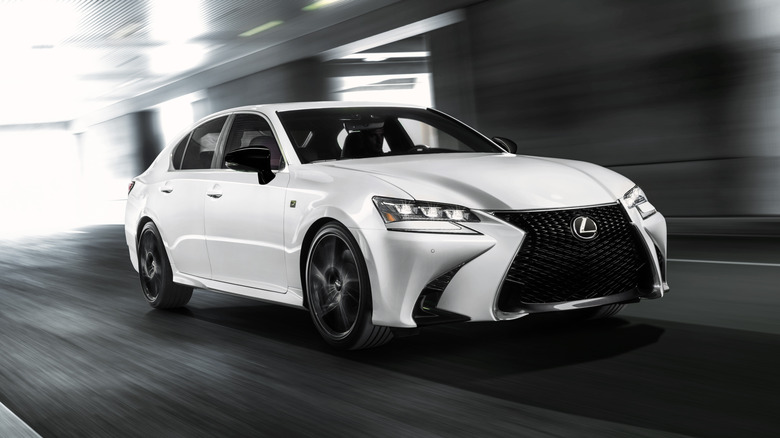
Automakers love to use letters and numbers as the names of vehicles, from basically the entire BMW lineup of numbers to Lexus and Mercedes using letters. While they seem random, the letters and numbers chosen to represent a vehicle's name do have meanings behind them. For Lexus, the second letter in a vehicle's name describes the type of vehicle it is. If the second letter in a Lexus vehicle's name is S then the vehicle is a sedan, if the letter is C then the vehicle is a coupe, if the letter is an X then the vehicle is a crossover, and if the letter is a Z then it is an electric vehicle.
One of the more popular vehicles in the Lexus lineup is the midsize GS sedan. As we just mentioned, the S in the GS name indicates the style of vehicle as being a sedan. The G in the name originally stood for 'Grand,' meaning the Lexus GS government name is the Lexus Grand Sedan. For the Lexus GS F, the F in that name stands for Fuji Speedway and indicates a performance model. For the other sedans in the Lexus lineup, there's the Luxury Sedan (LS) and Executive Sedan (ES). Lexus also has the IS, which is a sedan, although the letters for the IS name stand for Intelligent Sports.
What you need to know about the Lexus GS F
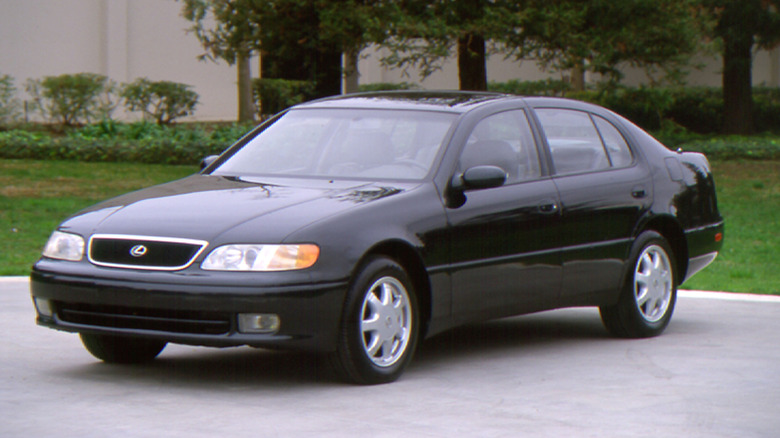
Just five years after Toyota created the Lexus luxury brand, the 1993 Lexus GS300 landed on American streets. The first generation of the GS was a rear-wheel-drive luxury sedan that featured a number of high-end features that many economy cars today still don't have. Certain first-gen GS models had heated leather seats, a CD-player with automatic disc changing, and even automatic climate control.
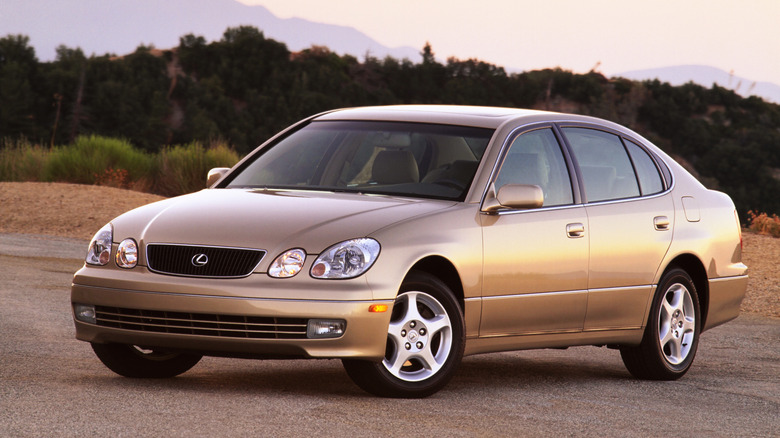
The second generation of the GS ran from 1997 until 2000 and featured more sporty styling and some upgraded interior materials. Passengers could sit in leather-upholstered seats, which were mostly comfortable except for some side bolsters that could be, well, bolstered. The second-generation GS also received a refresh in 2000. The new exterior design helped the GS battle rivals like the Mercedes-Benz E-Class.
The third generation of the Lexus GS first appeared at the 2004 North American International Auto Show and arrived on the market as a 2005 model. Lexus continued to up the ante when it came to luxurious interiors, adding more leather and offering a 7-inch touch screen infotainment system. The third-gen GS also had a V8 engine that carried over from the previous two generations, as well as an optional V6 and even a hybrid engine. A refresh of the third-generation appeared in 2008 and was sold until 2011.
Modern generation (and death) of the Lexus GS
The fourth generation of the Lexus GS brought in a more modern styling that closely resembles the profile the GS gives today. Hitting the market in 2011, the fourth-generation GS offered more sporty styling and performance. In fact, this generation was the first time Lexus introduced the F-Sport trim, leading the way to the Lexus GS F. The fourth-generation GS offered gasoline and hybrid engine options.
The fourth generation of the Lexus GS was unfortunately also the last. However, Lexus did refresh the generation in 2015, updating the exterior styling to make a more sporty and luxurious sedan. Drivers who upgraded to the F-Sport package got larger 19-inch wheels.
Lexus didn't stop in the exterior, adding new features inside that helped make the GS feel truly luxe. A 12.3-inch touch screen was fit snugly into the dashboard, and a high-end 17-speaker Mark Levinson audio system makes music sound great. Lexus discontinued the GS after the 2020 model year, marking the fourth-generation as the last.