

CES 2026 Day 1 Round-Up: The Beginning Is Just The Beginning

Today is the official first day of the Consumer Electronics Show, but don't be fooled. I spent most of yesterday in planes, trains, and automobiles, scouring the city for the best tech that's making its appearance at the show this year. This year is also bringing me a few firsts in my career as well, which is making the show more exciting than ever.
Starting off with a bang, I hopped into a helicopter and flew out to the Grand Canyon, courtesy of our friends at Honor. During the flight and the tour on the ground, I got to put Honor's latest flagship, the Honor Magic Pro 8 through its paces. You can read more about that below.
While Honor certainly took up a lot of my day here at CES, I also got the chance to check in with some other really great brands bringing new products to the table. From past mistakes being rectified to a refresh of last year's successes, here's all the cool tech I saw before the show officially opened.
Honor Magic Pro 8
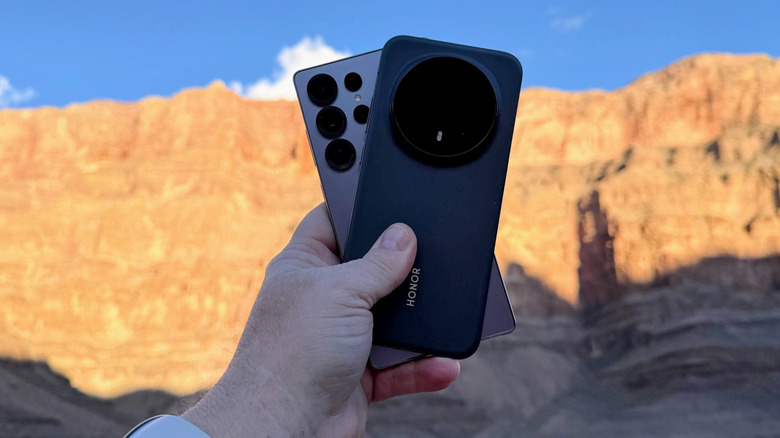
You gotta hand it to Honor — when it goes, it goes big. At CES, it wasn't enough to hand me an Honor Magic 8 Pro. No, they also had to put me in a helicopter and fly to the Grand Canyon to test out the camera. So I did and it's very, very good.
That's not surprising. Honor, to this day, still has my very favorite portrait mode, going back to the Honor 200 Pro. Meanwhile, the Honor Magic 8 Pro is the company's latest flagship. It has been announced in China thus far, but now it's making its way to western shores. No, not U.S. shores; don't be silly, but everywhere else in the world will be able to buy it.
The Magic 8 Pro has all the best specs you could ask for. It has a Snapdragon 8 Elite Gen 5 processor, 12+512GB of RAM/ROM, 7,100 mAh battery with 100W wired charging, IP69 water resistance and a quadruple camera system. This stellar camera system includes a 200-megapixel telephoto (3.7x optical zoom) camera, and 50 megapixels each for the main sensor, ultrawide (122-degree FOV) and selfie camera on the front. Put simply, this phone has all the potential to be great, and my hand on time so far has born that out.
Dell brings back the XPS
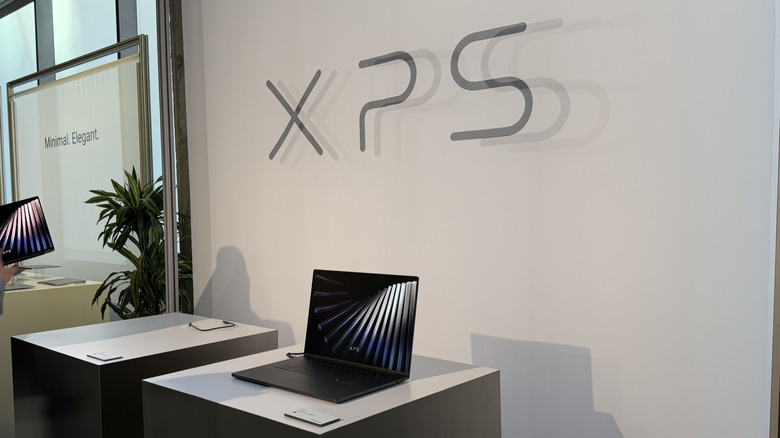
Ok, so let's get this out of the way right now — Dell made a mistake. Last year, Dell did away with all of its branding (except "Dell") and tried to simplify its lineup. It didn't go well. Jeff Clarke of Dell got on stage and said, "I owe you an apology...you were right, on branding." So, this year, Dell is walking things back and bringing back the XPS line of laptops. Woot!
This year's Dell XPS 14 looks particularly enticing. It has a 14-inch, tandem OLED display, and, according to Dell, it takes up less desk space than a 13-inch MacBook. The Dell XPS 13 is also making a comeback. It will be the thinnest and lightest and least expensive XPS ever. While Dell couldn't give us an official weight on the XPS 13 — and indeed wouldn't let us touch it or photograph it at a preview event in NYC — but it told us the XPS 14 will check in at 3 pounds while the XPS 16 will weigh 3.6 pounds, which is almost one pound lighter than the last version.
Later this year, Dell will release more midrange laptops carrying only the "Dell" branding. So all told, Dell will have its base model Dell laptops, high end XPS laptops, and Alienware gaming laptops, which is the simplified lineup we were looking for a year ago.
Anker Nano Docking Station
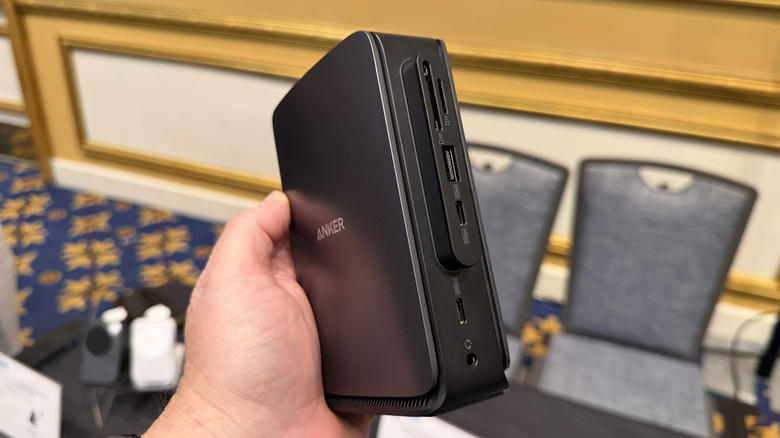
Anker, as per usual, had a whole host of devices to play with from robot vacuums that spread a scent to projectors with built-in rotating speakers, but the device that caught my attention had to be the 13-in-1 Nano Docking Station, and the first thing you might think is, "How can a docking station be '13-in-1' and 'nano'?" The answer is, it's not, or at least not at the same time.
The docking station comes with a full size SD card reader, a microSD reader, one DisplayPort, two HDMI ports, three USB-A ports, three USB-C ports, an Ethernet port, and a headphone jack. That is a lot of I/O for one docking station, but wait, there's more. With the push of a button, a smaller docking station comes out on the main station with a USB-C, USB-A, and both card readers. That way, you can take it with you when you're on the go and not have to disassemble your entire setup.
How handy this ultimately turns out to be is anyone's guess. I would imagine a user who works from a home office and on the go often would find this useful. At the very least, it saves you from having to buy a separate device as a smaller unit, which is a win.
Chamleo Arzora and By O
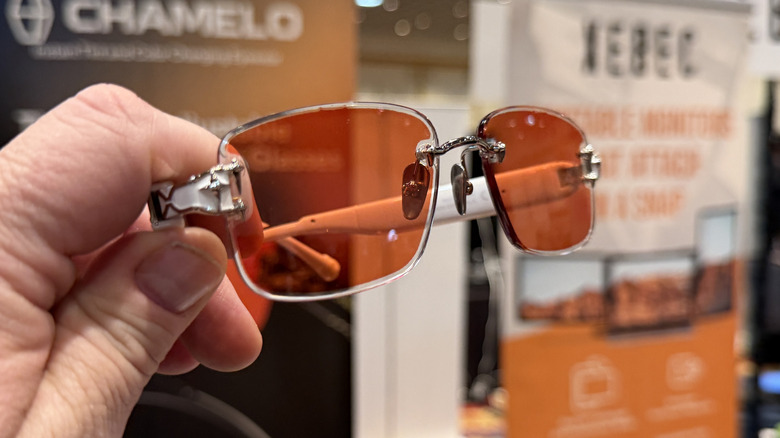
I first met with one of Chamleo's founders two years ago at CES when, at the time, he was developing color-changing sunglasses. Last year, I met with Chamleo as it exists today and checked out a variety of tint-changing glasses, which are excellent. This year, the company is expanding its portfolio with a pair of new offerings. Arzora is a set of ski goggles with Chamleo's color changing tech built in, allowing wearers to adjust the amount of light coming in to work in a variety of scenarios from bright sunlight to stormy weather.
By O is a collaboration with actor and creator Omari Hardwick which uses the color-adjusting lenses to help your body adjust to various rhythms throughout the day. They can reduce eye strain during the day and filter out blue light at night, all in one pair of glasses.
Personally, I'm a fan of the Aura-style glasses, which work with the By O lenses, though I'm more into the Calm lineup of colors myself. I normally use transition lenses in my Meta Ray Bans, which are just okay, but I really dig these tint-adjustable lenses because they can give me the right amount of light filtration that I need.
Qualcomm Snapdragon X2 Plus
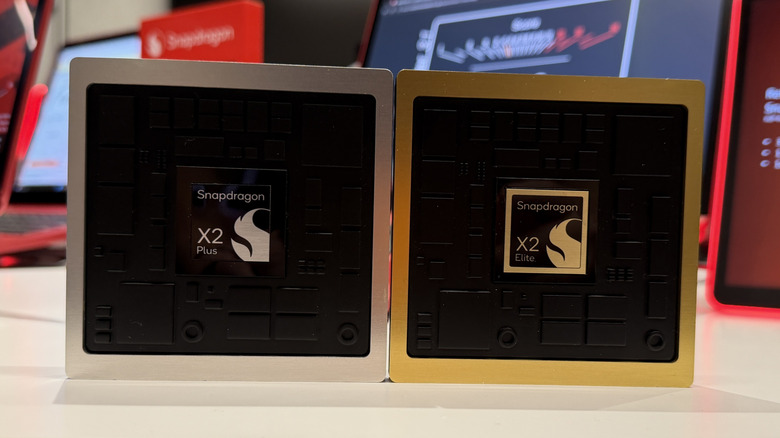
I should start this out by reminding you that Qualcomm brought me to CES this year and paid for accommodations, hotels, meals, and some transportation, but as is always the case with sponsored travel, all the company is buying is my time. My opinions remain my own. All that being said, Qualcomm launched a new midrange processor in its compute lineup — the Snapdragon X2 Plus. This will come in two variants — 10-core and 6-core processors.
The gist of the announcement is that the new Snapdragon processors will get 35% more performance while requiring 43% less power. These two new processors replace last year's 10-core and 8-core processors in the midrange market. New hardware running these processors is expected in the early part of this year.
This is not a significant step for Qualcomm — it has already had a generation of midrange PC processors, so this is evolution, which is good. If I'm being totally honest, my ears perk up whenever a new laptop running Qualcomm silicone gets announced, and midrange processors make that hardware accessible at lower price points, which is a win for everyone.