

Search For Malaysian Airlines Flight Resumes 12 Years After It Vanished
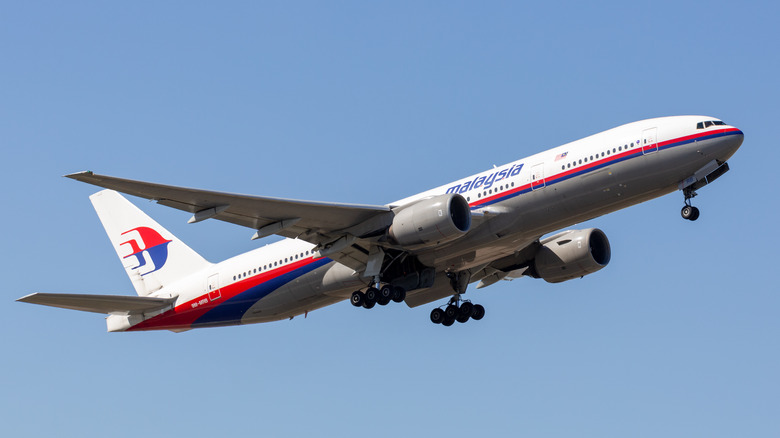
In a surprising and unexpected development, the search for Malaysian Airlines Flight 370, which went missing on a routine flight from Kuala Lumpur to Beijing on March 8, 2014, has resumed. MH370 was carrying 227 passengers, most from China, and 12 crew, and its disappearance ranks as one of aviation history's worst accidents. What followed was the largest underwater search ever organized, coordinated by Malaysia, China, and Australia, covering an area of 46,000 square miles of ocean off the west coast of Australia.
The nations scoured the region using sonar-equipped ships, drone submarines, and aircraft, with no success. A few small pieces of debris were found off the eastern coast of Africa, but the black box and remains of the passengers and crew were never recovered. The original search ended in 2017, with a British-American robotics company called Ocean Infinity resuming a search in 2018, also with no results.
But Ocean Infinity has returned to the case, with a plan to search a new area that covers 5,800 square miles. Just as with their 2018 search, Ocean Infinity will only be paid if it discovers the plane's wreckage. If it does, the company will receive a payment of $70 million from the Malaysian government. The company started its search in the spring of 2025, but paused in April due to poor weather conditions. Ocean Infinity resumed the search on December 30, 2025, and the search will last up to 55 days, covering specific areas where the company believes the plane is most likely to be found.
What happened to Malaysian Airlines Flight 370?

Malaysian Airlines Flight 370 disappeared from radar only 39 minutes after leaving Kuala Lumpur International Airport, a major Southeast Asian aviation hub. The flight's final radio call came from its pilot, who simply said, "Good night, Malaysian Three Seven Zero." MH370 then entered Vietnam's airspace but didn't check in with that country's flight controllers. Shortly thereafter, the plane's transponder ceased operating. According to satellite information, the plane flew for hours, potentially running out of fuel in the southern part of the Indian Ocean, where it likely sank. While Malaysian Airlines doesn't have the worst record for plane crashes, the MH370 disappearance has been a source of intrigue since.
There are many theories about what actually happened, but little is known. These include a loss of electrical power, failure of the cabin pressurization system, or even a hijacking scenario. But there was no bad weather, no proof of any technical issues affecting the plane, and no ransom demands or distress calls. Conspiracy theories abound, from a rogue pilot to the flight being shot down to an evil government landing the plane to grab a passenger or cargo item.
The original search started in the Indian Ocean between Malaysia and Vietnam. It later grew to include the Andaman Sea and into the Indian Ocean. Searchers picked up signals that were thought to be coming from the airliner's black box, but this was shown to be an incorrect assumption, with no black box and no wreckage found.
All about the search for Malaysian Airlines Flight 370
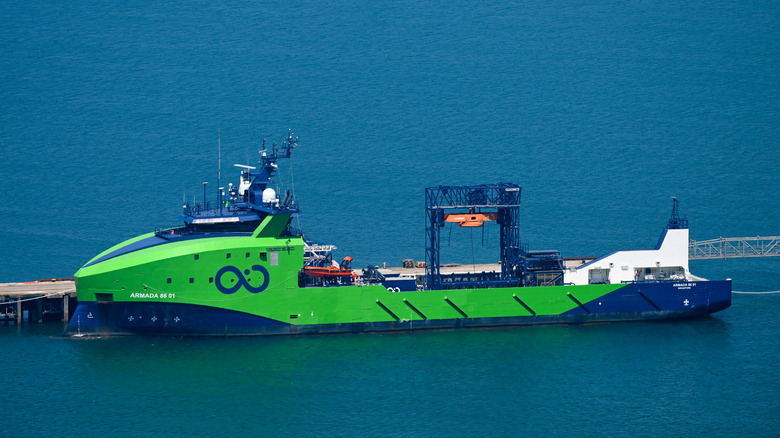
According to the most recent information from the MH370search.com website at the time of writing, the new 18-month search agreement between Ocean Infinity and the Malaysian government was signed on March 25, 2025. The Ocean Infinity ship Armada 86 05, similar to the one above, is currently in position 1,108 nautical miles from Perth, Australia, with a five-day trip each way for resupply. Summertime in the Southern Hemisphere makes January, February, and March the best times to safely search for whatever remains of MH370 in the Indian Ocean. Depending on whether the ship needs to make one resupply run or two, and how good the weather is, the search period could end as early as 7 March or last until the end of the month.
Ocean Infinity's Armada 86 05 is currently operating in water varying from approximately 3,600 feet to 13,000 feet in depth. The area has been charted and shows a combination of seamounts, abyssal plains, and valleys. Ocean Infinity, which has partnered with makers of underwater drone gliders, now has Autonomous Underwater Vehicles (AUVs) equipped with acoustic mapping that provides great detail of the sea bottom, plus laser scanning that provides excellent detail up close, along with magnetometers that can pick up metallic objects. Ocean Infinity has previously found several shipwrecks, including that of the famous Endurance, which Sir Ernest Shackleton sailed to the Weddell Sea in Antarctica before it sank in 10,000 feet of water.