

4 Bike Types You Can Legally Ride Without A Motorcycle License In California
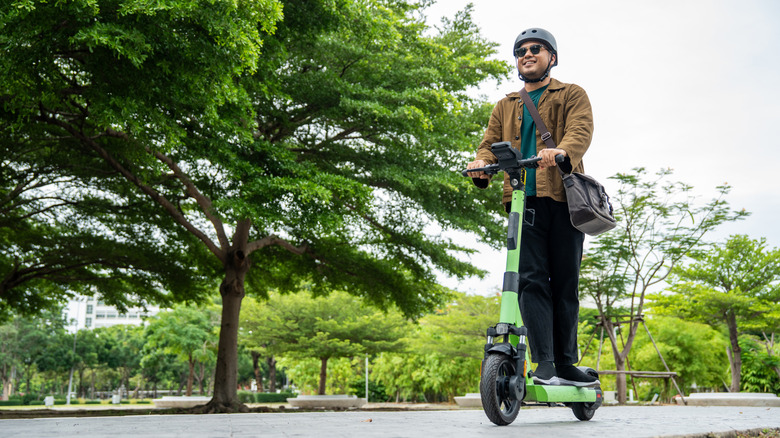
It's as easy as riding a bike, some will say about a routine task. What this fails to consider, though, is that riding a bike has become an increasingly complex matter. This is because there aren't only pedal-driven bicycles and motorcycles, but a range of different machines in between. The difference between a motorcycle, a moped, an electric scooter, an electric bicycle and the various classes of such can be difficult to determine. You might have moved to a new state, bought a new machine, or even both, and be very wary of the legal ramifications of riding it. For car drivers, there are factors such a commercial versus non-commercial use and the size and weight of the vehicle to consider, though a Class C noncommercial license is typically the one that the average driver taking their own car across California's roads will require.
Bicycles are rather more complex when it comes to those weight regulations, as well as factors such as their power source. When a motor was first added to a bicycle and the motorcycle was born, so too was an entirely different type of vehicle. The concept has been adapted since to include models powered by electricity, those with two wheels and those with three, the addition of sidecars, the creation of variants like mopeds, and so on. Depending on the particular type, weight, and class of vehicle you're riding, then you might find that your existing license doesn't allow you to legally ride. It's vital, then, to understand the specific laws regarding licenses in your state as well as those you may be traveling to. For residents of or visitors to California, then, these are the types of bikes that won't require a motorcycle license to legally ride there.
Standard pedal bicycles
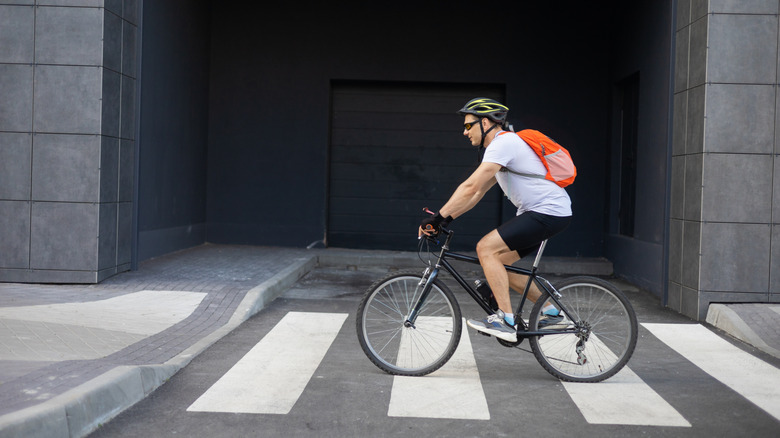
Conventional bicycles don't have a power source other than the rider. These pedal-powered modes of transport, as such, don't require a driving license of any class or a separate motorcycle license. This doesn't mean, though, that their use isn't carefully regulated by the law for the safety of riders, other road users, and pedestrians alike. One particularly important factor to consider is that in some countries, such as the United Kingdom, it is typically illegal to ride a bicycle on the sidewalk. In the United States, as is so often the case, it's a matter of municipality law rather than federal.
In Los Angeles, for instance, the municipal code reads, " No person shall ride, operate or use a bicycle, unicycle, skateboard, cart, wagon, wheelchair, rollerskates, or any other device moved exclusively by human power, on a sidewalk, bikeway or boardwalk in a willful or wanton disregard for the safety of persons or property." Meanwhile, in San Francisco, it's illegal to ride on the sidewalk for anyone but those under 13, and all cyclists as well as drivers must pass on the left. This means that it's critical to understand and obey the laws during each leg of your journey, across California or elsewhere. After all, they may change as you enter a new area. In the city of Carlsbad, road rules are the same as they are for drivers, and though no license is required for a conventional pedal bike in California, they are never permitted on the sidewalk in Carlsbad. Neither, of course, are electric bikes, and these particular models are interesting cases too. In some instances, as we'll see, a license will be needed for this type of bike.
Electric bicycle
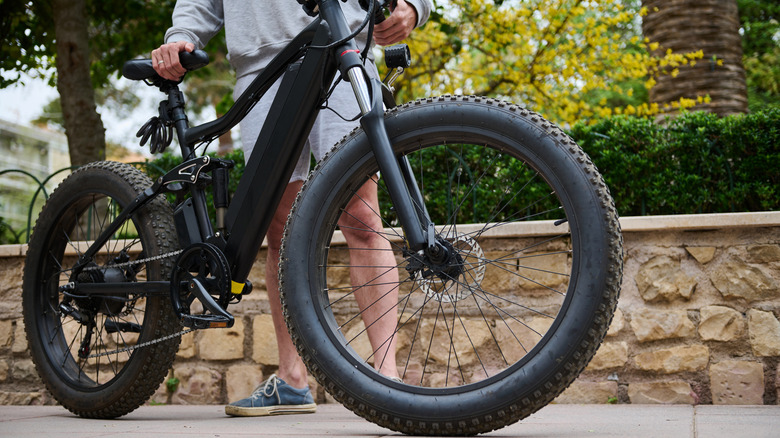
Electric bicycles are an interesting middle ground between purely pedal-powered and fully motorized models, and there are some important things to know before buying an e-bike. Users can alter the amount of power exerted by the motor in response to the journey they're taking, the kind of terrain, how much they're carrying, and so on. In this way, cycling is made more accessible for those who may not be comfortable with pedaling for long periods or are unable to do so. It also means that they are still reliant on your pedaling to generate movement, as the motor begins working when you do so using the bike's sensors and the settings you've selected to determine how much power to generate.
It's clear that electric bicycles aren't all that different from conventional pedal models. The crucial distinction is that, typically, they aren't capable of sustaining power under their own volition, intended to augment pedal-powered cycling instead of replacing it. As a result, a motorcycle license isn't required to ride one in California, nor is a driving license of any sort. Nonetheless, there are still some important legal wrinkles to consider with this type of bike. California classifies e-bikes as class 1, 2, or 3, with the first two being limited to 20 mph and below and class 3 topping out at 28 mph. None of the three can have motors output more than 750 watts, meaning that they aren't motorized vehicles in that sense. The California Bicycle Coalition explains that license plates and insurance are also not required with these bikes, but that the higher speed of class 3 models means that additional caution is necessary. Class 3 models are for riders of 16 and over only, and helmets are mandatory on them for riders of all ages.
Scooters
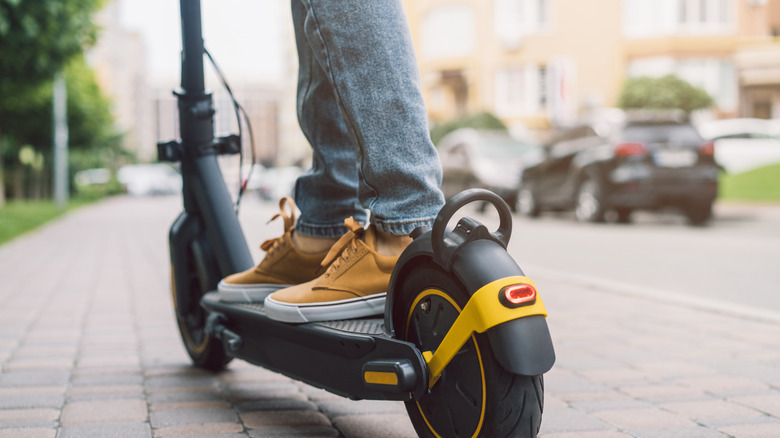
Electric scooters are made by several major brands and provide similar benefits to e-bikes, though without the "pedal-assist" focus. Instead, the reverse is true: motorized scooters power themselves, typically after a kick-start from the rider. With these vehicles, the California DMV notes, "A person holding a valid driver license of any class may operate a motorized scooter." As a result, motorcycle licenses carried with either an M1 or M2 can, of course, operate one, but this particular license type isn't needed.
For comparison, in the United Kingdom, only licensed rental scooters can be legally ridden in public, and riders require a provisional or full driving license in order to do so. Privately owned ones on public land are forbidden there, and police around the country take that very seriously. In fact, the BBC quotes a Wiltshire Police spokesperson as noting, "Officers can seize e-scooters being used illegally, and riders may receive warnings, fines, penalty points on a future driving licence or prosecution." The issue is that the vehicle classification and requirements for insurance in the U.K. aren't currently available, and so unlicensed models are typically confiscated by the police and destroyed.
In California, the same road rules that apply to other vehicles also have to be adhered to by e-scooter riders. In addition, they are for use on areas with special permission, such as bike lanes, but not on sidewalks. Age and safety restrictions also apply, and a learner's permit or driver's license must be held. These vehicles are to be ridden by those who are 16 or over only, and if 16 or 17, must always wear a helmet. It's also strictly forbidden to have a passenger on your scooter with you. Riders also need to be aware that they can still get a DUI while riding an electric scooter.
Three-wheeled motorcycles
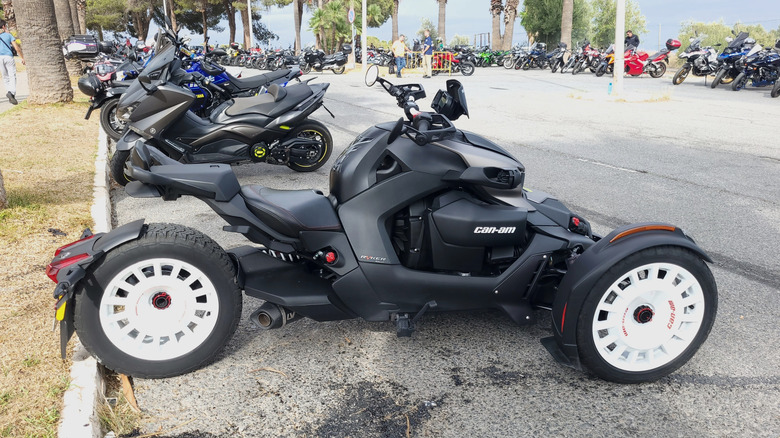
You'd think that a motorcycle would require a motorcycle license (M1 or M2). Typically this is the case for vehicles that fit the California Highway Patrol's definition of a motorcycle: "a motor vehicle that has a seat or saddle for the use of the rider, and is designed to travel on not more than three wheels in contact with the ground [...] and whose motor displaces more than 150 cubic centimeters." These vehicles mostly require a Class M1 motorcycle license. There are some unique exceptions, though, that don't. Namely, a motorcycle with a sidecar or a trike can be operated without the endorsement, and simply need a Class C license. With regards to gear, a helmet approved by the Department of Transportation is mandatory.
This exception is made because, in these two unique cases, an operative motorcycle is not a two-wheeled vehicle but a three-wheeled one. This puts it closer, in vehicle classification terms, to a car or more conventional vehicle, which are the very types covered by the noncommercial Class C license. Trikes are undoubtedly rather novel, but the three-wheeled design wasn't simply chosen to stand out. There are practical benefits such as enhanced stability and the appeal to a non-traditional biker crowd, and in chasing them, manufacturers have designed some truly iconic trikes, such as the Can-Am Ryker. Three-wheelers are perhaps more accessible than their more conventional counterparts, and that's certainly true for Class C license holders eager to drive one in California.