

These Are The Tools You'll Want To Own Duplicates Of
We may receive a commission on purchases made from links.
Across the tool marketplace, buyers have opportunities to choose from. There are so many different kinds of tools out there that even a modest collection can easily run into the hundreds or thousands of individual pieces. Some tools are small, semi-disposable additions, like utility knives or paint brushes. These are inexpensive and often require replacement. Basic consumables aren't the only tools that most pros and DIY enthusiasts will want to have an abundance of, though. There are a few staple tools, both in the power and hand tool segments of the toolbox, that benefit from redundancy.
In some cases, duplicate tools should be just that: Multiple examples of the same item. There's a wide range of visually identical drill bits you can find at your local hardware store that feature different tips and material compositions, for instance. As an example, cobalt and carbide drill bits may be nearly indistinguishable to the eye but perform different functions when seated in the chuck of a drill. To the untrained eye, a drill is quite similar to an impact driver, and the two can both drive screws. But their specific purposes and strengths diverge in important ways. However, these five tools are great candidates for duplication.
Tape measures
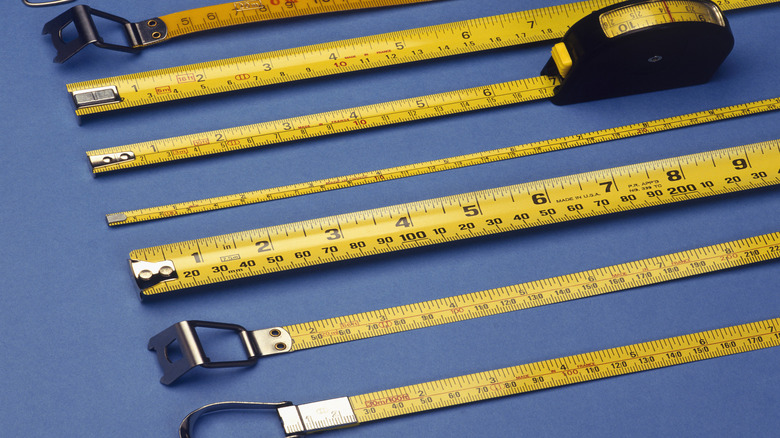
Having just one tape measure might not be enough. Even during simple installation projects or woodworking forays, you might want or need multiples. Tape measures also go missing while working on projects both large and small. Unless you've got it strapped to your belt, you'll be setting it down frequently. This ultimately becomes a wasteful game of hide-and-seek that can sap time away from your work.
I can say from experience that the frustration of "losing" a tape measure behind the board you're measuring or on a windowsill next to your workspace is enough to send even the most levelheaded person into a frenzy. Misplacing the tool halts any progress you might hope to make because, without the ability to take measurements, you can't continue making even rudimentary progress on most tasks. Forgetting where you stored your only tape can be an impediment to starting a project, too. The Stanley FatMax 25-Foot 2-Pack is a solid option to keep your measurements consistent while adding a second tape into the mix to cut down on slowdowns and frustration. But for those who've found themselves particularly susceptible to misplacing their tape, something like the LICHAMP 6-Pack of 25-Foot Tape Measures can be a decent pickup.
Levels
Leveling tools come in many forms. Plenty of installers will own at least a basic laser level. These tools are great for striking a line across a wall, illuminating a level layout aid on the surface to speed up the process of hanging pictures, installing a TV mounting bracket, or putting up shelves. There's so much that a laser solution in this realm can accomplish. However, there's no need for multiple laser levels in your collection unless you're involved in professional tool procurement.
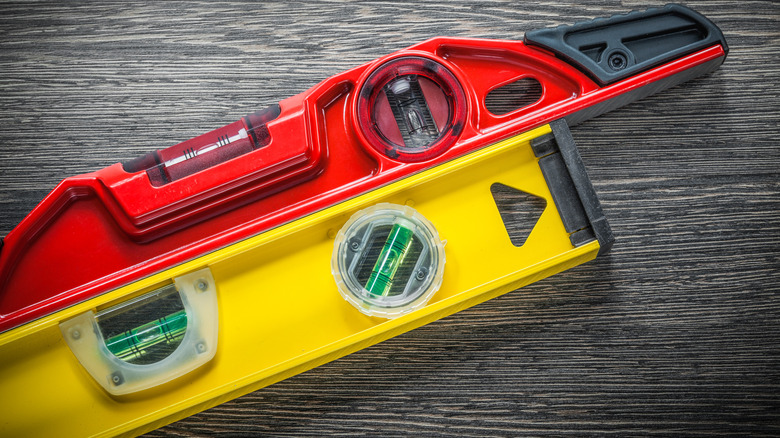
The levels that require redundancy in your toolbox are the analog variety. Old-fashioned stick levels with liquid vials scattered across the tool's body remain a trusted resource for all sorts of installation tasks. They're perfect for squaring and leveling new building elements like walls and paver walkways, and they deliver ample versatility for decorative needs, too. If you're a frequent tinkerer, it's a great idea to have a collection of levels in varying sizes. The smallest among these tools features a single vial and can hang on a string. The typical small-bodied variant that most will know is a torpedo level, and larger options include box and beam levels. Having one in a few different sizes can be immensely helpful when tackling more demanding projects. However, two of the same kind can come in handy when squaring up different components in a build. For instance, I once built a raised garden bed with bricks and called upon four or five different tools in this family at one point or another, including two shorter torpedo levels.
Circular saws
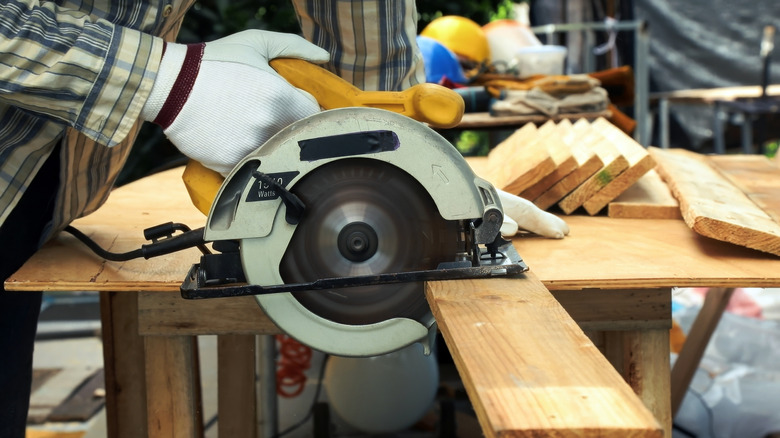
I've always been of the opinion that tool users should maintain both a corded and cordless circular saw in their collection. Having one of each allows for coverage across numerous job requirements, allowing users to stay on top of their projects with greater ease. A cordless saw is the ideal choice for tasks involving awkward areas and spaces. Lugging a cord around and supplying power to places like a treehouse or up in the attic can be extremely difficult. Mobility is critically important, and a cordless saw provides exactly that. On the other hand, a corded tool offers constant power without the worry of maintaining a charge. When work area flexibility isn't necessary, plugging in and keeping your cutting tool ready for action without interruption is a major asset.
Beyond the comparison of corded and cordless tools, the circular saw is actually a tool that offers exceptional versatility. There are small-bladed options, large framing-focused saws, and even worm drive saws that place the blade on the opposite side of the handle for better line of sight while cutting. Having two or more saws in different styles can give you better coverage across a broad spectrum of specific cutting needs, allowing for more effective performance no matter the task.
Clamps
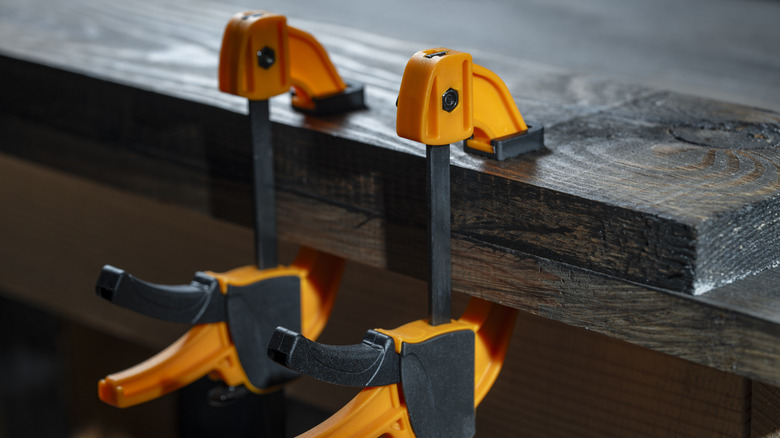
Clamps are a staple in many trade arenas. There are many types of woodworking clamps, and each one offers an important set of benefits. Pipe clamps offer interchangeable sizes with the clamping hardware pairing up with whatever size pipe you might need for the task at hand. Many tool users also have quick-release clamps in their arsenal, since they provide fast grabbing force and are easy to use with a single hand. Clamps feature prominently in crafting circles of all types, but they're equally at home with carpenters and many other installers and builders.
There's an odd reality in the clamping world: No matter how many clamps you have available, there's always space for more in your collection. Gluing workpieces, attaching cutting guides to boards, and holding equipment in place while you cut, screw, or shape are just a few uses for clamping devices. One clamp (of any sort) simply isn't enough to tackle any job beyond the exceedingly simple. Having at least a few, and collecting a couple of different varieties for use across a range of needs, is a great idea for any kind of tool user. It's often best to look for bundle deals like the Irwin 4-Pack of Quick-Grip Mini Bar Clamps or the Jorgensen 6-Inch Bar Clamp 4-Pack Set.
Sanders

The sander isn't really a tool that's built to last. I've never had a sander that continued to deliver high-quality performance for more than a year or two before experiencing at least some kind of quirk. My most recent sander is a cordless Milwaukee random orbit model. I've had it for a few years, and it still works well. However, the battery connection point has become excessively clogged, making it necessary to knock the battery loose every time I need to remove it from the tool body. Sanders of all makes and models run into the same hardship: They're designed to constantly come into contact with fine particles that the sanding action creates in clouds. These particles stick everywhere and can quickly interfere with the hook-and-loop system, the motor, and more.
Moreover, corded sanders feature an important benefit that isn't inherent to other tools. The sander is a piece of equipment that drains batteries rapidly, so corded alternatives are ideal whenever the job parameters allow for it. Beyond the range of different sanding tools designed for specific surface preparation tasks (such as belt, sheet, random orbit, and detail sanders), having at least a cordless and corded model in your arsenal allows you to hand one to a friend or other helper to tackle jobs faster and provides redundancy in the event of a sudden tool failure.
How we chose these tools
All of these tools are items that I own duplicates of and use (in duplicate) frequently. My own experience repairing things around the house and performing DIY installations informed this list, highlighting the equipment that I use multiple examples of and, in the past, the shortcomings in my workflow arising from a lack of equipment. They can all make a big impact for DIYers in particular when added in pairs or larger numbers.