

Ice Dams Are A Major Winter Threat To Your Home – Here's How To Stop Them
We may receive a commission on purchases made from links.
Winter's snow can certainly create an aesthetically pleasing landscape that looks magical from the window. But sometimes extremely low temperatures can become dangerous, especially if you make maintenance mistakes with your radiator and don't follow other winter season preparations. Ice dams, for instance, are those cold-weather problems that don't arrive with an obvious warning, but can quietly and severely damage your home.
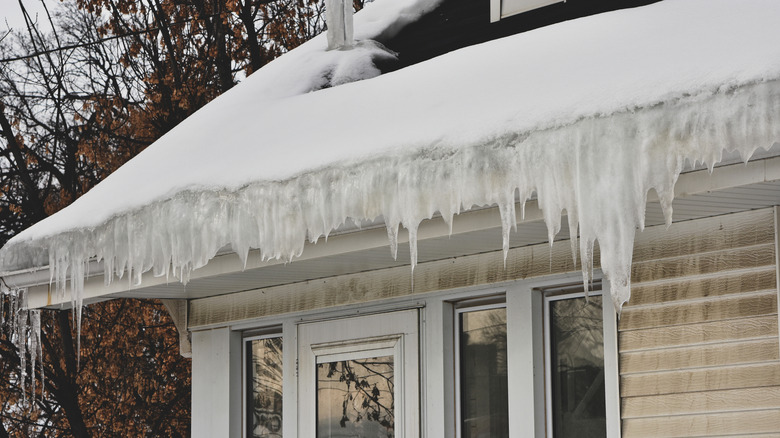
They form when warm air from your home escapes and heats the snow on the upper portion of the roof. As a result, ice melts first, runs down toward the colder eaves, and refreezes on the lower, colder roof sections. This repetitive action creates ice formations (often hanging from gutters and eaves) that are both fascinating and dangerous in almost equal measure. For instance, these icicles may grow as they collect more melted ice, and their watery remnants will eventually leak through your roof, destroying your walls and ceiling.
Besides that, as we transition to spring, all of that snow that piled up throughout the cold season will melt, meaning the ice dams will come crashing down to the ground. Once this happens, the added weight will cause your gutters and fascia boards to sag or even fall off. Even worse, ice dams can set a perfect environment for mold growth, which can pose a significant health hazard. So, how do you remove and prevent it?
How to remove ice dams from your roof and gutters
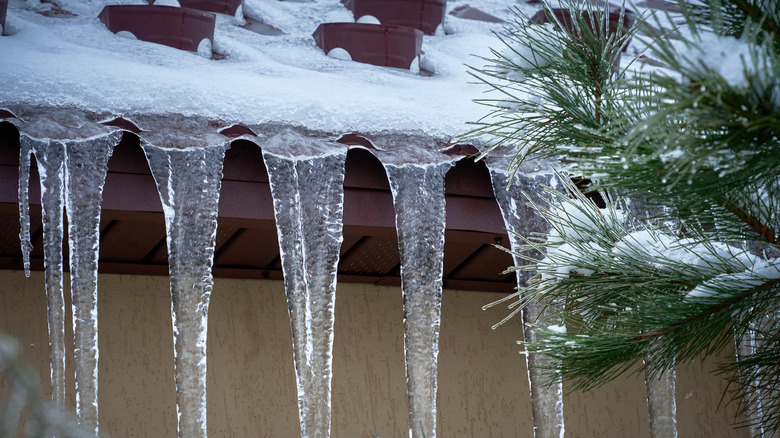
If you're trying to figure out how to get rid of ice dams, before you pick a shovel or any tool for that matter, it's worth noting that this process is almost as dangerous as the ice dams themselves. So, you'll want to take caution since knocking down icicles chaotically can easily result in a head injury or expensive gutter repairs.
If you are looking for a hardiest hack to take care of snow, filling old stockings or socks with calcium chloride and placing them across the ice dam is a great option. Calcium chloride, also known as ice melt, is exothermic. This means that when it reacts with water, it makes heat, which melts the ice right beneath and around the sock. As such, trapped water will drain off the roof, preventing ice dams from forming.
However, for this solution to work, experts recommend placing the socks approximately every two to three feet along the eaves. Additionally, if the problem is severe, use additional ice-melt socks to create additional drainage channels. You'll also want to avoid rock salt; it can damage shingle nails and metal gutters because saltwater is corrosive. And since you're dealing with snow, ice, and calcium chloride (it can irritate your skin), wear safety gear, such as gloves and non-slip shoes, because accidents can happen.
Here's how to prevent ice dams from forming
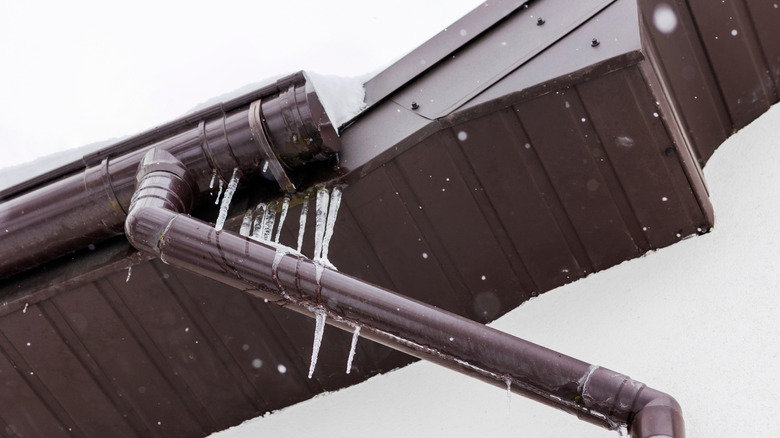
Placing old socks filled with ice melts is not a long-term solution. For this reason, you'll want to do everything possible to prevent ice dams from forming, and the first step is to properly insulate your attic. Your attic is the major gateway for heat to escape. This means that if it's inadequately insulated, heat will escape through the roof, triggering snow melt. So, by insulating your attic the right way, you'll minimize heat loss and maintain a stable roof temperature, which, in turn, will prevent the formation of ice dams and also help save on electricity bills.
Beyond insulating your attic, you'll also want to make sure it has proper ventilation. An attic with poor ventilation can become very hot, which, even with proper insulation, will probably lead to ice dams. To avoid these, installing vents such as Kartol's Gable Vent (available on Amazon for $42) will help. They will keep temperatures more consistent, prevent moisture buildup, reduce energy costs, and even prevent ice dams from forming.
Don't forget to seal gaps around light fixtures or attic hatches; they can easily allow heat to escape to the rooftop. Outside, keep your gutters clean (this new Ryobi attachment makes it easy) so melting snow has a place to drain rather than sitting inside and refreezing. Though it's a DIY you'll want to avoid this winter for safety reasons, you can use a roof rake to remove snow from the roof to reduce the risk of ice formation.