

New York Is Fighting Subway Fare Skippers With Spikes And Paddles
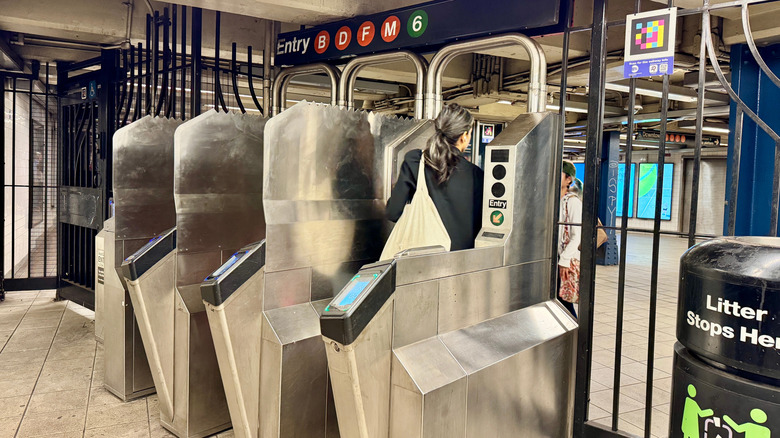
Public transport users in New York have had to deal with a range of changes over the past year, from the long-running MetroCard being phased out in favor of the OMNY card to subway stations being equipped with spikes and paddles to deter fare evaders. The latter has been a particularly controversial measure, and has drawn its fair share of mockery online. However, according to the MTA, the new changes are working.
The MTA's chair Janno Lieber recently claimed in an interview that subway fare evasion is down 35% overall since the changes have been implemented, and said that this reduction was as much about improving riders' feelings about the system as it was about money. Lieber said that "it's about that sense of fairness and equity in New York where people feel like, why does that guy go on for free? I'm being a sucker, I'm being ripped off." He continued, "the only way [the system] works" is if "we all share the public space and play by the rules in this city together."
The 35% figure quoted by Lieber refers to network-wide fare evasion, with other MTA officials claiming there has been an even bigger reduction for stations that have had deterrent features like spikes and paddles implemented at turnstiles. Speaking to the New York Times, MTA spokesman Mitch Schwartz said these stations had seen a 60% drop in riders jumping turnstiles to avoid paying their fare.
More changes are on the way for New York's public transit system
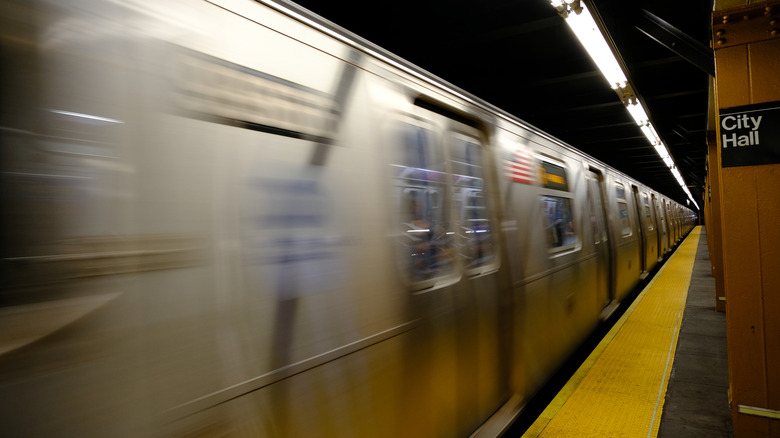
Encouraged by the results of the fare evasion measures, MTA officials plan to roll them out across the whole network imminently. Despite the claimed drop in evasion — and therefore the increased revenue for the MTA — riders shouldn't expect fares to drop anytime soon. In fact, the opposite is happening, with subway ticket fees set to increase in 2026. Thankfully, other incoming changes will be more welcome news to riders, such as the permanent adoption of rolling fare caps.
The system will change to cap fares for most riders at $35 over the space of seven days, while reduced-fare riders have a fare cap of $17.50. The seven-day period is a rolling one, with the MTA saying that riders will only pay for up to 12 rides over that period. Any additional rides will not incur a fee. Express bus riders will also see a $67 rolling seven-day fare cap launched, with the MTA considering a number of ways to improve the overall experience for bus passengers. One of those changes is that, to keep buses on schedule, the authority is in the process of fitting buses with cameras to automatically ticket drivers caught using bus lanes.