

This Winter Trick Could Save You From Getting Frozen Out Of The House

If you live in an area with cold, harsh winters you might have to use a snow blower to clear your driveway before you head out. Snow and ice can also make steps and walkways slippery, and a winter storm can even lock you out of your house. Water will seep into your door locks and freeze, jamming the tumbler mechanism. You might be able to wiggle your key and get it inserted all the way, but the lock may not turn. A quick preventative measure is to cover your door locks with aluminum foil if you anticipate below-freezing temperatures. It's a cheap solution that uses material you probably have on hand, and the physical barrier can keep water from getting into the lock. Foil is also a good insulator, which is why we use it to cover dishes in the oven.
If your house is heated well on the inside, foil may help contain some of the heat that metal locks absorb. When those first snowflakes start falling or the forecast calls for freezing weather, get ready to cover your locks. Carry a small package of foil when you leave the house as well so you can re-cover them when you come back and open the door again. The effectiveness of this hack will depend on the design of your locks and doors and the severity of the weather. Give it a test the next time it gets chilly, and this might become a trusted part of your winter routine.
Other ways to deal with frozen door locks
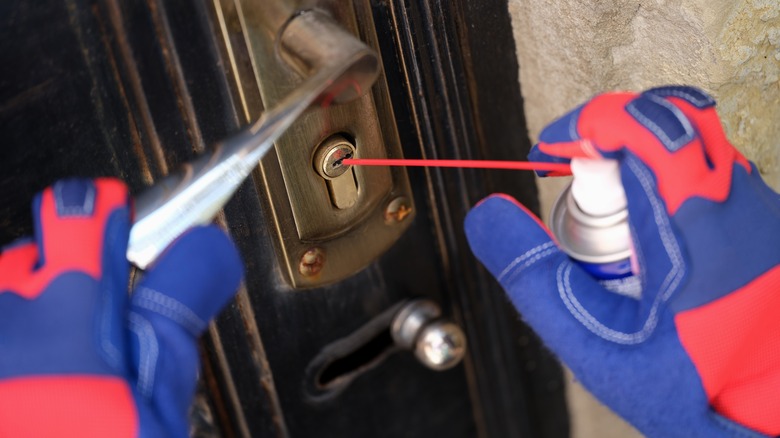
Covering your locks isn't the only thing you can do to keep them from freezing. Amazon sells 3-In-One dry lock lube, an oil-based spray with a thin applicator straw. You can also try PB Blaster 8-GS dry lubricant, a graphite spray that can also be used on car door locks. Silicone spray also can keep door mechanisms from freezing, but WD-40's standard multi-use product can gum up your locks. WD-40 silicone lubricant and specialist gel lube each have an attached applicator straw and are safe for use on locks with or without an aluminum foil covering.
If you have electronic locks, check with the manufacturer for safe lubricant and ice prevention options. There are a few things you can to do try and open a door with a frozen lock. Pouring some warm water on the lock might melt surface ice and make room for the key and a little hand sanitizer on the key or in the slot might induce melting thanks to its alcohol content. Heating your key with a couple passes of a cigarette lighter might also melt the ice, but be careful not to burn your fingers.