

These Drone-Installed 'Magic Balls' Could Transform The Power Grid
Data centers are being built all over the U.S. as demand from AI companies reaches unprecedented levels, but electricity providers are increasingly struggling to keep up with this new demand. Massive data centers in California are sitting empty thanks to power shortages, while electricity bills for everyday Americans increase as the current power infrastructure reaches its maximum capacity. New infrastructure is being built in many places where there are significant electricity supply issues, but it's likely to take years to complete.
In the meantime, optimizing the current electricity grid has become a priority for energy providers. Helping to speed up the process is a Norwegian startup called Heimdall Power, which has come up with an innovative new device that it calls the Neuron. It promises to unlock additional capacity in the existing power grid by utilizing an array of sensors to take constant measurements of the operating conditions of power lines. In turn, this allows operators to boost the amount of power they send down a certain line.
Usually, a power line is given a fixed capacity rating, which is used to determine how much power can be sent down it during everyday conditions. With the ball-shaped Neuron, operators can take real-time data about the line's condition and any nearby weather systems, then increase power levels if the conditions are right.
The devices can be installed quickly and easily
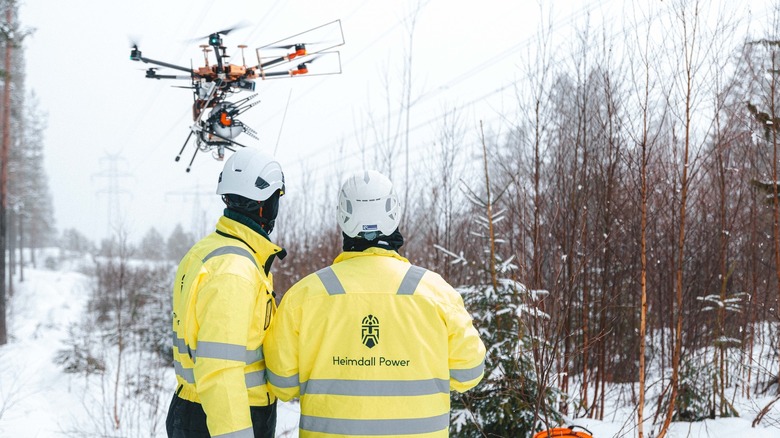
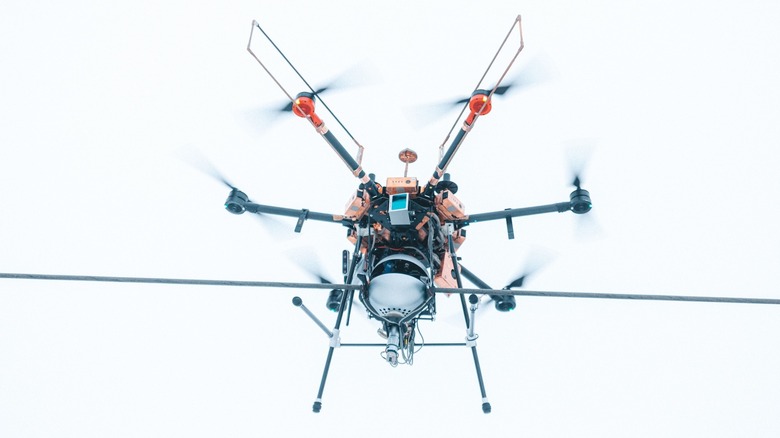
These so-called "magic balls" can be installed on existing power lines without the need for costly downtime, since they're designed to be fitted by autonomous drones. Speaking to Data Center Dynamics, Heimdall Power's CEO Jørgen Festervoll said that they could be installed on "every [power] line where there was congestion," and that "because this technology is relatively low-cost [...] we can push it out quickly" across North America. The devices also draw power directly from the line that they're monitoring, and so don't need additional wiring once they've been fitted.
The North American power grid has a long history, but hasn't really been subject to many game-changing innovations since it was first constructed. The new monitoring system might be one of the most significant developments in years, but it's only recently been made commercially viable thanks to developments in cloud computing and AI.
According to Festervoll, his company already has a long list of grid operators looking to employ its technology, and since "politicians love it, regulators love it, and utilities are starting to understand it," he expects more will sign up in the future. Given the seemingly insatiable demand for U.S. data centers — particularly in states like Virginia, which houses more data centers than anywhere else in the world — it may well be that the startup's Neuron devices become a more common sight on American power lines in the near future.