

This Small Plug-In Gadget Was Made To Save Your Home From Electric Fires
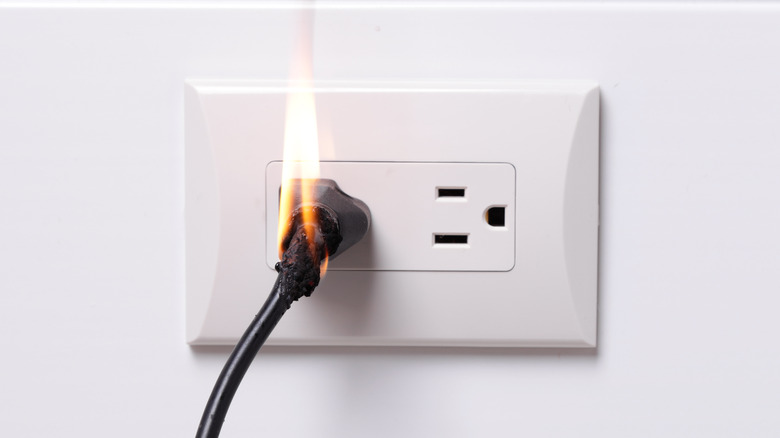
According to the U.S. Fire Administration, residential fires in American homes killed more than 300 people in 2023 and caused almost $1.5 billion in damages. While it's virtually impossible to completely eliminate the chances of a home fire, taking steps to control potential dangers can be a life-saver. A circuit breaker that keeps tripping unexpectedly could be a sign of a potential fire hazard lurking behind your walls, but the Ting fire sensor from Whisker Labs can alert you of trouble spots in time to fix them. It might be worth checking with your home insurance provider to see if you're entitled to one of these gadgets free of charge. A dozen major insurers will payfor a Ting sensor, including Nationwide, State Farm, and Chubb.
The device plugs into a wall outlet and uses artificial intelligence to monitor your electrical system for signs of arcing. Arcing is when electricity escapes from a circuit's wiring or components to jump across a small air gap, and the sparks and small bolts generated can ignite insulation, wood, or paper. If your Ting sensor detects arcing, it sends a notification to your phone via the brand's smartphone app. Beyond its promise to identify any issues, Ting will contribute up to $1,000 toward the cost of needed repairs. If your insurance provider doesn't cover the cost of the device, you can buy one independently from the Ting website. Each one costs $99 and includes a 12-month subscription to Ting's monitoring service, which is required for the sensor to send alerts. After that you'll have to pay $49 a year to stay connected to your Ting sensor, although your homeowner's insurance might cover that cost.
How effective is the Ting fire sensor?

There isn't much truly independent information on the Ting sensor's effectiveness, but the manufacturer analyzed data from 265,000 American homes and published the results in a 2023 research paper. Ting claimed its sensor was able to prevent four out of five electrical fires, a figure that's been repeated in news releases from insurers like State Farm and Nationwide. A 2025 study conducted by the Insurance Information Institute in collaboration with Whisker Labs concluded that homes with Ting sensors installed saw a significant drop in fire-related claims.
The study reported that Ting sensors detected impending hazards in one out of every 60 installed homes and reduced insurer claim payouts by an average of $81 per customer each year. There are plenty of smart home gadgets that will save you money, bug the Ting sensor just might save your home and family from disaster. Whisker Labs has added features to the Ting since its release, including a frozen pipe warning that's lets you know when a power outage and low temperatures combine to increase their risk of bursting. If you're not confident about what to do about frozen water pipes, the Ting sensor should give you time to take action before they become a messy, expensive problem. Your home needs to be on its own electric meter for Ting to work properly, so it might not be appropriate for apartment or townhouse residents.