

These European Countries Still Have Mandatory Military Service

Mandatory military service ended in the US in January 1973, and many of us consider it a historical footnote. However, despite one of the world's most powerful militaries dropping military service, some European nations continue to enforce it for reasons ranging from national security to simply being a long-standing practice. Additionally, despite many European countries moving away from mass conscript armies at the end of the Cold War, current geopolitical tensions have seen some of them reintroduce military service.
The specific military service policies vary. In some places, military service involves a month to a few months of training; in other countries, conscripts may spend a year or more in uniform. What unites all these schemes is the belief that compulsory military service still has a role to play. Broadly speaking, European countries that retain conscription fall into two groups: NATO and non-NATO states. In terms of NATO countries, there are nine countries with compulsory military service schemes — among them are Greece, Turkey (included because part of it is in Europe), and Norway. Additionally, Croatia is reintroducing mandatory subscription next year.
There are also several countries running or planning to introduce voluntary schemes. France has just voted to reintroduce voluntary military service, as has Germany, which ended its compulsory military service in 2011 and has recently voted to reinstate a voluntary scheme — although compulsory service could be reintroduced if volunteer rates are too low. Belgium, the Netherlands, and Bulgaria also operate similar schemes.
Non-NATO countries that enforce military conscription programs include Austria, Switzerland, and Ukraine.
Details of NATO countries with military service
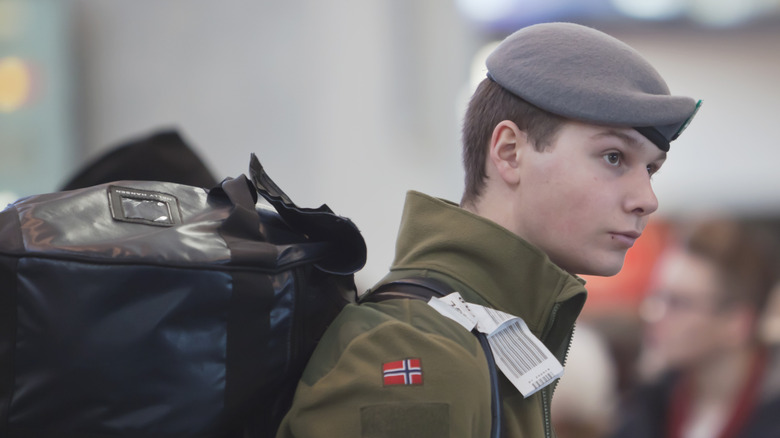
As noted, mandatory military service remains in force across a number of European NATO countries, although the way it's applied varies considerably. The nine NATO countries with compulsory subscription in place are Denmark, Estonia, Finland, Latvia, Lithuania, and Sweden, as well as the aforementioned trio of Greece, Turkey, and Norway. In some cases, these are legacy long-running schemes that are seen as a way to instill civic responsibility. In other cases, conscription schemes have been reintroduced due to rising security concerns.
Towards NATO's southern flank, Turkey and Greece both continue to operate compulsory military service. Further north, the Nordic countries have a particular association with compulsory conscription. Amongst these, Norway, Denmark, and Finland are among the six NATO countries that never suspended conscription (Greece, Turkey, and Estonia are the others). Sweden reintroduced conscription in 2017 as a result of a changing security environment, although the Swedish "total defence duty" scheme allows citizens to opt for civilian or general national service options. Similarly, in the Baltic region, Lithuania and Latvia have both reinstated military service as a direct result of ongoing security concerns.
The type of conscription model run by each country varies, but generally, there are three main formats: lottery, mandatory, and selective compulsory.
Non-NATO European countries with military service
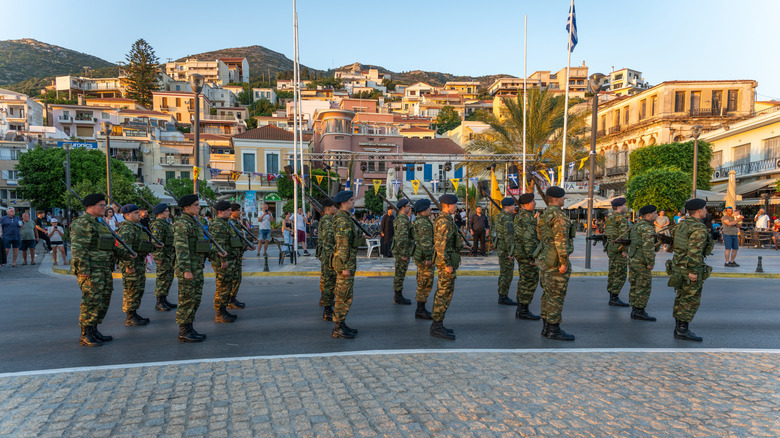
Mandatory military service in Europe is not restricted to NATO countries, and several non-NATO states enforce conscription for a variety of reasons. Among what could be considered Europe's more 'traditional' countries still running conscription schemes are Austria and Switzerland, both of which are neutral countries that maintain mandatory conscription programs. Cyprus can be broadly grouped here, although there are unresolved regional tensions that add extra stimulus to the argument in this case.
Moving away from what could be considered 'mainstream Europe,' there are a couple of peripheral states that need to be mentioned. Both Belarus and Moldova rely on conscription as a core part of their armed forces structure. In the case of Belarus, conscripts serve for 18 months and make up the majority of the armed forces. Similarly, Moldova — and Transnistria, a breakaway republic — rely almost entirely on conscripted armed forces, although whether or not we count Transnistria as a separate country is an argument that's way beyond the scope of this article.
Finally, we can't consider military service in Europe without mentioning the two countries that are currently playing for the highest stakes — Russia and Ukraine. Ukraine enforces mandatory military service as part of its mobilization in the Russian conflict, confirming that troop numbers still matter despite the high technology used in the Ukraine War. Of course, Russia itself continues to operate a compulsory service program as part of its own large-scale mobilization efforts.
Finally, it's interesting to note that some European states are listed among the countries without a military.
Different types of military service
Although several European countries retain compulsory military service, the way candidates are selected differs significantly from one system to another. However, we can broadly fit European subscription models into three main categories. In a universal mandatory system, military service applies to nearly all eligible men (and women in some cases) with limited exceptions. Finland is a clear example of this; Finnish males aged 18 to 60 are liable for compulsory military or civil service.
Other countries operate lottery-based systems, where conscription exists in law but only a portion of each eligible group is called up. Denmark and Lithuania use variations of this approach, with as many places filled up with volunteers before selecting additional conscripts through the lottery mechanism. Another example is Latvia, which reintroduced conscription in 2024, initially on a voluntary basis, although a lottery system is now being used to top up shortfalls in volunteer numbers. As an incentive to volunteer, Latvia doubles the pay of those who volunteer compared to those who are conscripted.
A third model is selective compulsory service. Countries such as Sweden and Norway maintain a legal obligation to serve. However, in practice, only a small, carefully chosen group is selected for military service based on aptitude, health, and motivation.
Finally, approaches to gender also vary widely. The aforementioned Norway and Sweden, for instance, operate gender-neutral conscription services that apply to both men and women. Elsewhere, women may volunteer for military service but aren't subject to the draft; Latvia and Finland are two countries operating such a scheme.