

These Companies Make Diesel Airplane Engines, But Are They Good For Flying?
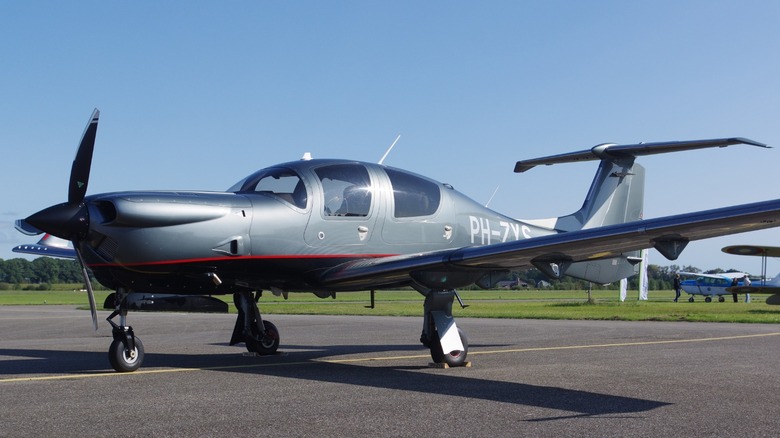
For most people, diesel engines equate to either pickup trucks or semis traversing freeways. However, what many of us do not know is that diesel engines can be used in aircraft, too. You would not find them on airliners, though, which typically use jet engines or turboprop engines. Instead, diesel engines are usually found on general aviation aircraft that still use piston engines.
So, what makes aircraft diesel engines different from non-diesel ones? Just like their terrestrial counterparts, planes that run on diesel fuel use compression-ignition to initiate combustion, meaning they do not require spark plugs. However, what separates them from ground vehicles is that, aside from running on regular diesel, they can also use Jet A as fuel.
At the moment, two general aviation manufacturers offer aircraft with diesel engines right out of the gate: Diamond Aircraft, based in Europe, and Piper Aircraft in the US. The former's product line is almost entirely available with a diesel engine, from the single-engine, fixed-gear DA40 series and twin-engine DA42 and DA62, to the high-performance DA50 RG. On the other hand, Piper only offers the Archer DLX or its trainer variant, the DX, for customers who want a diesel-powered airplane.
Cessna, the maker of the venerable Skyhawk (also known as the Cessna 172), has also experimented with diesel engines when it introduced the Turbo Skyhawk JT-A in 2014. However, this was pretty much short-lived, as the company discontinued the model in 2018 — less than a year after it received its certification. While this is unfortunate, you still have a chance to get a diesel-engined Cessna through engine manufacturers.
Airplane engine manufacturers also build diesel engines to retrofit onto existing planes
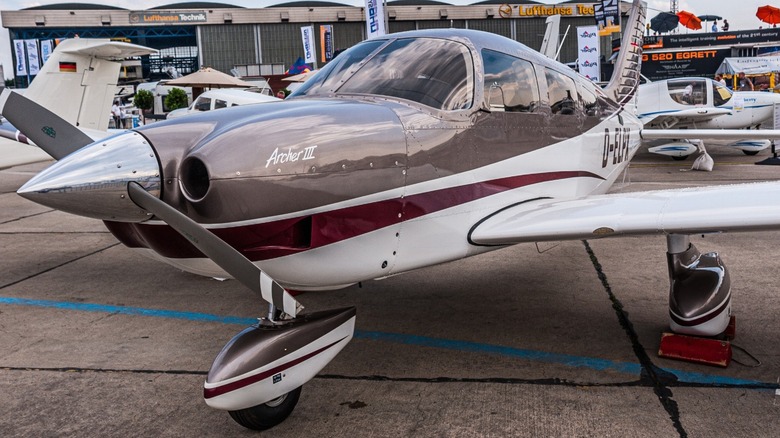
While you only have two options when it comes to brand new diesel-powered airplanes, you can actually convert an existing aircraft into a diesel by purchasing a diesel engine from certified engine manufacturers. This is similar to how Cummins, Detroit Diesel, and other manufacturers make diesel engines that you can install in different trucks and vehicles.
One such company is Continental Aerospace Technologies, which manufactures the CD-100 series of engines. This family is available in outputs ranging from 135 hp to 300 hp and can be purchased with a retrofit kit to make installation on older aircraft easier. The company advertises kits for popular single- and twin-engine models, like the Cessna 172 Skyhawk, Piper PA-28, Diamond DA40, Diamond DA42, Robin DR400, and Tecnam P2010. This means that the engine has been tested to work well with these airframes and also makes them easier to install on older planes.
DeltaHawk is another US-based engine manufacturer that offers diesel engines for general aviation aircraft. It currently offers three models under the DHK line, delivering power outputs from 180 hp to 235 hp. Unlike the Continental diesel engine, which uses components from an existing design, DHK engines are a clean-sheet design, meaning the company built them from the ground up to specifically run on diesel or Jet A fuel.
Aircraft diesel engines offer many advantages over traditional avgas-powered aircraft that use 100LL fuel. So, much like how there are many myths related to diesel engines that you need to stop believing, there are also several facts that many people do not know about diesel-powered planes.
What advantages do diesel engines have over traditional avgas aircraft?
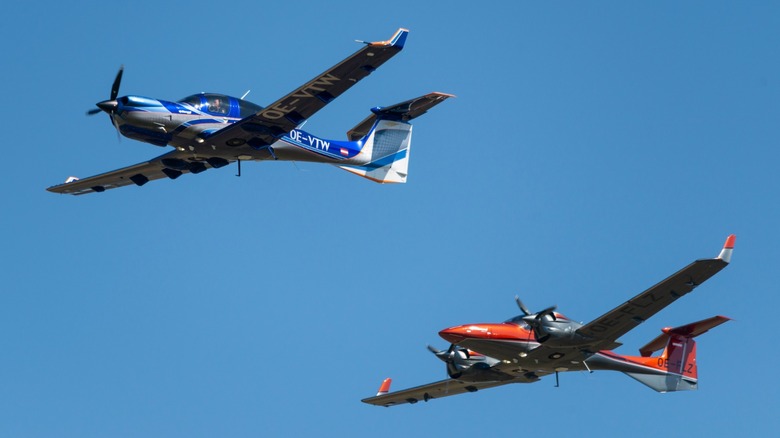
The first thing airplane owners need to know is that diesel aircraft are far more fuel-efficient than comparable avgas-powered models. For example, Flying Magazine said that Piper claims the diesel-powered Archer DX has a 326-nautical-mile advantage over the same model with a 100LL engine, flying up to 848 nautical miles from the 522-nautical-mile range of the avgas-powered model — a more than 60% improvement in range.
Another advantage of diesel engines is that most of them come with FADEC or full-authority digital engine control. This means that pilots no longer have to deal with manual throttle, propeller governor, and mixture levers — instead, the engine will do everything for you, and you just have to manipulate one control. This makes things far simpler for the pilot, reducing the workload and allowing them to focus more on flying the airplane.
Furthermore, 100LL aviation gasoline, the fuel used by traditional piston engines, is much more expensive and harder to find in Europe. It could cost three times as much per gallon as diesel or jet fuel, so many operators prefer diesel engines for their general aviation aircraft across the pond. Jet fuel is also much safer when it comes to the environment, as it does not contain lead, unlike 100LL (with "LL" meaning Low Lead).
Many people still balk at switching to diesel, though, because of the high cost of installing them. Diesel engine retrofits can cost $70,000 or more, so private operators who fly their plane occasionally might not find this viable. However, some fleet operators are already considering this because of the massive fuel savings that diesel engines offer.