

Arizona Law Could End Interstate Speed Limits, But With One Big Catch
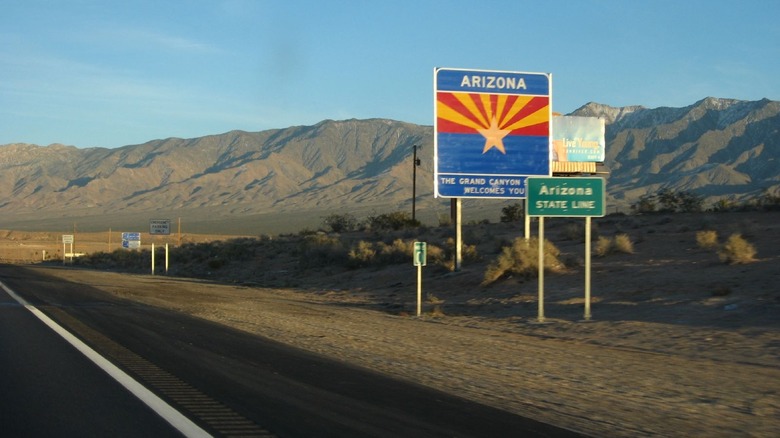
American states have a vast range of speed limits, and we may soon have our very own version of the Autobahn. Again. With some caveats. Arizona state Rep. Nick Kupper recently introduced House Bill 2059, known as the Reasonable and Prudent Interstate Driving (RAPID) Act.
This would give the Arizona Department of Transportation (ADOT) the authority to basically do away with speed limits for non-commercial vehicles, but only on very specific stretches of rural interstates — during daylight hours. Kupper said his proposal came to him while on a lengthy road trip. If you've ever found yourself on a vast stretch of bleak open road zigzagging through the country, it can make anyone want to zip across as fast as possible.
However, the proposal would mandate an 80 mph maximum speed limit at night and keep all existing laws regarding unsafe or reckless driving. ADOT would first be required to conduct engineering studies, assess the impacts higher speeds might have on current roadway design standards, and research past safety records before approving any "derestricted" speed zone. Furthermore, it would need to work with Arizona's Department of Public Safety to carry out enforcement efforts plus conduct annual safety audits. And yes, drivers with lead feet who abuse their need for speed will face stricter civil penalties.
The bill lays out a one-year pilot program that would take place on portions of Interstate 8 (I-8), a major east-west freeway well-known for its miles and miles of desert. Heavily traveled by both tourists and commercial traffic, it connects San Diego, California, to Casa Grande, Arizona, and is an integral part of the Southwest's highway infrastructure.
Changes to Arizona interstates may be coming
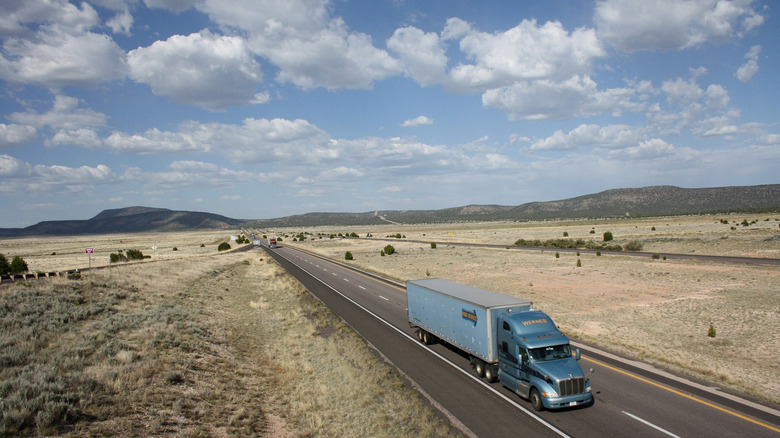
Remember that we mentioned this was yet another attempt at an American Autobahn? Well, between 1995 and 1999, Montana tried using "reasonable and prudent speed limits" (RPSLs) on both its federal and state rural highways outside of urban areas. Technically, there were no numerically based maximum speed limits. Instead, the state relied on drivers to determine what was a "reasonable and prudent" speed. In reality, though, the State Patrol enforced a 90 mph limit.
These roads became cleverly known as the Montanabahn, and here's the interesting part of that whole experiment: Montana's Legislative Audit Division found that during those four years, the state recorded its lowest fatality rate. As average speeds increased, crash and fatality rates for each vehicle mile traveled oddly went down, and were actually similar to numbers in nearby states without RPSLs in place. It also found that the use of seatbelts combined with driver's behavior had a "greater effect on safety outcomes than posted speed limits alone."
Kupper used Montana's findings to bolster his proposal and says they prove that increasing speed limits in certain areas can be done without sacrificing safety. "When rules are clear and focused on driver behavior, states can let safe highways operate as they were designed to operate," Kupper said. If the pilot program is authorized and proves successful, other interstate highways near rural areas (defined as those with less than 50,000 residents) might also become Arizonabahns, including stretches of Interstates 10, 17, 19, 40, and I-15. Arizona isn't the only state looking to raise its speed limits, either.