

Here's How Long You Have To Get A New License After Moving States

Moving to a new state can require a lot of planning and paperwork, and it wouldn't be hard for a few simpler tasks to fall through the cracks. In addition to finding a new home in a new town, organizing movers, packing, and registering kids at new schools, you'll also have to somehow find the time to safely move your vital records, like your birth certificate and Social Security card. Beyond the obvious reason of not wanting to misplace those important documents, you'll also need them shortly after you make the big move so you can tick off another step on that massive to-do list: updating your driver's license.
Every state handles car registration and driver licensing a bit differently. A good example of this is how something as straightforward as registration costs can differ wildly: It can be quite a shock to move to a state with expensive car registration fees if your previous one was more affordable. Don't assume that the process in your new state will mirror the one from the state you're leaving. After your legal residence changes, you'll be required to update your driver's license within a certain length of time. Your grace period differs from state to state, but you typically have between 30 and 90 days. We recommend you check before you move, however, as some states give you as few as 10 days (or even less). Here's what you need to know, what you will typically need, and what to expect when you apply for a new license.
How driver's license processes may differ by state
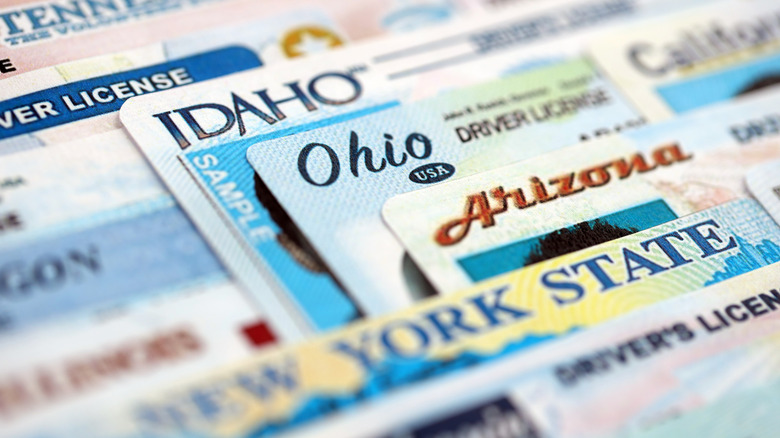
The first step you should take when you know you're moving to a new state is to identify what government agency handles licensing in that state. It's often called the Department of Motor Vehicles (DMV), but some states use other names, like the Department of Driver Services in Georgia. The appropriate website should tell you what documents you'll need and how to apply for a new license, along with the number of days you legally have to acquire a new license once you've moved.
Next, you will typically have to bring your current driver's license from your old state, another document to verify your identity such as your Social Security card, proof of residence at your new address, and payment for any fees associated with getting your new license. This will differ depending on your new state's laws; for example, you may be required to undergo a vision screening and a road knowledge or driving test, though you can take a third-party driving test in some states instead of scheduling one with the DMV. These tests are offered by a state-certified driving school or training center, allowing you the opportunity to brush up on your parallel parking skills. Utah, Texas, and Pennsylvania are all good examples where third-party testing is permitted.
If your current license has expired or been suspended, the process will be different and likely harder. You may have to follow the guidelines for applying for a new license. Also, if you are issued a temporary ID, be sure to check that it will cover you if you plan to travel or if you're starting a new job. There are even a few states that may allow you to use a digital copy of your license. An example of this is the Illinois digital driver's license program, with the state joining others like New York, Maryland, Hawaii, and California in offering the service.