

Is It Safe To Use WD-40 On Plastic Car Parts?
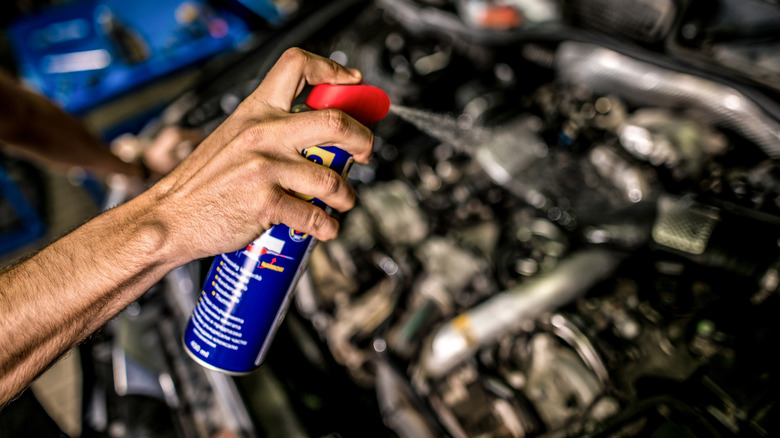
If you're a DIY enthusiast, chances are, you've got a can of WD-40 in your home maintenance kit. After all, this product (originally a water-replacement product invented in the 1950s) has evolved into an all-purpose solution with more than 2,000 documented uses, per the WD-40 website. For car owners, it can be the saving grace for degreasing dirty car parts, breaking down and preventing rust, lubricating squeaky car door hinges, and so much more. That said, while WD-40 has many uses, it is not as foolproof as many car owners think; experts suggest that you should avoid using WD-40 on plastics and rubber.
But is it really safe to use this magical spray on your car's plastic parts? The simple answer is that it depends. While WD-40 is effective at displacing water and oil from metal (enhancing its ability to break down rust and lubricate moving parts), its effect on petroleum-based products like plastic is quite different. When you spray WD-40 on a plastic, its hydrocarbons will react with plastic polymers, and since they can't mix, the molecules in the polymer will just break down. Although the effects will not be visible at a glance, continuous exposure will inevitably soften the plastic, making it fragile and prone to cracking or breaking.
However, it's worth noting that the above effect refers specifically to regular WD-40. WD-40 is still safe to use on plastic car parts, provided that it's not the original formula. According to the company's website, you should use WD-40 Specialist Silicone, which safely lubricates and protects non-metal surfaces such as plastic.
Choosing the right WD-40 product for plastic car parts
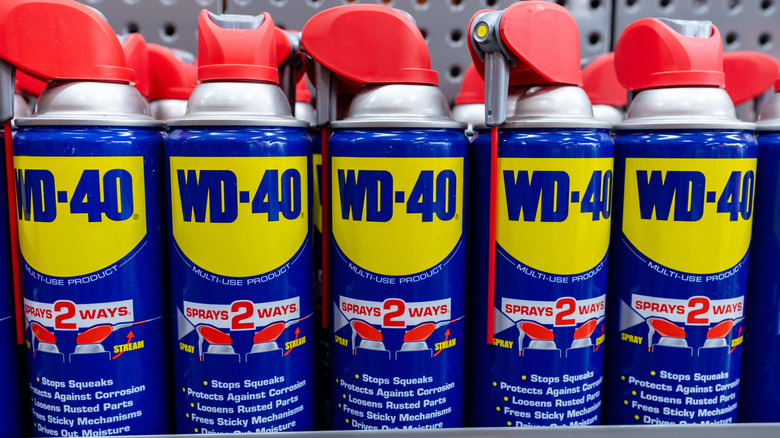
It's easy to assume that WD-40 is a single product. But the truth is, this brand has tons of WD-40 products you may not even realize exist. Before you reach for that blue-and-yellow can to fix that damaged bumper, it's best to understand the basics of what each product can and can't do. As mentioned earlier, you'll want to avoid using the original WD-40 Multi-Use Product when cleaning, lubricating, or protecting plastic parts.
However, if you're planning on lubricating your car's window seals, guide rails, or plastic linkages, the WD-40 Specialist Silicone Lubricant will come in handy. In addition to protecting plastic parts from degradation, it will dry faster and more smoothly, without leaving behind a sticky or tacky substance that attracts dust and grime, and this is a big bonus to your cabin.
WD-40 might not make it on the list of car cleaning tools you should have in your garage, but it can make quite a difference. A product like WD-40 Specialist Cleaner and Degreaser will better suit your needs, as its formula is designed to cut through dirt and grease buildup with ease. Plus, it also creates a protective shield that gives your car's plastic parts a shiny look and keeps dirt and dust from sticking to them.