

What Happens To Returned Products At Amazon? Here's Where They Go
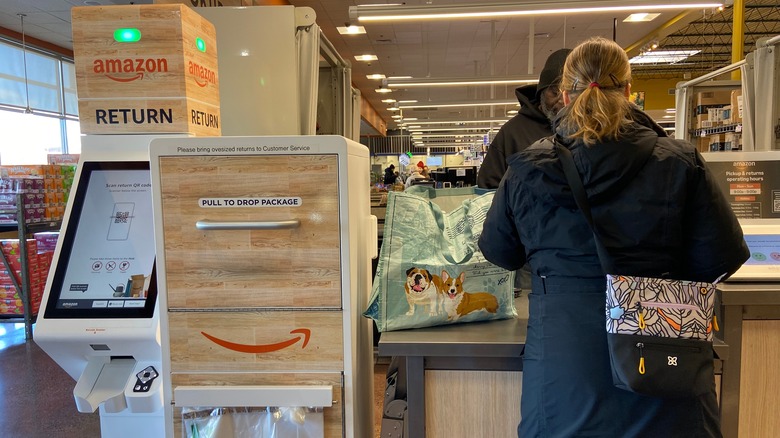
Amazon's distribution network operates on a scale that's almost incomprehensible. The e-commerce juggernaut ships up to 25 million packages each day, and during the holiday season that number rockets even higher. But not all items stay at their destination. Thanks to Amazon Prime perks and the company's notoriously generous return policy, many items are shipped back. The company also allows customers to return products at brick-and-mortar retail locations such as Whole Foods grocery stores.
BBC Earth reports that customers in the U.S. return around 3.5 billion products a year, of which only 20% are actually defective. And, according to an investigation from The New Yorker, the total value of returned goods in the U.S. alone is roughly estimated to be around one trillion dollars. That's more than the GDP of most countries.
So, what happens to the shirt that didn't fit, or that expensive gadget you returned after a bad case of buyer's remorse? Ideally, they'd be inspected for damage or defect, and either returned to stock with an open-box discount or responsibly disposed of. But what actually takes place is both stranger and, perhaps predictably, more wasteful.
Investigating Amazon's return pipeline will lead you into an infinite black hole of endless, unwanted goods and giant warehouses full of wholesale mystery boxes, as well as billions of pounds of landfill waste. Although products do get reused in some cases, such as with Amazon resale warehouses, they are exceptions to the rule. Here's what you should know before you send back your Amazon purchases.
An unfortunate number of returns end up in landfills
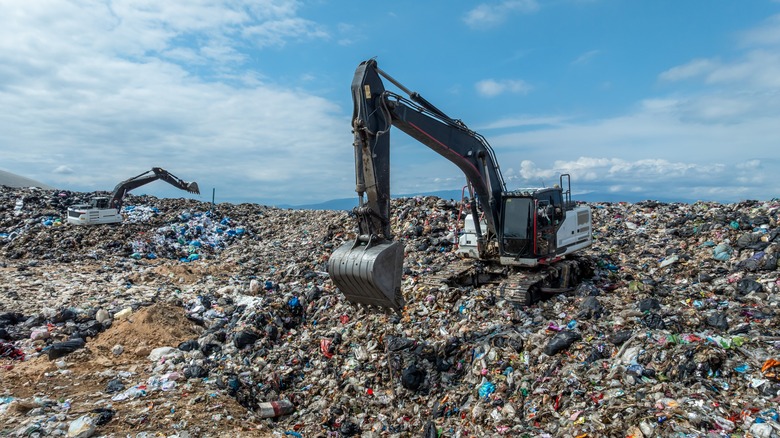
According to returns management firm Optoro, 8.4 billion pounds of returns were junked in 2023 across all included retailers. And it's not just the broken or defective items, either. In 2021, an ITV report uncovered that Amazon was marking a quota of up to 200,000 items per week for destruction at only a single warehouse. From some of the best headphones to books and even the occasional MacBook or iPad, the items were put into boxes labeled 'destroy.' Comparatively, fewer than 30,000 items were donated. Amazon claimed the company destroys an "extremely small" amount of goods in a statement. To be fair, programs like Amazon Renewed refurbish and resell discounted products in some cases.
However, sending items to landfills in the quantity Amazon does is a surefire way to attract negative attention. Moreover, the wastefulness footprint for returns goes far beyond the items themselves. Transporting them back through Amazon's reverse logistics chain uses fuel and labor. At the scale with which Amazon processes returns, it's also incredibly expensive. Increasingly, Amazon has employed a different solution: it simply tells unhappy shoppers to keep products and issues a refund regardless. What this means is that the task of trashing the items is offloaded onto the consumer. It's a win-win for Amazon, which gets to dodge the heat for wasteful practices while saving the money it would have cost to landfill the items itself. And with 14% of returns being fraudulent last year, Amazon would rather not sort through the rocks someone put in an iPhone box. It's unclear what percentage of returns are destroyed, donated, or never requested back as of 2025.
Many Amazon returns are sold in bulk to liquidation warehouses
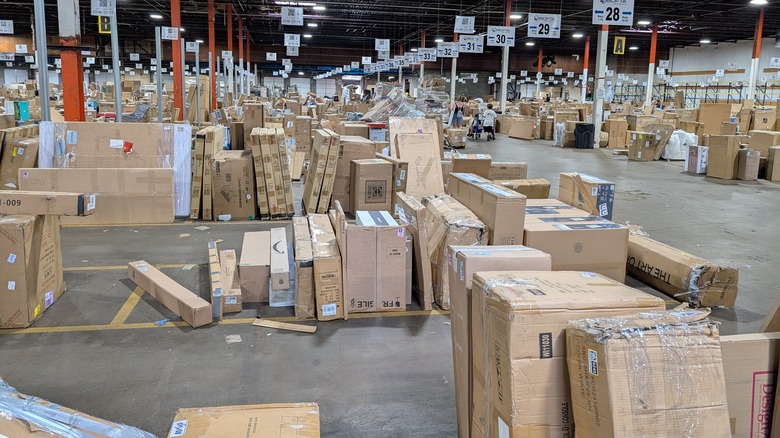
One of the strangest fates to befall returned Amazon items is liquidation. Since many items cannot be repackaged by either Amazon or a seller, they are instead sold for pennies on the dollar to liquidation companies. These entities buy our e-commerce jetsam and resell it in bulk, and the liquidation industry has ballooned to $644 billion as of early 2022, according to a CNBC report. Simply searching the web for "liquidation center near me" is likely to show multiple such locations depending on where you live. Visit one, and you'll find an enormous warehouse full of gigantic, poorly labelld boxes, each full of... stuff. They're essentially mystery boxes, which means you could pay hundreds of dollars for one and find items worth thousands, or you could find a bunch of random junk that you have no need for and no chance of reselling.
It's impossible to say how much of the stuff that ends up at a liquidation center is rehomed. Pallets are often picked over by resellers who flip what they can and toss the rest away. While liquidation is certainly better than a direct trip to trash mountain, in many cases, liquidators aren't necessarily saving items from the landfill so much as adding extra steps to the process.
But believe it or not, Amazon is actually one of the better companies in terms of restocking or rehoming returned items, in terms of the avenues it offers, thanks both to its enormous data and logistics operations and business partnerships. The economy is set up to favor customers, who continue to demand an endless supply of cheap goods and easy returns, but it's not set up to efficiently distribute the surplus.