

5 Car Etiquette Rules That Passengers Break All The Time
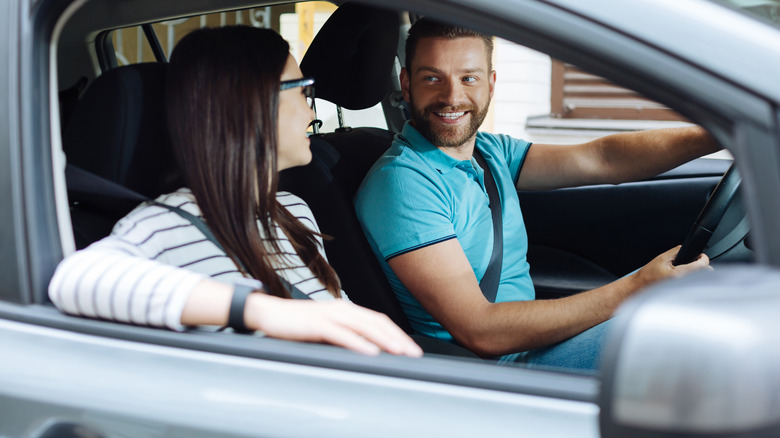
Beyond being a mode of transportation, cars represent a sense of personal sovereignty for their owners — a haven where they can control their surroundings and unwind. That dynamic of solitude changes whenever a passenger enters the equation, though. Different people have different personalities, and unruly passengers can put a dampener on a driver's experience. If you've ever given a ride to someone who seems to flout every rule in your unwritten book, you've probably subconsciously (or directly) blacklisted them from hitching a ride ever again.
From littering to making obnoxious noises, there are certain annoying habits that passengers exhibit when being driven around. It's a tale as old as time (at least since cars became widely accessible), but with the advent of ridesharing, it appears the populace needs a re-education. Software solutions like Uber and Waymo have made it easy to forget that the car owner or driver is a fully functioning human, and not just a part of the machinery designed to get people to their destinations.
Cases of passengers being disrespectful or inconsiderate to car owners are increasing. As such, these passengers need to realize they're entering a social contract governed by unwritten etiquette rules. These rules facilitate a smoother, safer, and more enjoyable experience for all parties involved, particularly the car owner.
By educating potential passengers about these guidelines, we hope to make your next ride a bit less invasive. After all, good company makes good journeys — and it starts with simple courtesy.
Avoid distracting the driver

The most common version of this infraction occurs the moment a passenger buckles into the front seat. Some people assume riding shotgun grants them equal rights as the driver regarding the controls on the front deck. Sure, it feels good to sing along to your favorite song with the wind in your hair, but fiddling with the dashboard console without permission isn't cool. Odds are the driver has curated the vehicle's internal environment (the temperature, seat position, and yes, even the playlist) to suit their current state of mind or help them stay focused. Hijacking the playlist without asking and blasting songs that don't match the mood could disrupt the driver's flow.
In addition to the music debacle, passengers frequently underestimate how sensitive a driver can be to sudden noise and motion. Sharp exclamations, loud conversations, or abrupt gestures can easily jolt a driver and break their concentration, causing them to swerve or lose sight of a vehicle popping out of a corner. Some passengers even go so far as to call the driver's attention to irrelevant subjects. A car may be a shared space for the duration of the ride, but the driver's mental clarity remains the top priority to ensure the safety of all occupants.
Don't kick your feet up on the dashboard

It's unclear when exactly it became hip for people to lounge with their feet propped up on the dashboard, but it has slowly evolved into something of a travel aesthetic. However, this practice is one of the most dangerous activities a passenger can indulge in. When a collision occurs in a vehicle, the airbags deploy at speeds exceeding 200 miles per hour to lessen impact and potentially save lives.
With your feet on the dashboard, that life-saving potential can turn into another source of bodily harm. You may wonder what happens when you keep your feet on the dashboard. Well, those legs will more likely than not be launched directly into your face and torso, resulting in catastrophic injuries that include shattered femurs, broken pelvises, and severe facial trauma.
Beyond safety concerns, there's also the matter of basic respect and hygiene. Shoes come into contact with everything from parking lot grime to bathroom floor residue — contaminants you wouldn't want anywhere near the surfaces your hands touch. Even if passengers go barefoot to avoid dirt, they still introduce the possibility of foot odor and greasy smudges that bare skin leaves behind on dashboard surfaces. These marks can be difficult to remove and can degrade the materials over time. No car owner wants to see their dashboard treated like a footstool, so keep your feet on the floor mats where they belong.
No backseat driving
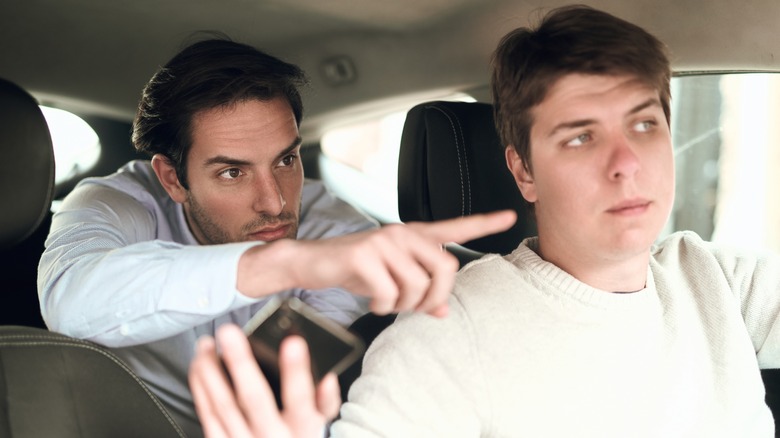
There's a clear distinction between being a helpful co-pilot on a road trip and being a backseat driver, though passengers do not always recognize where that line falls. Passengers can serve as an extra set of eyes and ears, watching out for street signs (such as one-way indicators), other vehicles that might pop out of a blind spot, or other potential hazards the driver might miss. Done right, this support comes without undermining the driver's authority, which goes a long way toward enhancing the driving experience.
Backseat drivers, on the other hand, operate from a fundamentally different playbook. They critique lane changes, route decisions, and challenge every driving choice they wouldn't have made themselves. That sort of nitpicky behavior creates a mental burden on the driver; their attention is split between the road ahead and defending their decision-making. As you can imagine, that can lead to hesitation at critical moments, whether in the form of second-guessing a merge or braking suddenly because a passenger made an audible sound expressing their displeasure.
A survey of 2,000 motorists found that 70% find backseat drivers quite frustrating, with 25% reporting a missed turn because of them. A further 7% reported involvement in more costly incidents like collisions. Although there's no official data on fatalities, you'd do well to adopt an easygoing personality in the passenger seat. Even the most experienced drivers make some common mistakes — just try not to be the reason they make more of them.
Close the car door gently
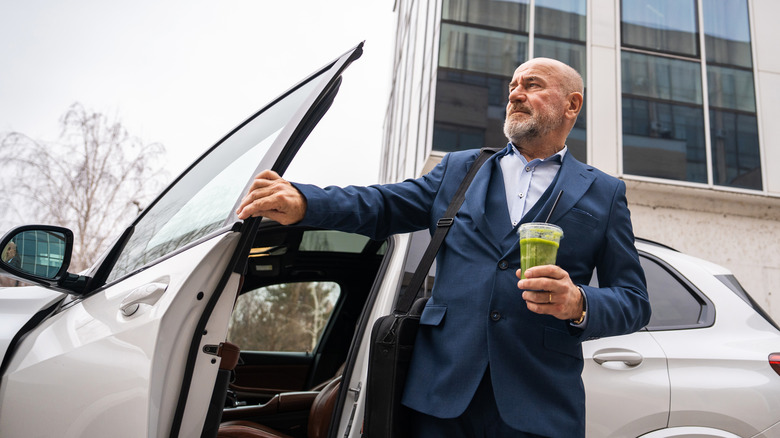
Modern car doors are precision-engineered marvels that require surprisingly little force to shut. A gentle push is all it takes for the lock mechanism to engage securely. However, a significant portion of the population is not privy to this fact, particularly those who learned to drive in an era when car doors needed a firm shove. The result is a plague of door-slammers who swing doors with enough force to send the entire car into an oscillation cycle.
Car owners know that sound intimately and what it implies. Every forceful closure rattles window regulators and places undue stress on the door hinges and frame. Power door locks also suffer the same fate, as there's a link between the constant slamming of doors and malfunctions in a car's locking mechanism. This can lead to unscheduled trips to the auto shop — which nobody really likes.
As a passenger, observe how the car owner closes their door. That should be your baseline for appropriate force. Anything beyond that comes off as disrespectful to the person who puts in the effort to keep their vehicle in good condition.
Seek permission before eating in the car
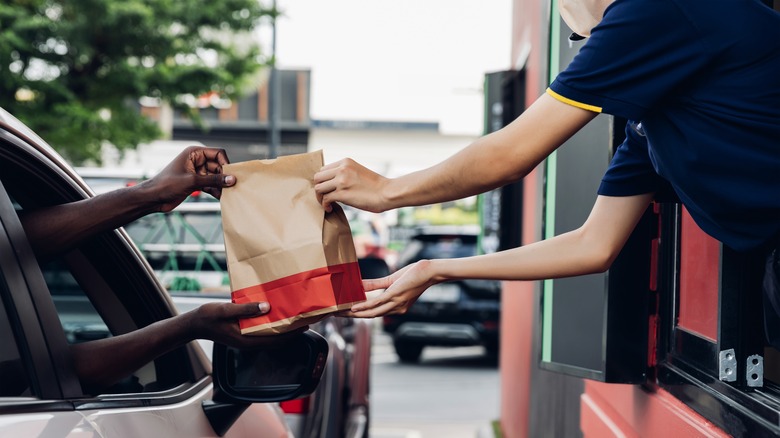
Food content filmed in cars has exploded in popularity over recent years. If your "For You" page is remotely trendy, scrolling through social media almost always leads to a creator reviewing fast food from the driver's seat — or simply eating while talking about something else. This trend has normalized eating in vehicles to some extent and reinforced the misconception that cars can become dining spaces where food is always welcome. The reality is far messier, and car owners know it all too well.
Those seemingly harmless chips or sandwich crumbs find their way into seat stitching, where they remain long after you've forgotten about them. Beverage spills are even worse; they seep into upholstery and carpeting, causing material damage, unpleasant odors, and reduced resale value due to permanent staining. If your car is in a similar spot, SlashGear has a few tricks you can try to get it clean again.
As such, passengers should request permission before unwrapping food in someone else's car. If permission is granted, then they are expected to clean up after themselves. Passengers often exit vehicles, leaving behind food wrappers, napkins, and empty bottles without a second thought about the burden they're creating for the car owner. If you brought it into the car, you're responsible for taking it out.