

Gas Prices Are Dropping Across The Country – AAA Thinks It Knows Why

There are a lot of things that cause incense among drivers (such as the dastardly traffic of certain cities across the U.S. for instance), but few are as significant as rising prices. Whether insurance, groceries, or gas, it seems our wallets are being assailed from every angle nowadays. There is some occasional respite, though, with price drops in some key significant areas. Gas prices, for instance, are among the primary expenses for a lot of motorists, and it seems they're falling to lows that haven't been seen for quite some time as of December 2025. CBS New York reported that New York City's average gas price had fallen to $3.09, $3.05 in Connecticut and less than $3 per gallon ($2.97) in Long Island/New Jersey. This, of course, is some nice financial news to receive, something that can often be a bit of a rarity.
As always, though, gas prices are prone to fluctuation because they're so heavily impacted by global events and trends, both big and small. CBS, then, took to a worldwide automobile authority, AAA, to determine the cause of this price drop. Robert Sinclair, AAA Northeast's senior manager of public affairs, spoke with the news show about the causes of gas prices dropping. Sinclair noted that "a combination of factors" all had a part to play in the situation, particularly highlighting the limited demand for gas as of December 2025 and the potential for a deal between Russia and Ukraine to mitigate the effect of sanctions and thereby remove a barrier to access to Russia's significant production capacity. Let's take a look at these primary factors and how long the impact on gas prices may last. It's nice to have some good news for ICE drivers, but we can't rely on it lasting.
Russia's position as a huge source of global gas
The IEA reports that Russia is topped in natural gas production only by the United States, and that Russia is the biggest exporter of gas in the world. Its role in this area is critical, then, and the war in Ukraine has had a significant impact on these prices as sanctions have been enforced on Russian assets, manufacture, and exportation. As AAA's Robert Sinclair put it to CBS New York, then, "crude oil is pretty cheap in anticipation of a possible deal between Russia and Ukraine." The thinking behind this, according to Sinclair, is that a potential deal would result in the cutting of the sanctions that are currently on Russia and so "lead to more product on the market," thereby reducing the price of crude oil and natural gas. It makes complete sense that this possibility would have exactly that effect. After all, energy costs are intrinsically linked to the Russian invasion of Ukraine.
As the European Central Bank puts it, the outbreak of the war was met by a sharp increase in costs in these areas, "In the first two weeks after the invasion, the prices of oil, coal and gas went up by around 40%, 130% and 180% respectively." These are tremendous jumps that show the sheer volatility and vulnerability of energy costs, but it also means that it can possibly reduce again in response to possible peace plans, as AAA notes. Nonetheless, conflict such as this is not the only factor that AAA pinpoints as having a huge impact. In a broader sense, global changes to prioritization of gas have also had an impact on the reduction of costs, because there has been a reduction in the call for it of late around the word.
The colder weather in a lot of areas has also had an impact
Few things impact the price of a product or service like the balance between supply and demand. Generally speaking, the rarer something is, the higher the price associated with it, and the more it's sought after. By contrast, a more common or less popular resource will often see a price reduction. This, according to AAA, has had a big impact on the dropping of gas prices across the United States.
The curious thing, according to the outlet, is that production remains at about a consistent level as it has throughout the year, but, according to Robert Sinclair in his CBS New York interview, "demand is down significantly, down 400,000 barrels per day just a week ago." This explains a significant drop in prices, with such a notable reduction in demand. AAA suggests that a lull in winter travel after Thanksgiving is a prominent factor in this.
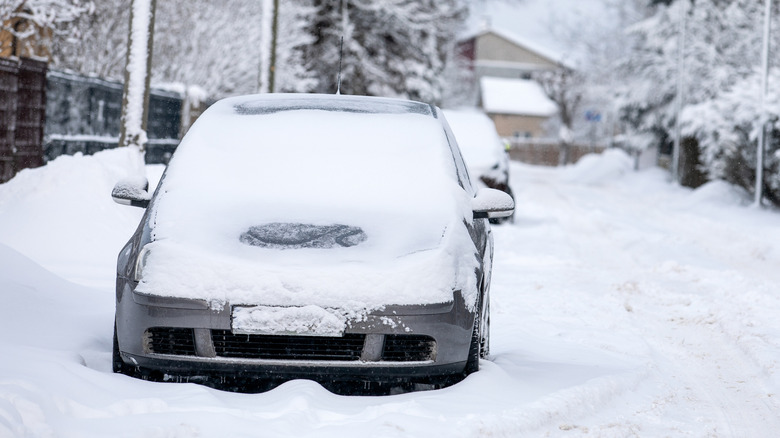
CBS highlights the time of year as a significant one: In winter in the United States, bitter cold and snow can make driving hazardous, and so a lot of drivers may opt to keep their vehicles in garages over the holiday break. Many, of course, will still be traveling for the holiday season, but overall, AAA suggests, roads may be a little more quiet in this sense. According to CBS, the national average gas price of approximately $2.95 hasn't been so low since February 2021. The process is normal, though, Sinclair goes on, noting that "prices start to dip after the end of the Summer driving season, which is indicated by Labor Day," while early in the year, in February and March, they begin increasing again in response to the approach of the more expensive summer blend gasoline.